Last Updated:
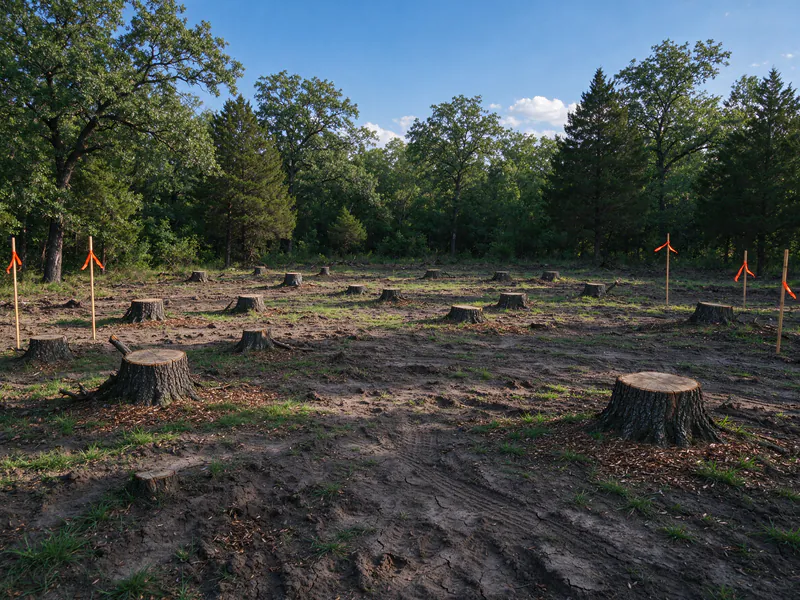
Post Oak Land Clearing Denton offers and manages clearing and grubbing across Denton and the west and north of Denton County, with the work done by licensed and insured contractors. Clearing takes down what stands above the ground. Grubbing goes after what lies under it: stumps, root balls, lateral roots, rotted brush piles and rock. Together they turn a wooded or brushy footprint into bare mineral soil that a grading contractor can shape and compact. That is the scope a house pad, driveway, shop slab or pond needs, and far more disturbance than a pasture or a trail should ever get.
What happens on the first visit
The first visit draws a line between ground that gets grubbed and ground that only gets cleared. Expect a walk of the pad, drive, septic area or pond against your plat or site plan, flags on every tree that stays, and a look at soil, slope, access, utilities and where the stumps and logs will end up.
That line matters because grubbing a whole tract is rarely the plan. On a five-acre homesite the structural areas plus a working margin get grubbed, the yard around them is usually mulched or cleared at the surface, and the rest stays wooded. Each extra square foot of grubbing adds machine hours, debris and bare soil that has to be held in place afterward.
The walk also builds the permit list. Inside Denton city limits, grubbing falls under the city’s clearing and grading permit. Justin requires a city permit for any dirt work, and Krum requires a land development permit for clearing and grubbing; other towns and county land are confirmed per address. Every grubbing job needs a Texas811 locate ticket, because pulling a root ball disturbs soil far below the 16 inches at which state law treats machine work as excavation.
What grubbing removes, and why it matters under a slab
The Denton Development Code defines grubbing as removing stumps, underbrush and rocks before clearing and grading, without changing the grade. Tucked into that same definition is a line people miss: a tree removal permit is required for all trees 3 inches or more in diameter. That is a lower trigger than the 6-inch floor for protected trees elsewhere in the code, so the tree count on a Denton grubbing job is checked against both before anything is pulled. The Denton tree removal permit guide explains the paperwork.
Roots, organics and settlement
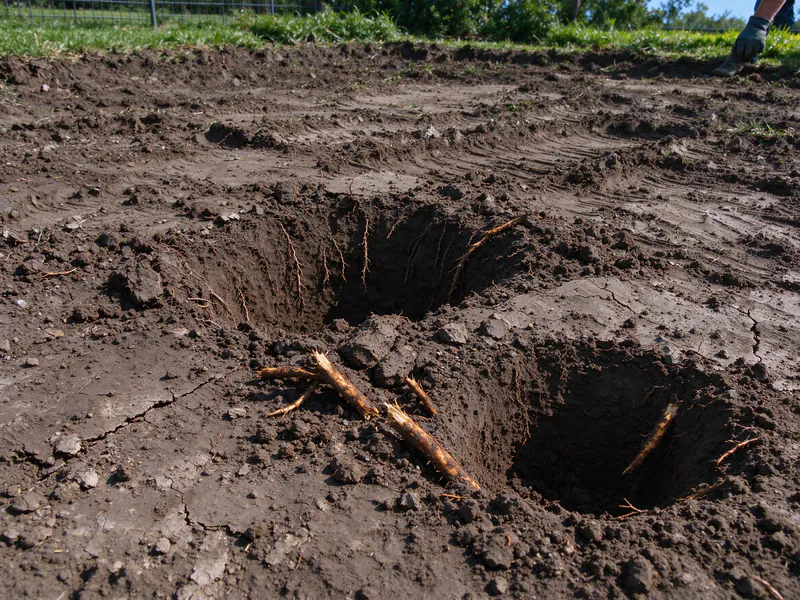
Wood left in the ground does not stay put. Roots and buried brush decay over years, losing most of their volume, and the soil above them drops into the space. Under a lawn that shows up as a dip. Under a slab, a driveway or a shop floor it shows up as cracking and low spots, and decaying root channels also give water a path under the foundation. On the west side of the county the clay makes it worse. Sanger clay and Slidell clay, mapped around Krum, Sanger, Ponder and Justin by the USDA soil survey, shrink and swell sharply with moisture, so a pad built on clay already moves; organics under it add settlement the engineer never planned for. Grubbing takes that material out before any fill goes in.
Excavator, dozer and root rake
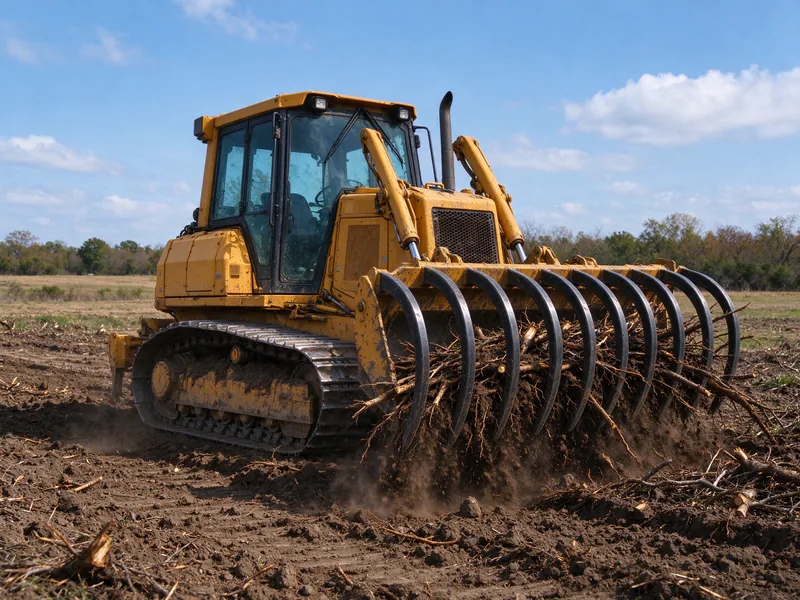
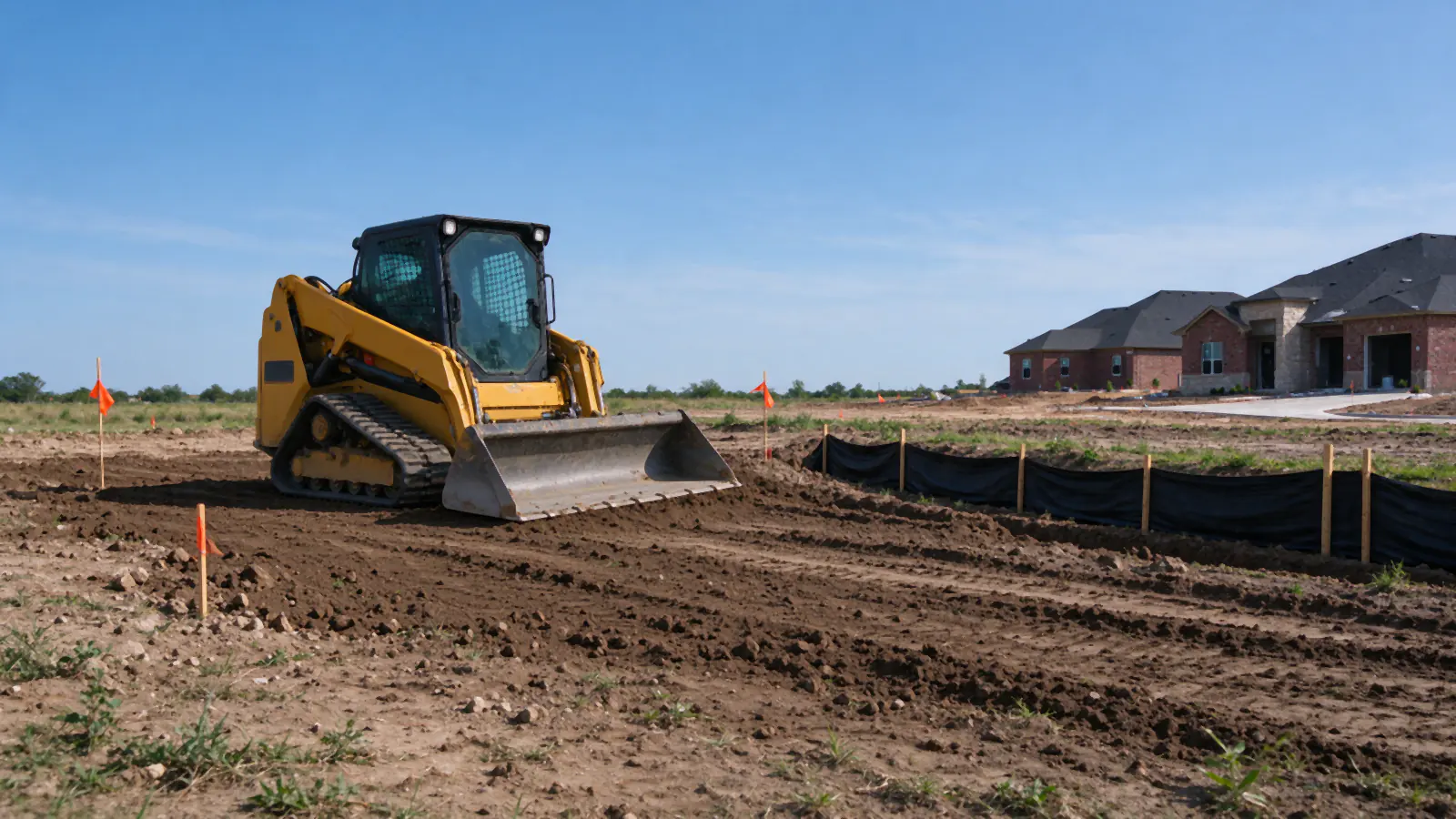
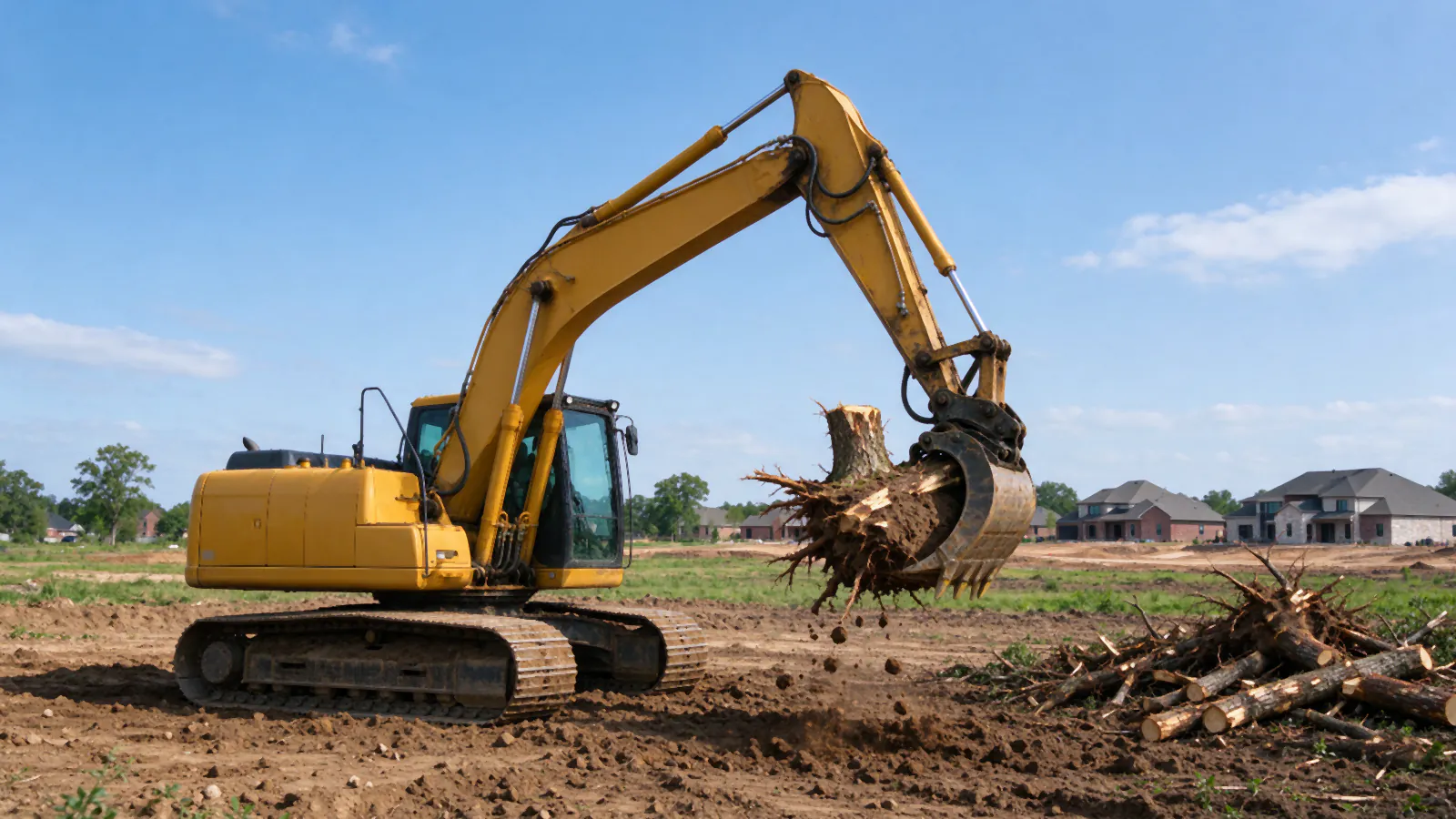
Two machines do most grubbing, and they leave different ground. An excavator digs around a stump, lifts it out with its root ball, and shakes the clay off before setting it aside. It works precisely near trees that stay and leaves the surrounding topsoil mostly in place. A dozer with a root rake pushes stumps out and drags the rake through the soil so the teeth catch roots while the dirt falls through. It covers open ground fast but scalps the surface as it goes. Footprints with a few large stumps near keepers usually get an excavator; broad pads in old cedar or mesquite usually get a dozer and rake. Many jobs use both.
Topsoil: strip, stockpile, put back
Topsoil is full of fine roots and organic matter, which makes it good for grass and poor under a slab. Where the site plan calls for it, the topsoil in the footprint is stripped after grubbing and stockpiled on the property for the yard later. Hauling surplus dirt off site is excavation work and is not part of clearing and grubbing.
Building on wooded ground?
Send the plat or a sketch of where the house and drive go. The walk-through sets which ground gets grubbed and which only gets cleared.
Where the debris goes and what the ground looks like after
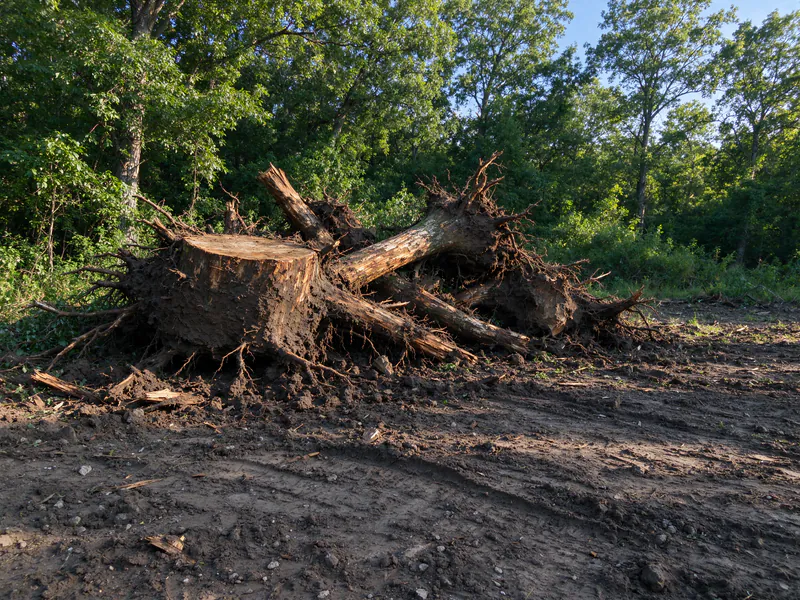
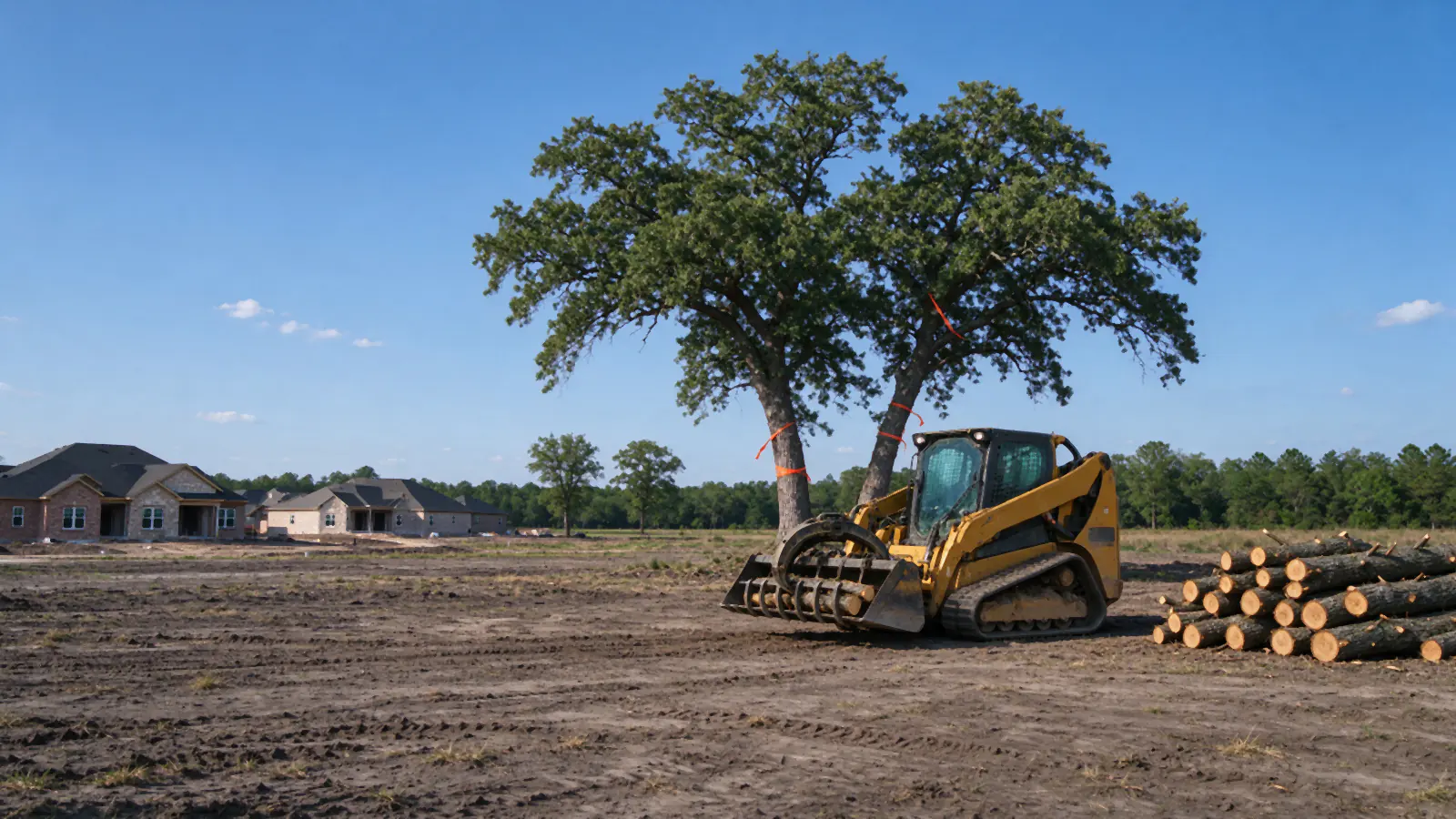
Grubbing makes more debris than any other kind of clearing, and the heaviest part is the root balls. A post oak or cedar elm stump comes out carrying clay in its roots, which adds weight to every load. Logs and limbs can be mulched on site away from the footprint, stacked as firewood or hauled; the can timber pay for land clearing guide explains why salvage value is rare around Denton. Root balls are either ground or hauled. The City of Denton Landfill takes brush at $30 a ton from Denton customers for pieces up to 12 feet, $35 for longer pieces and $40 from non-Denton customers. Burning is not available inside Denton city limits. On county land, a land-clearing burn is allowed only when no practical alternative exists and only on a county burn day, announced each morning; call 940-349-2840. The burning brush in Denton guide covers the rest, and land clearing debris removal covers haul-off.
Burying stumps on the lot is the shortcut to avoid near anything you plan to build: a buried pile rots and settles just like roots left in place.
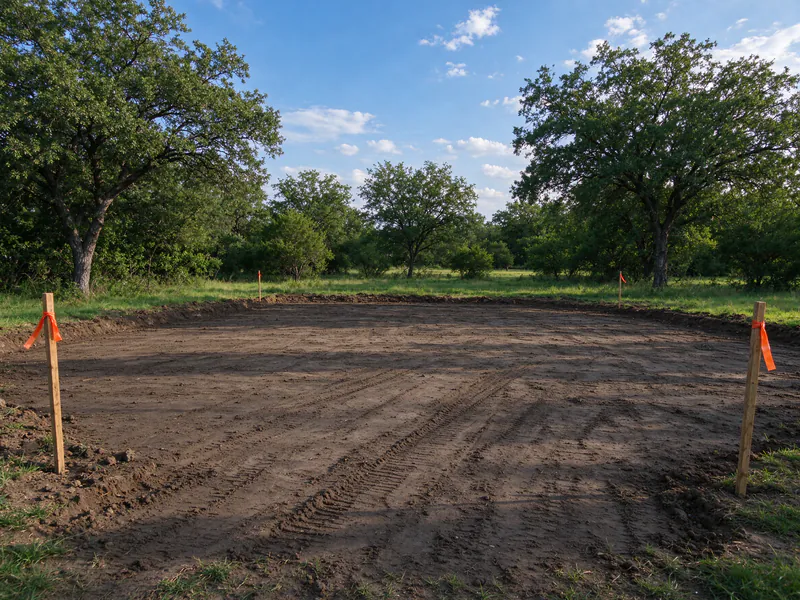
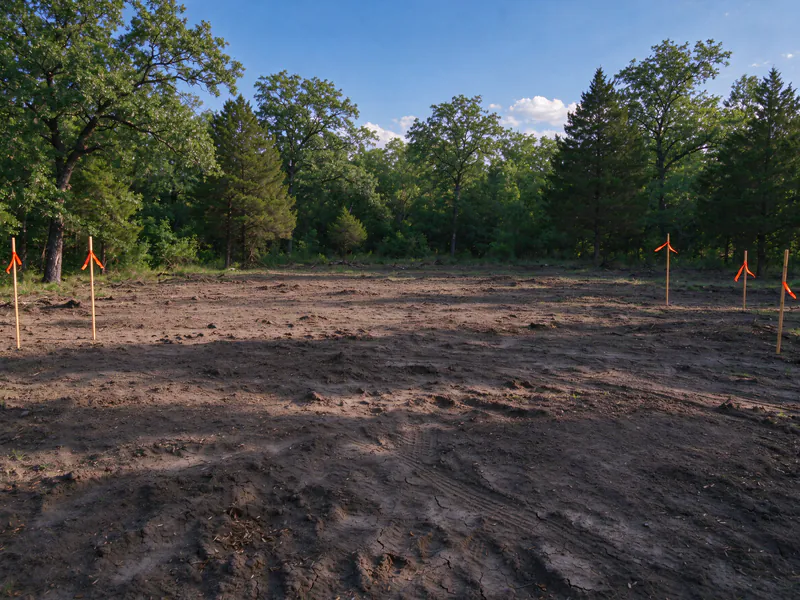
The finish level is deliberately rough. A grubbed footprint is bare mineral soil, root holes filled with site soil, the original grade roughly intact and no compaction. It is not a building pad yet. Cutting, filling, compacting and shaping drainage come next under land clearing and grading. Until then the soil is exposed, and bare clay seals under rain and sheds sediment fast. Grubbing an acre or more of soil brings coverage under the TCEQ construction stormwater permit, and silt fence on the low side is the usual first defense; erosion control covers the options.
Grubbing for ponds, drives and septic areas
Not every grubbing job is a house pad. A pond needs its bottom and the full line of the dam grubbed, because organics left in an earthen dam rot into seep paths. A driveway needs the roadbed and its shoulders grubbed, since a root left under base rock becomes a pothole. A septic area follows the layout the system designer draws. Digging the pond, building the dam and installing the septic system are separate trades that start after the ground is clean.
When grubbing is the wrong call
Grubbing a pasture, a trail or a woodland understory trades a clean surface for bare soil, a weed flush and erosion. Where nothing will be built, forestry mulching or pasture clearing usually does the job with the roots left holding the ground.
Grubbing near trees you are keeping needs restraint. Roots of a post oak spread well past its canopy, and an excavator tearing through them can kill a tree years later. Inside Denton, tree protection fencing has to be up before grading or brush removal starts on permitted work; selective clearing covers how work is routed around keepers. Creek ground is the other limit: Denton prohibits tree and understory removal in riparian buffers and undeveloped floodplain, so grubbing stops at the line set out in the clearing near creeks and floodplains guide.
What clearing and grubbing costs around Denton
There is no reliable published per-acre range for grubbing, so it is priced from the walk-through. The clearing part follows typical North Texas ranges of $1,500 to $3,500 an acre for light brush, $2,500 to $4,500 for moderate brush with small trees, and $3,500 to $6,500 or more for heavy woods; grubbing is added on top.
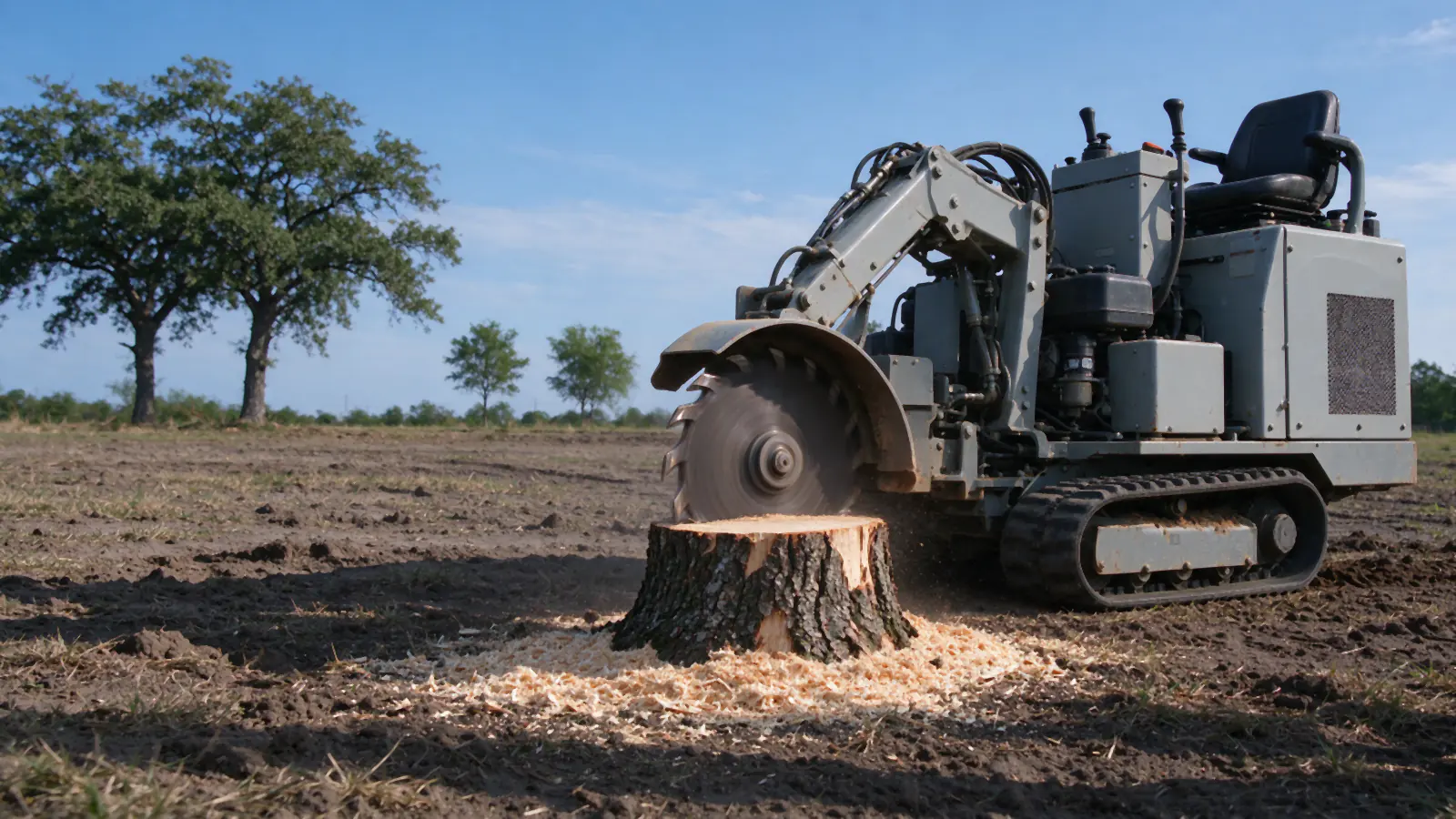
What moves the grubbing price is the number and size of stumps, how much root mass sits in the footprint, how far the root balls travel to disposal, and whether topsoil is stripped. The Texas A&M AgriLife custom rate survey for the East region, which includes Denton County, puts bulldozer land clearing at an average of about $159 an hour for machines under 160 horsepower and about $207 an hour for larger ones, which shows why stump-heavy ground costs more: it is hours, not acres. Inside Denton, add the $453 clearing and grading permit and, where protected trees come out, the $425 tree removal permit plus mitigation. The cost per acre guide and the cost calculator set the clearing side, and the clearing land to build a house guide puts grubbing in order with the rest of the build. For a lot with only a few stumps, stump grinding and removal may be all it needs.