Last Updated:
Post Oak Land Clearing Denton offers and manages lot clearing across Denton and the west and north of Denton County, with the work done by licensed and insured contractors. Lot clearing takes trees, brush and vines off a residential lot or small acreage so a house, a drive, a shop or a usable yard can go in. It sits between two neighboring jobs. Lighter brush clearing takes out the understory and leaves the trees, and the earthwork that follows a clearing pulls stumps and roots and shapes a pad. Working out which of the three your lot needs is most of the estimate.
What happens on the first visit
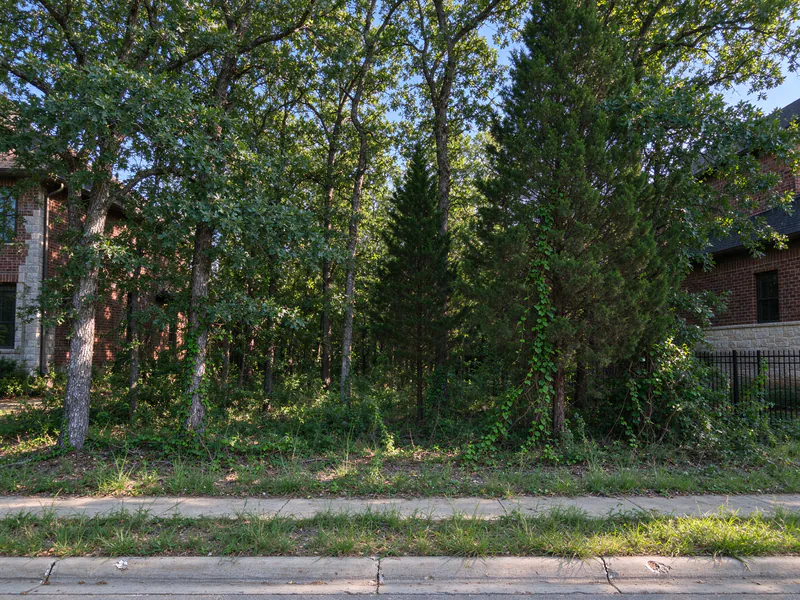
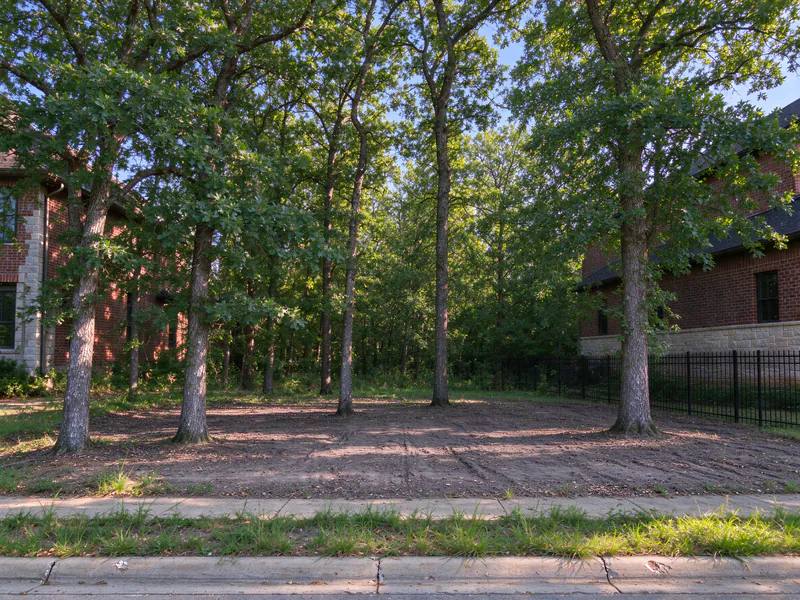
The first visit fixes where the house, drive and yard will sit, which trees stay and what paperwork the lot carries. Bring the plat, survey or builder’s site plan if one exists. Without one, the clearing limits are paced out and flagged on the ground, then confirmed with you before any tree is cut.
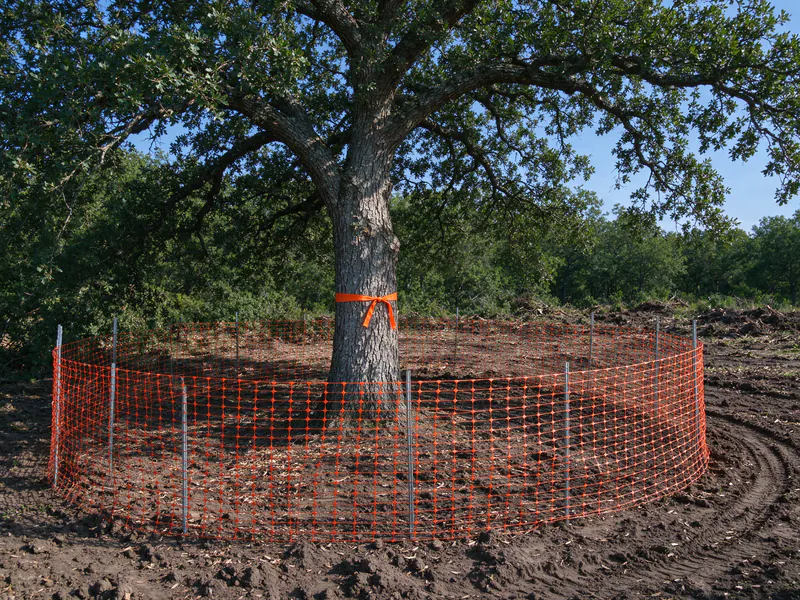
The walk records trunk sizes and species, because inside Denton city limits a post oak 6 inches across at chest height is a heritage tree and that changes the layout. It checks where a trailer can unload, how wide the gate or road frontage is, where water stands after rain, and whether old fence wire, trash piles or a buried line run through the growth. Service drops and power lines overhead get noted, since no machine or falling tree may come within 6 feet of a high-voltage line until the line operator has arranged it. You come away with a footprint, a list of keepers, a permit list and a stated finish level.
Wooded lots, post oaks and the order of permits
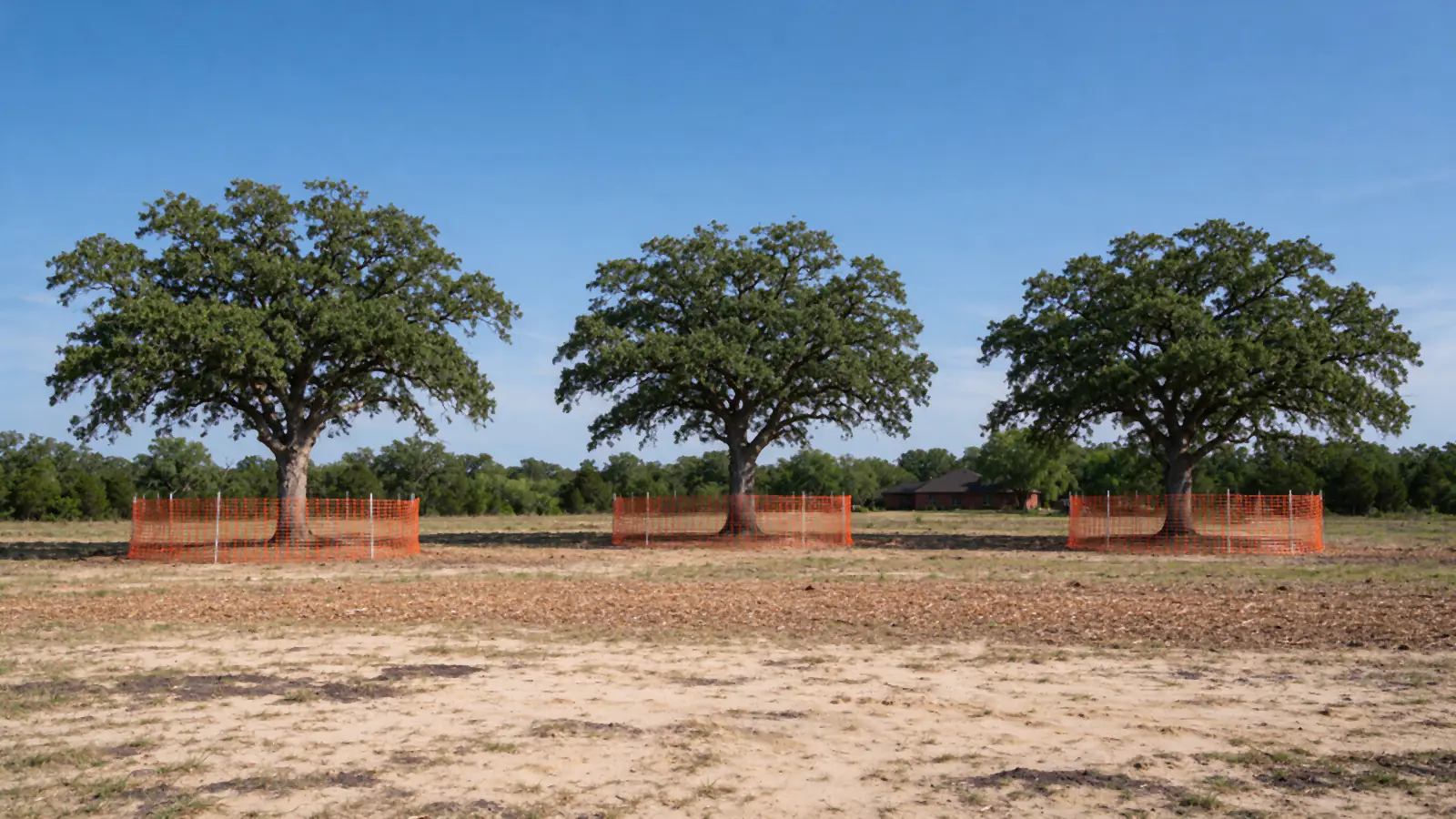
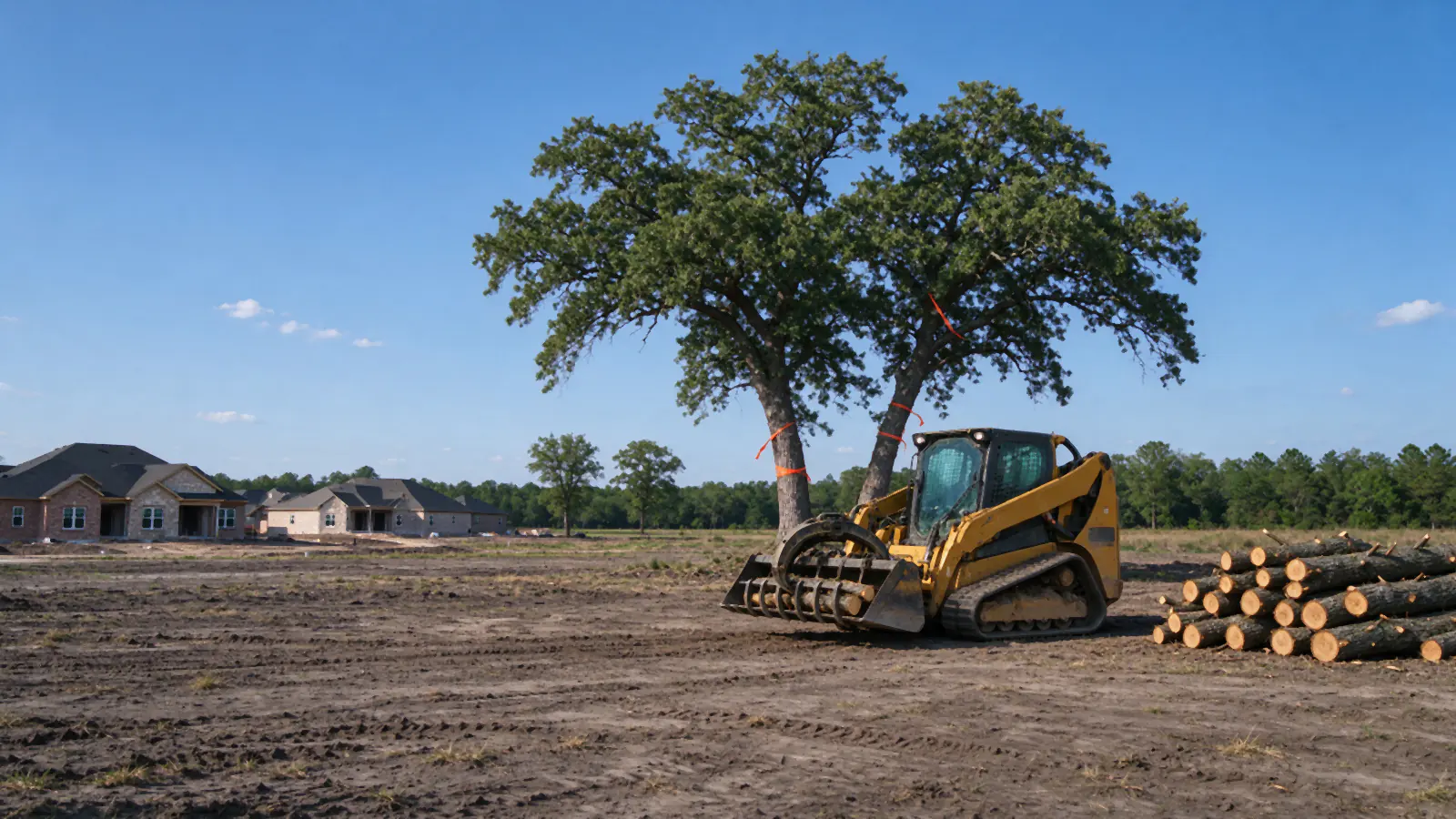
On a wooded lot in Denton, the trees set the schedule. The Denton Development Code applies tree preservation to undeveloped land, and on a lot headed for development no protected tree may come down until the final plat is approved and the city has issued a tree removal permit. Clearing first and asking afterward is the expensive order.
Most of what grows on these lots is Cross Timbers stock; the city’s own urban forest study lists hackberry, cedar elm and post oak as its most common trees. Post oaks are heritage trees from 6 inches in diameter at 4.5 feet, other healthy trees from 6 to 18 inches are quality trees, and mesquite and honey locust are unprotected. A development has to keep at least 30% of its heritage and quality tree diameter inside the development impact area. The tree removal permit is currently $425, and mitigation of $200 per caliper inch applies where trees are neither kept nor replaced. The Denton tree removal permit guide walks through the filing.
Dirt rules sit on top of tree rules. Clearing, grading or grubbing generally needs the city’s clearing and grading permit, currently $453, once the work disturbs more than 2,000 square feet or 25 cubic yards. A lot that already has a single-family home on it is exempt from tree preservation, though the city still wants an exemption submittal on eTRAKiT, and a substantiated exemption costs nothing. In the ETJ, and in Justin, Argyle, Roanoke, Sanger and Krum, the rules differ and each town’s version is confirmed per address.
The ground changes the plan as well. Lots west and north of town sit on Grand Prairie clays such as Sanger and Slidell clay, which hold water and rut under tracks. Lots in the sandier Cross Timbers band toward Argyle drain faster but wash readily once the cover is gone. The same clearing scope gets different timing and different erosion control on each.
Felling trees on a lot is not pushing over brush
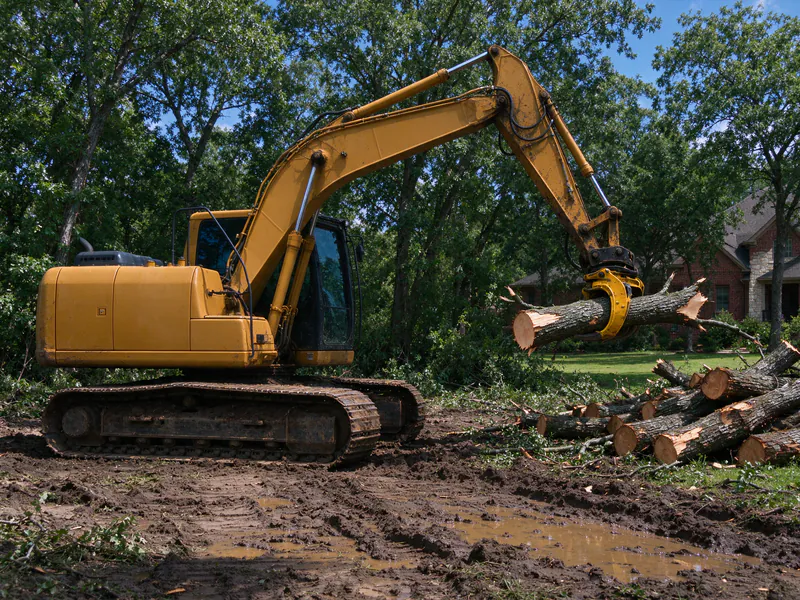
On a residential lot, trees come down one at a time, each in a chosen direction, with its lean, its dead wood and the neighbors in mind. A machine can walk down a brush thicket. It cannot safely shove over a 40-foot post oak standing beside a fence line, a garage or a service drop, and treating the two alike is how fences, roofs and lines get hit.
What changes a felling plan shows up on the walk: a trunk leaning toward something that stays, dead tops that can snap loose when the tree moves, crowns tangled with the next tree so one drags the other, hollow or split stems. Where a tree sits close enough to a house or wires that it has to be climbed and lowered in pieces, that is arborist work rather than land clearing, and it gets scoped that way. While trees are falling and machines are moving, nobody stands inside the work zone, owners and neighbors included. That is a condition of the job.
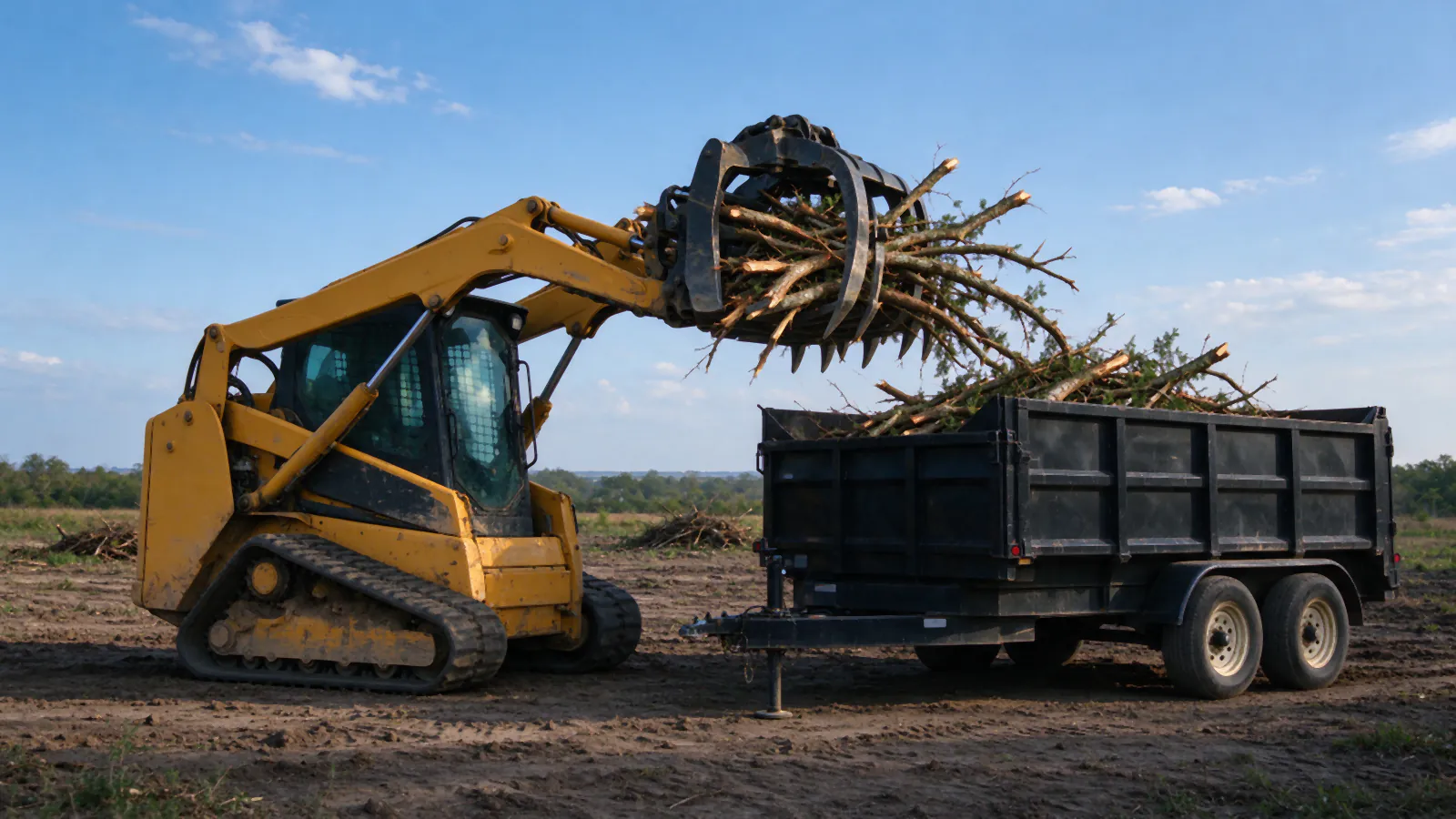
Trunks too big for a mulching head are cut into lengths, then hauled, chipped, or stacked as firewood where you want it. Selling the wood seldom offsets the bill on a residential lot, and the timber guide explains why.
Building on a wooded lot?
Send the plat or site plan and photos. The walk-through sets the footprint, the drive line and the trees that stay.
Drive corridors and getting machines in
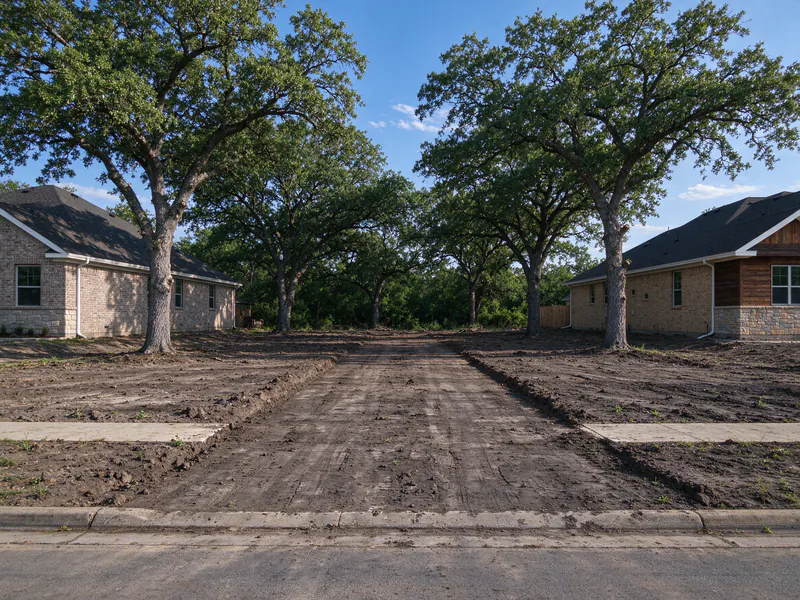
A driveway corridor is cleared wider and taller than the finished drive. The extra width leaves room for base material, for drainage along the edges and for the trucks that use it during the build, and the overhead clearance keeps concrete and delivery trucks from tearing limbs. Denton’s code asks for 13.5 feet over public streets, a sensible target for a private drive too.
The corridor is usually cut first, because it is also how the clearing machines get in and how logs and chips get out. Its line comes from the plat or site plan so it meets the road where an entrance is allowed. A new entrance or culvert onto a county or city road involves whoever owns the road, which is confirmed per address. Building the drive itself, with its base, culvert and paving, belongs to a paving or excavation contractor rather than the clearing job. Inside the corridor, stumps come out completely, because roots left under a drive rot, settle and crack whatever sits on them.
Debris and finish level
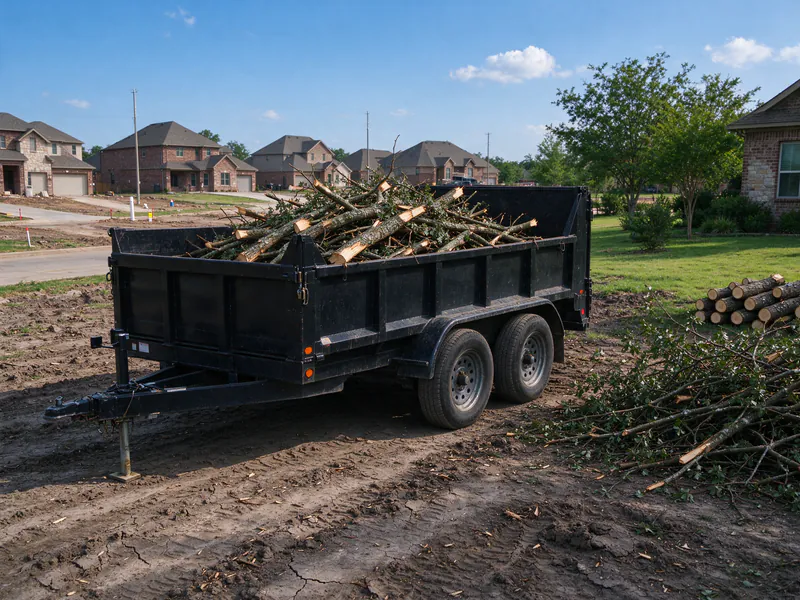
Every lot clearing quote should say where the wood goes and how finished the ground will be. Inside Denton city limits burning is off the table, since the Fire Marshal’s Office does not allow open burning in the city. That leaves mulching or chipping on site, or hauling.
Brush and limbs are often mulched and spread where the yard will be, which covers bare clay. Logs and stumps from the building footprint are hauled or ground, because wood buried under a slab settles as it rots. The City of Denton Landfill takes brush at $30 a ton for a Denton customer with pieces 12 feet or shorter, $35 for longer pieces and $40 for non-Denton customers, with a $26.50 minimum per load; debris removal covers the hauling side. Outside city limits, a land-clearing burn is legal only on a county burn day and only when no practical alternative exists, as burning brush in Denton explains.
Finish level comes in three steps, and quotes should name the one being priced:
- Cleared: trees and brush out, stumps cut low, roots still in the ground, soil mostly undisturbed.
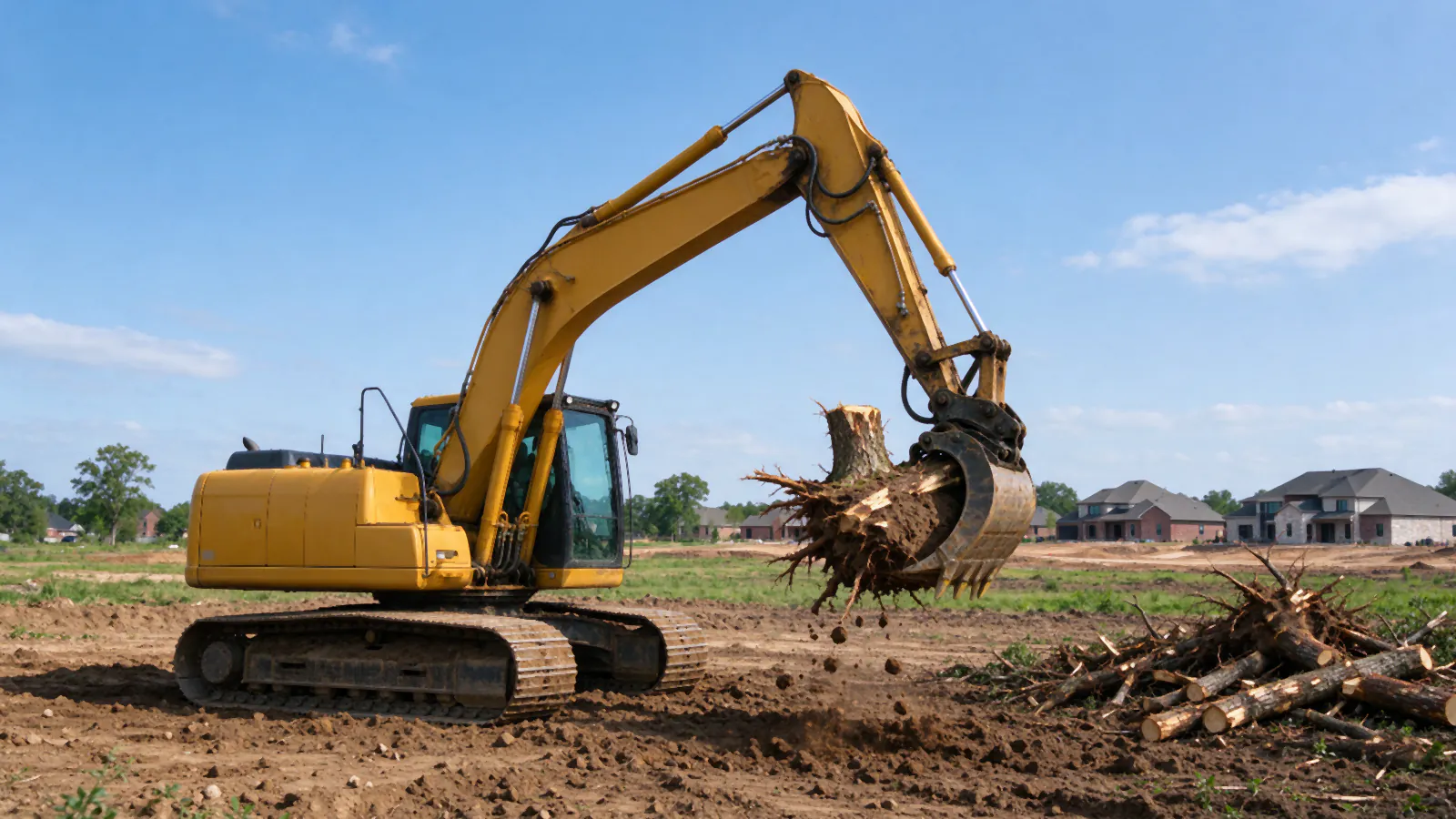
- Grubbed: stumps, root balls and buried organics pulled from the footprint. That is clearing and grubbing, and any digging 16 inches or deeper needs a Texas811 locate ticket at least 48 hours ahead.
- Graded: the pad shaped and compacted, which is land clearing and grading.
A cleared lot is not ready for a slab until the last two are done; clearing land to build a house sets out the order. Once grubbing opens 1 acre or more of soil, TCEQ stormwater permit coverage applies and silt fence goes along the low side, covered on the erosion control page.
What lot clearing costs around Denton
Typical North Texas ranges run $1,500 to $3,500 an acre for light brush with small trees, $2,500 to $4,500 for moderate brush with trees up to about 8 inches, and $3,500 to $6,500 or more for heavy woods, dense cedar or larger hardwoods. Those are budgeting figures; a walk of the lot turns one into a price.
Lot size bends that math. A half-acre home site needs the same trailer haul, setup and permit work as three acres, so small lots are priced around the machine time they take rather than a slice of an acre rate. After size, the drivers are the count and diameter of trees to fell, how many keepers the machine must work around, whether debris is hauled or mulched, how much stump work the footprint needs, access through a narrow gate or past a septic field, wet clay and the permits. The land clearing cost calculator gives a range for your acreage, and the cost per acre guide breaks the drivers down. Where most of the trees stay, selective clearing is priced differently, because a machine working around keepers covers less ground in a day.