Last Updated:
Post Oak Land Clearing Denton offers and manages stump grinding and removal across Denton and the west and north of Denton County, with the work done by licensed and insured contractors. A stump can be ground below grade, pulled out with its root ball, or left to rot, and each of those is the right answer somewhere. The choice depends on what the ground has to carry next: grass and a mower, a fence, a drive, or a house slab. Most of this page is about making that choice before a machine arrives.
What happens on the first visit
The first visit counts the stumps, measures the large ones at ground level and sorts each area by its future use. Expect a walk with flags on stumps near the house, fences, septic lines and meter boxes, a look at species and surface roots, a read on gate width and soft ground, and a list of what gets ground, pulled or left.
Location decides a lot. A stump close to a foundation, a fence post or a buried line gets ground, because pulling it would tear up whatever its roots wrap around. A stump inside a future pad or drive gets pulled. Stumps in rough pasture or woods may not need either. Where the tree is still standing, the stump question waits behind a permit question: inside Denton city limits, removing a tree 3 inches or more in diameter needs a tree removal permit or a documented exemption, and post oaks 6 inches and up are heritage trees. The Denton tree removal permit guide covers that step.
The walk also notes where the 811 ticket is needed. Texas law treats mechanized soil disturbance 16 inches deep or more as excavation, which includes deep grinding and every pulled stump.
Grind, pull or leave
Grinding makes a stump disappear from the surface and leaves its roots to rot slowly underground. Pulling removes the stump and main roots but opens a hole. Leaving costs nothing now and limits what the ground can be used for later. Matching each stump to the right method keeps the job from costing more than the ground needs.
Grinding
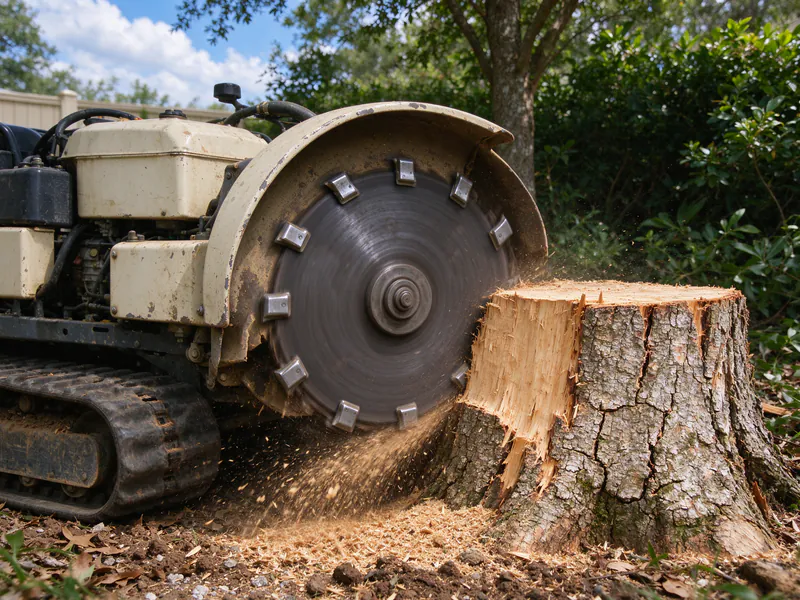
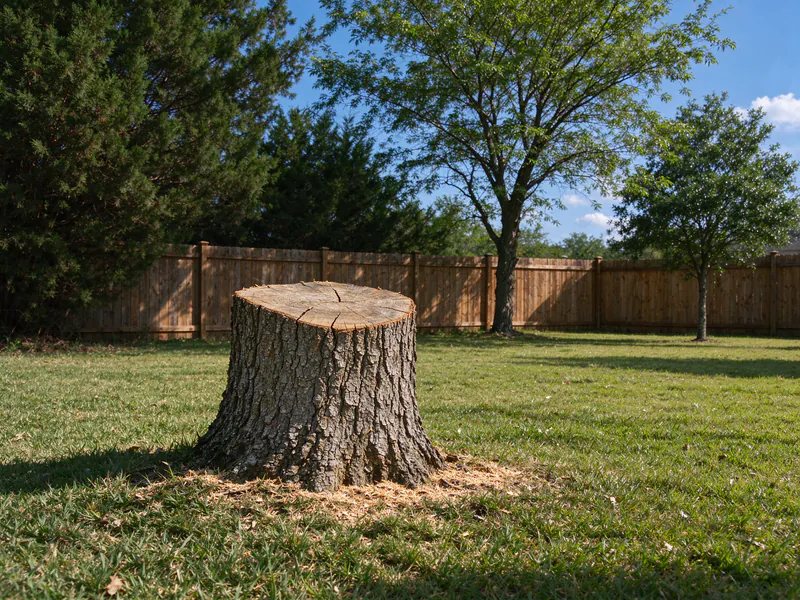
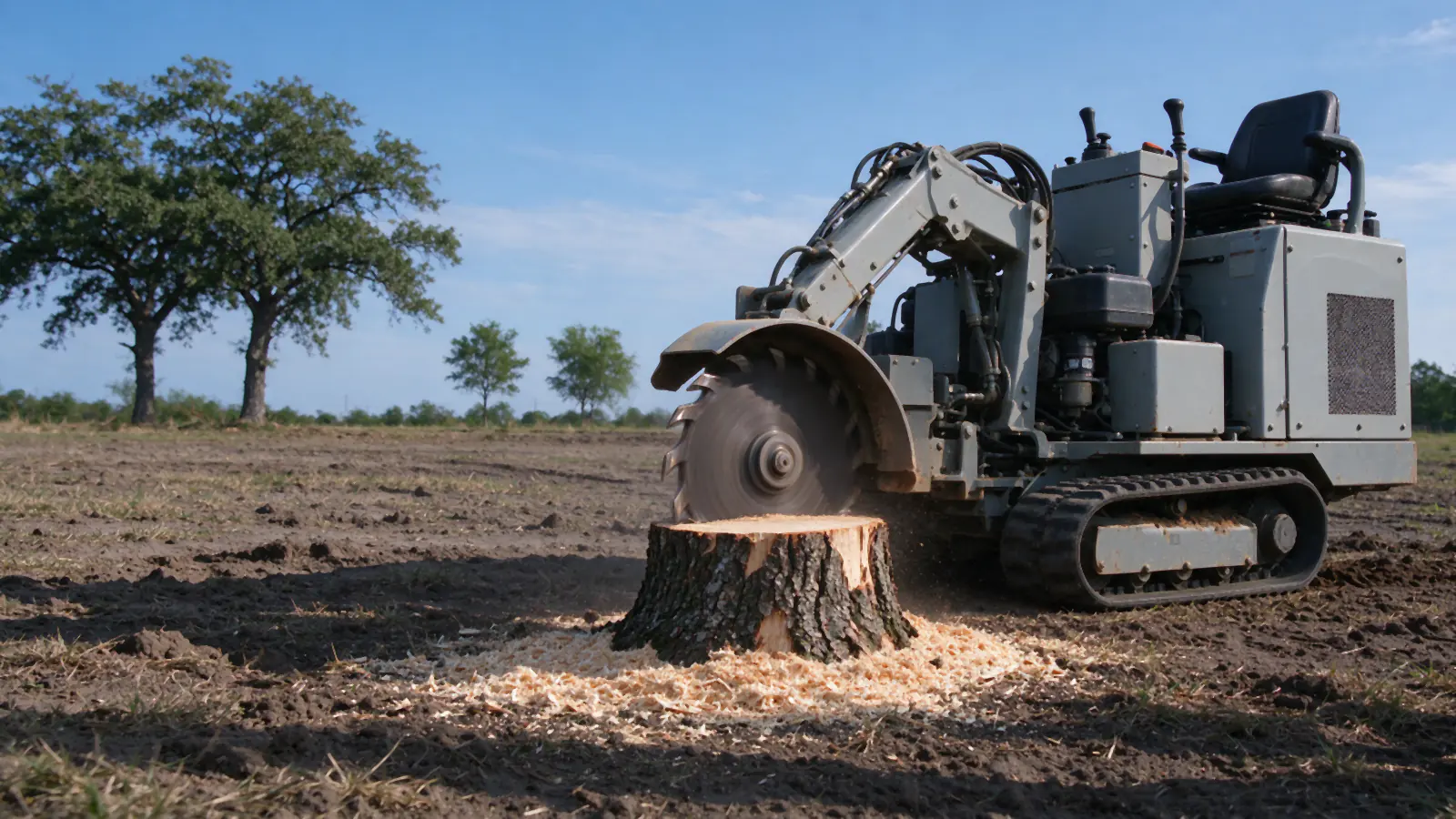
A stump grinder is a heavy wheel set with carbide teeth that sweeps side to side across the stump, chipping it away a few inches at a time. It works down to a set depth and stops, so the trunk base vanishes but the lateral roots stay where they are. That is fine under grass, because the roots rot and the soil above them is never asked to carry much. Grinders range from walk-behind units narrow enough for a garden gate to tracked and tow-behind machines for large stumps and open ground. On Denton’s clay, a heavy machine crossing a wet lawn leaves ruts, so wet-weather jobs favor smaller units or wait a few dry days.
Pulling
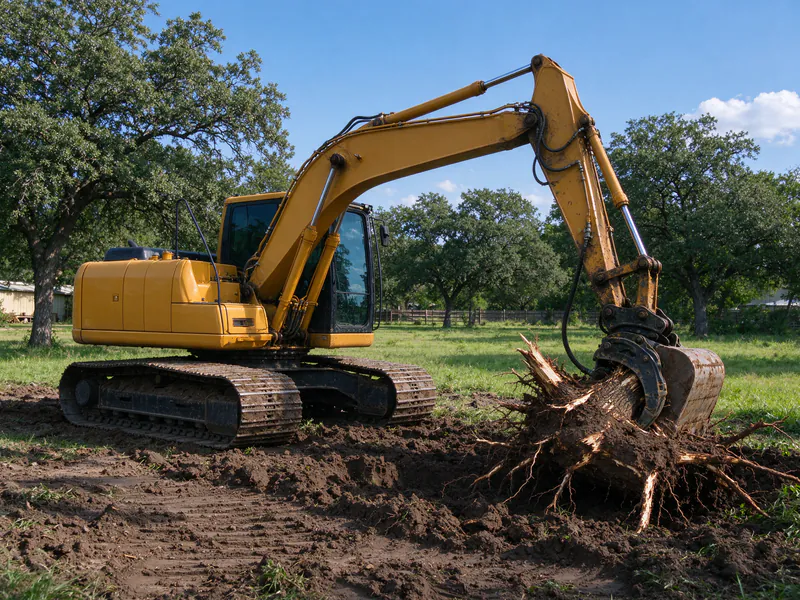
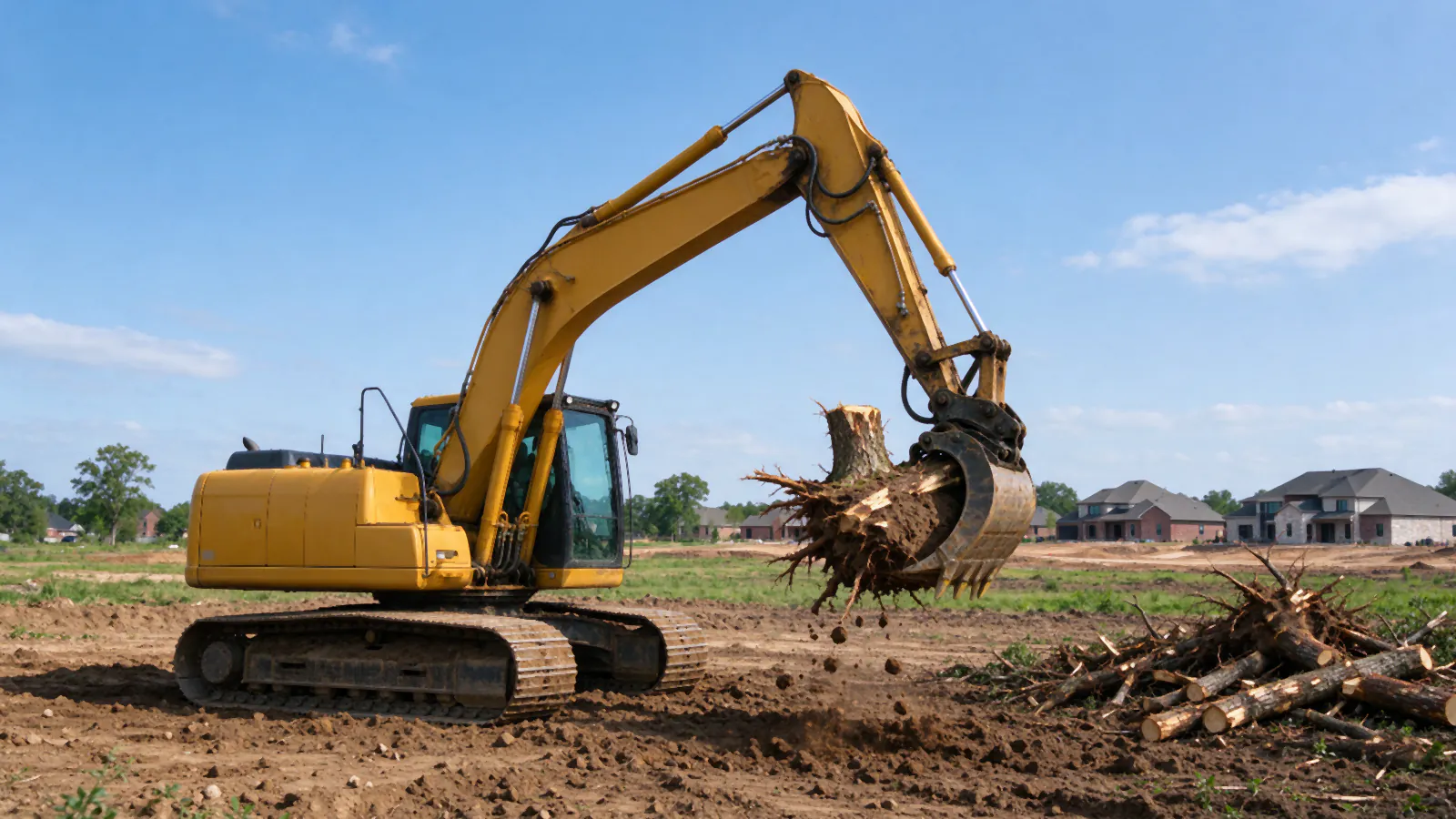
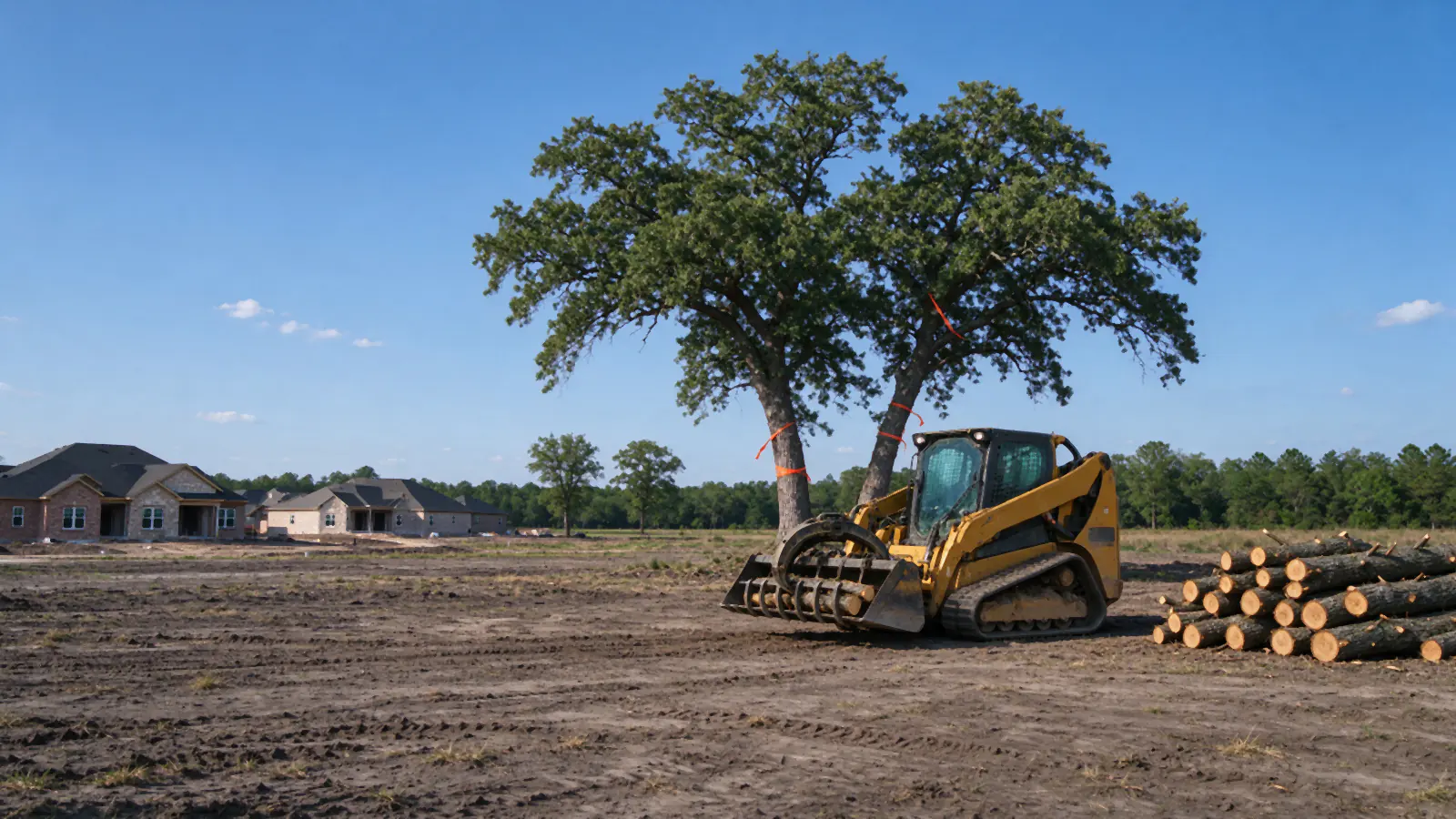
Pulling, also called stump extraction, uses an excavator or dozer to lift the stump and its main roots out of the ground. It is the method for anything structural. Wood left under a slab, footing or road base keeps decaying for years, and as it shrinks the soil above it settles, which shows up as cracks and low spots. On a building lot, pulling is usually part of clearing and grubbing, which strips roots and buried organics from the whole footprint rather than one stump at a time. The hole left behind is backfilled with soil in layers and tamped, and where a slab will sit, the builder’s fill and compaction standard takes over; land clearing and grading covers that handoff.
Leaving
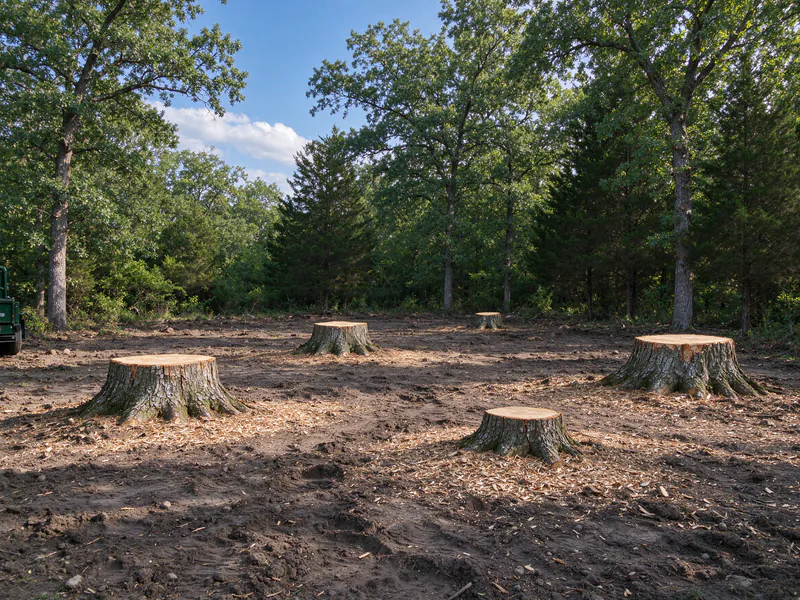
In woods, rough pasture and wildlife edges, a stump cut low and left alone does no harm and gives back to the soil as it rots. The catch is anything that rolls: a mower deck, a tire or a tractor. Stumps left in a pasture that will be shredded need to be cut flush or ground, which is why pasture clearing and forestry mulching both finish stumps at or near ground level.
How deep a stump grinder goes, and the 16-inch line
Depth is agreed per stump. For grass, a few inches below the surrounding soil is enough once grindings are raked out and topsoil goes back. For a new tree planted in the same spot, a garden bed or a paver base, grinding goes deeper so the new roots or base sit in soil rather than wood.
There is a legal line as well as a practical one. Under the Texas Utilities Code, using mechanized equipment to disturb soil 16 inches or deeper is excavation, and the excavator must notify Texas811 no earlier than 14 days and no later than 48 hours before starting, not counting weekends and legal holidays. Gas service lines, irrigation, electric feeds to wells and barns, and fiber drops all run shallow in yards and along fences. A grinder wheel will cut any of them, so locates are called before deep grinding, and stumps over marked lines are ground with care or left high.
Roots that come back
Grinding removes the stump, not the root system, and some species answer that by sprouting. Eastern redcedar cut below its lowest green branch does not come back at all, so cedar stumps only need grinding for looks or mowing. Mesquite and honey locust are different: both push new shoots from buds along their roots, sometimes several feet from the old stump, and a ground mesquite can return as a ring of switches within a growing season. Hackberry and Chinese privet sprout readily too, and privet thickets along Denton creeks recover quickly from cutting alone.
Those species need a plan beyond the grinder: mowing the sprouts until the roots run out of reserves, or a targeted treatment of the cut surface or the new growth. Keeping brush from growing back sets out the follow-up. On a lot with many such stumps, pulling or grubbing removes more of the root mass up front and cuts the sprouting down.
There is one more root effect worth knowing. A large tree near a house on Denton’s high shrink-swell clay has been drawing water from the soil under part of the slab for years. Once the tree is gone, that soil can slowly regain moisture and swell. Grinding the stump does not change that, and pulling it close to a footing can disturb the soil. Before removing a big tree beside a foundation, the foundation question belongs with a foundation professional.
A yard or lot full of stumps?
Send a count and a few photos. The walk-through decides which stumps get ground, which get pulled and which can stay.
Many stumps on one property
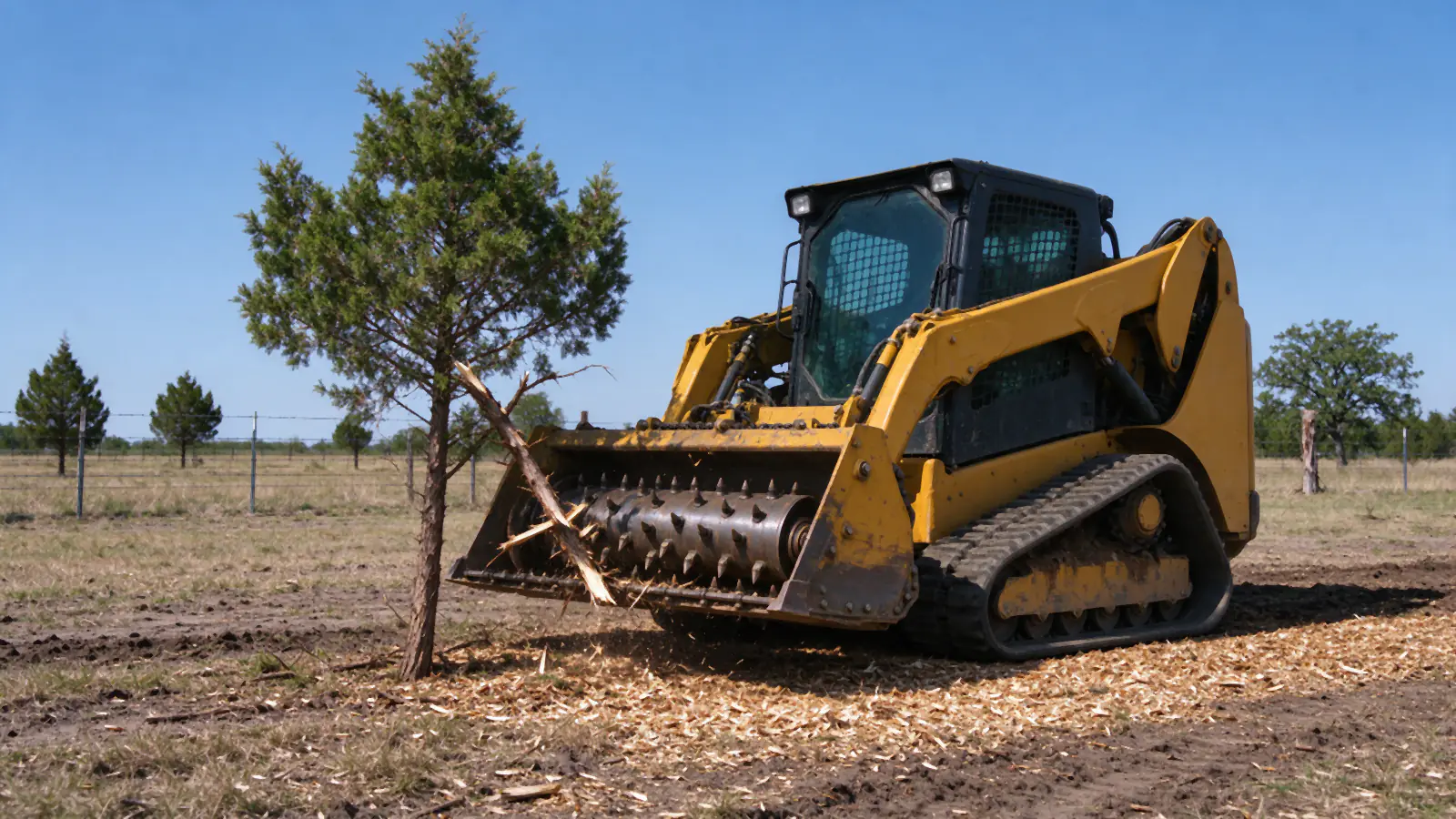
A handful of yard stumps is one job; a hundred stumps across an old cedar break after cedar clearing, or across a mulched pasture, is another. With that many, grinding stump by stump gets slow, and the choice shifts to the machine that covers ground. A mulching head takes stumps down to about grade in the same pass that clears the brush. A root rake on a dozer or loader pulls stumps and roots in sweeps where the ground will be farmed or built on. An excavator works through the stumps inside a pad or drive and leaves the rest. Where trees on the property are staying, selective clearing keeps grinders and loaders out of their root zones. On many acreage jobs, the honest answer is a mix: mulch the field, grind stumps along mowing lines and pull the ones inside the future house footprint.
Where the grindings and root balls go
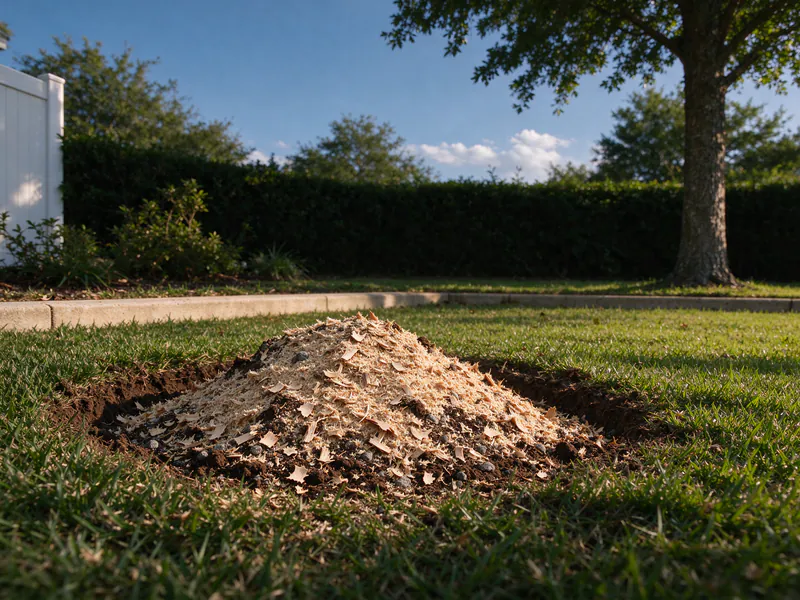
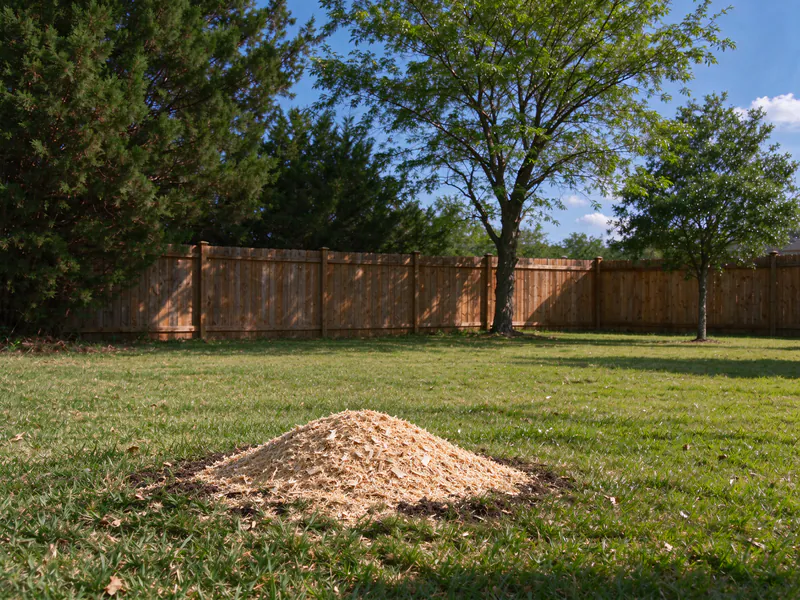
Grindings are a mix of wood chips and soil, and there are more of them than people expect, because a solid stump becomes loose chips full of air. Under a lawn, most are raked out, a little is left to fill the hole, and topsoil goes on top for seed or sod; the spot settles a little as the wood decays. In beds and paths, grindings make a rough mulch. Where they are not wanted, they are spread elsewhere on the property or hauled.
Pulled root balls are a heavier problem. Dirt clings to the roots, a root ball weighs far more than its wood, and landfills charge brush by the ton, so soil is shaken off before loading. Whether a facility accepts a root ball with soil attached as clean brush is confirmed before hauling. Inside Denton city limits, burning root balls is not an option, since the Fire Marshal’s Office does not allow open burning; land clearing debris removal covers hauling and disposal in detail.
What sets the price of stump work
There is no single local price for stump grinding that holds up, so stump work is priced from the stumps themselves. Diameter at ground level matters most, because the wheel has to chip through all of it. Species matters next: post oak and other dense hardwoods grind slower than cedar. Surface roots that need chasing, the number of stumps, rock in the root zone, gate width, wet ground and the distance between stumps all change the time on site. Pulled stumps add backfill and compaction, and grindings or root balls that leave the property add loading and tipping.
Moving a machine to the property costs about the same for one stump as for twenty, which is why a single stump carries a higher price per stump than a lot full of them. Stump work that is part of a larger clearing job is usually priced inside that job; the cost per acre guide explains how. For a sense of how a written scope should list stumps, depths and cleanup, see what a land clearing quote should include, and for stumps on a future home site, clearing land to build a house. A smaller lot with stumps and brush together is often simplest as one lot clearing job.