Last Updated:
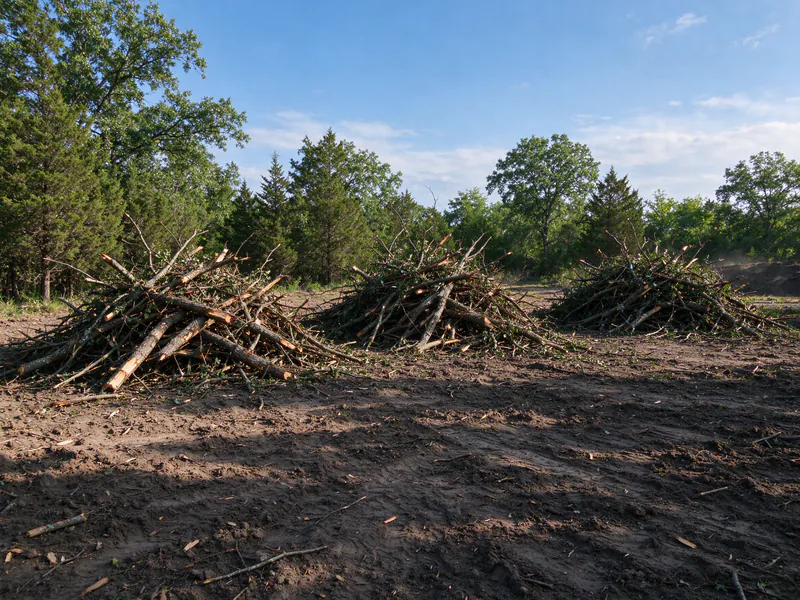
Post Oak Land Clearing Denton offers and manages land clearing debris removal across Denton and the west and north of Denton County, with the work done by licensed and insured contractors. Every clearing job ends with a pile of something: brush, logs, stumps, root balls, slash, and often old wire or dumped trash that was hidden in the growth. Where that material goes decides a large share of the price and what the ground looks like afterward, and around Denton, burning it is rarely the answer people expect.
What happens on the first visit
The first visit sizes the material and decides its destination before any of it is moved. Expect a walk of the standing brush and any existing piles, a look at log sizes and species, a check for wire, fencing, concrete and trash mixed into the wood, and a read on where a truck can load and turn.
Volume is the first question, and it is hard to judge by eye. The second is what the ground is for. A pasture can take a mulch layer, a yard can take some chips, and a house pad needs every scrap of organic material gone. The third is location: inside Denton city limits there is no burning, while in the county a burn is a narrow exception rather than a cleanup plan. By the end of the walk you should know which material gets mulched, chipped, hauled or left, and where the loads will go.
Five ways out for brush, logs and stumps
Clearing debris leaves a property one of five ways: ground into mulch where it stood, run through a chipper, hauled whole, burned where the rules allow, or buried. The first three cover nearly every job around Denton; the last two come with conditions that rule them out more often than not.
Mulched where it stands
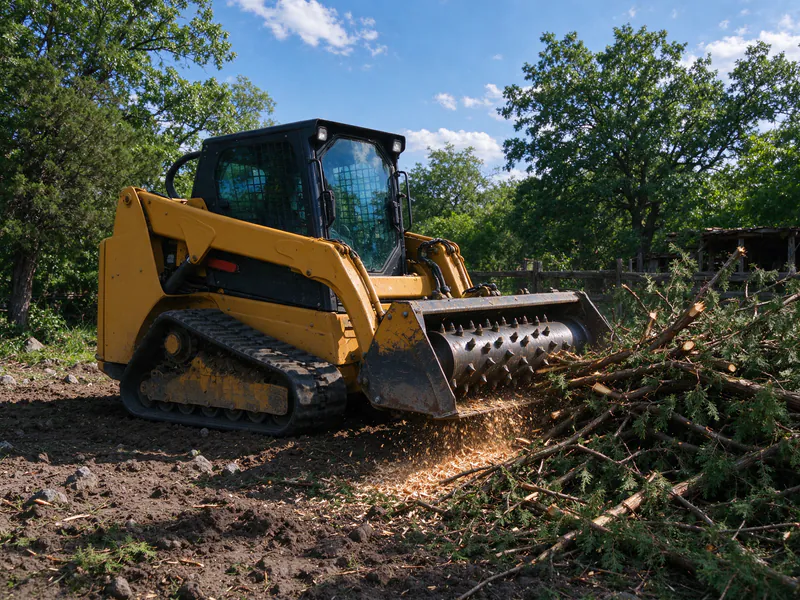
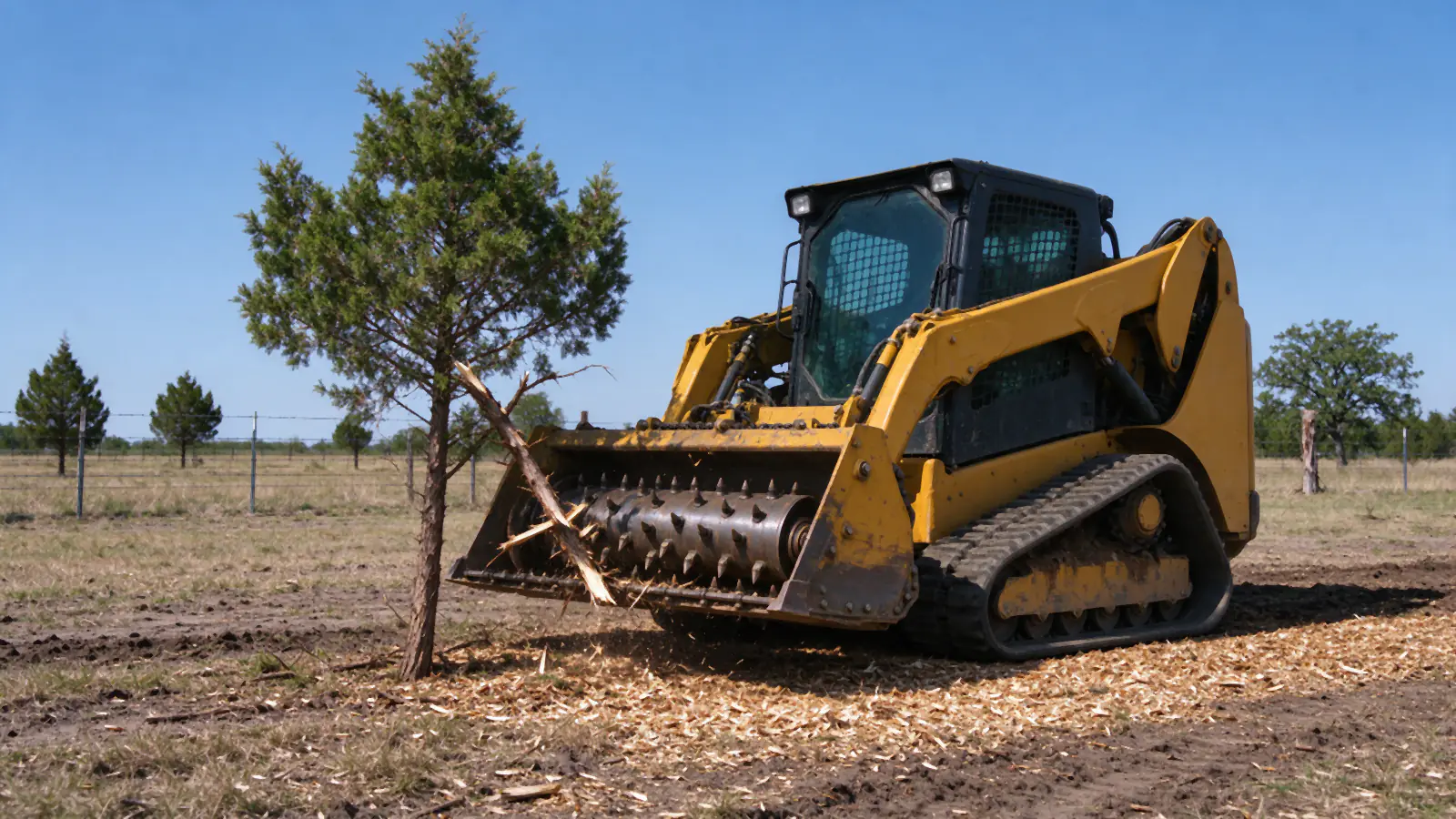
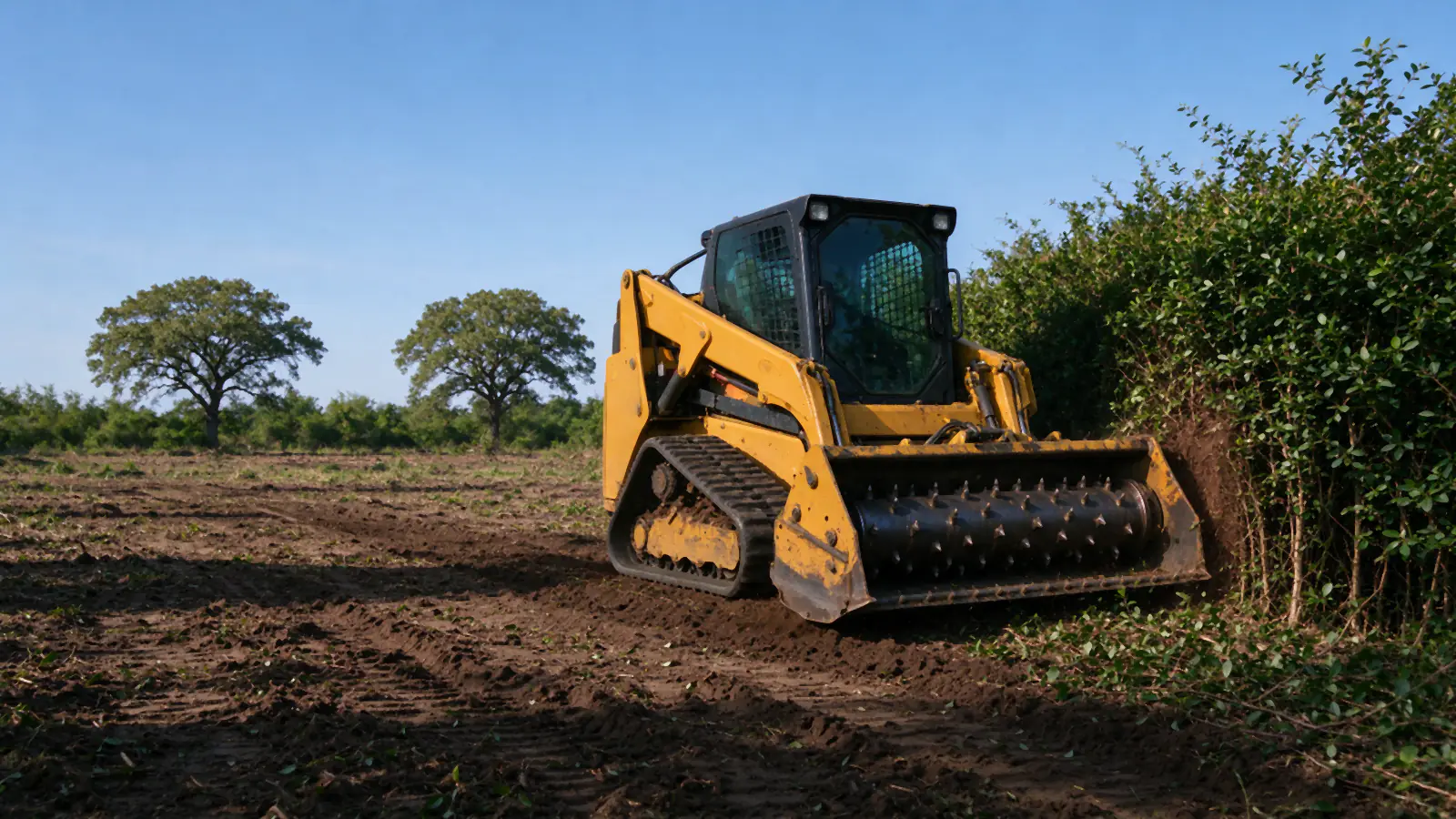
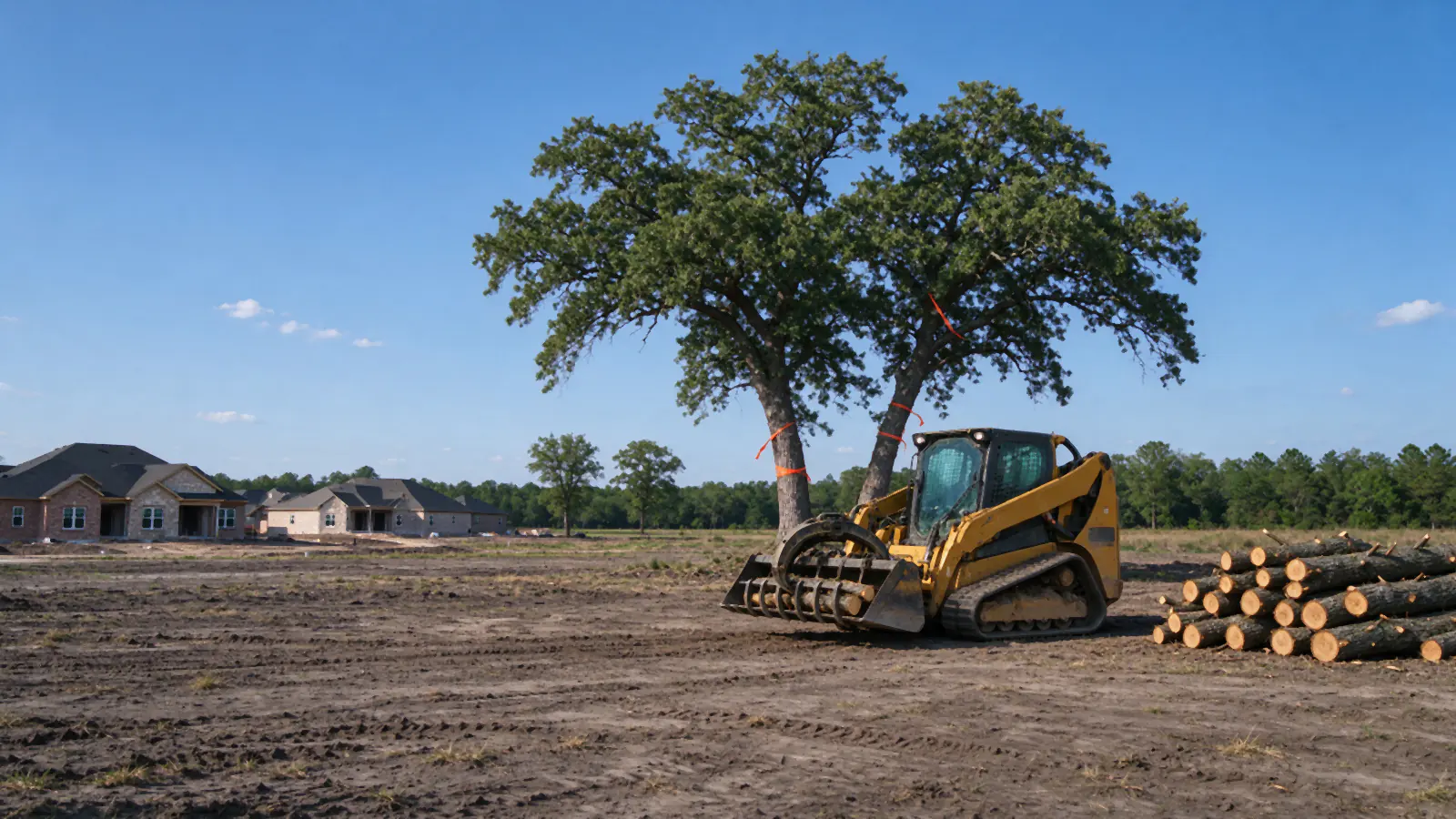
Mulching handles debris before it ever becomes debris. A forestry mulcher grinds standing brush and small trees into a layer on the ground, so there is nothing to load, haul or tip. On pastures, trails and wooded acreage that layer protects the soil and costs nothing to dispose of. Its limits are size and end use: big logs slow the head, and the layer cannot stay where a slab or drive is going. Forestry mulching covers the method, and forestry mulching vs land clearing compares it with clearing and hauling.
Chipped
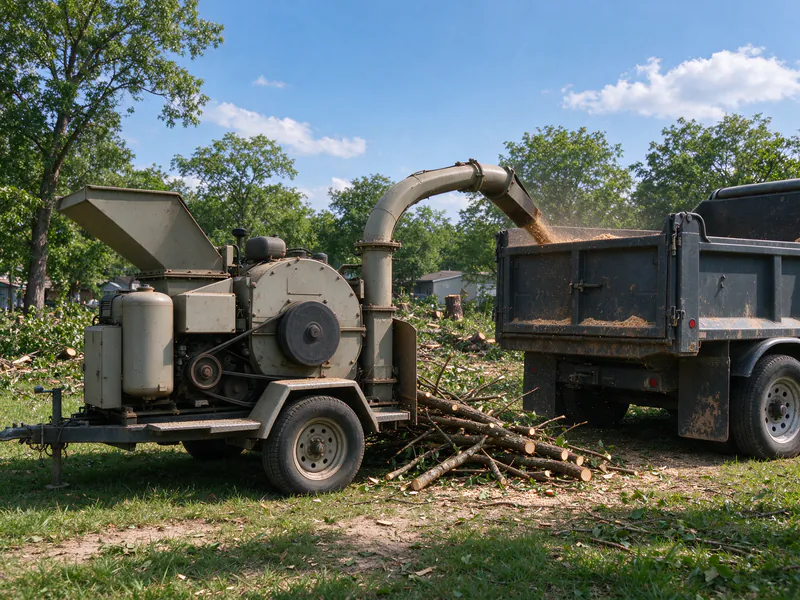
A chipper processes brush and limbs that have already been cut, fed in by hand or by a grapple, and blows out uniform chips. That makes it the tool for yards, tight lots and anywhere a mulcher cannot reach. The chips can be spread on paths and beds, piled for later use or hauled, and they pack into a truck far tighter than loose brush. Chipping is slower per ton than mulching because people feed the machine.
Hauled whole
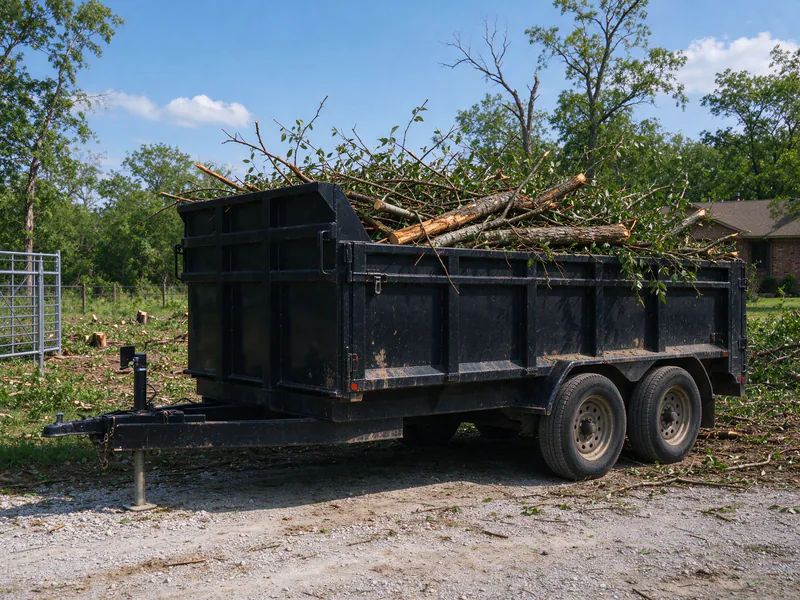
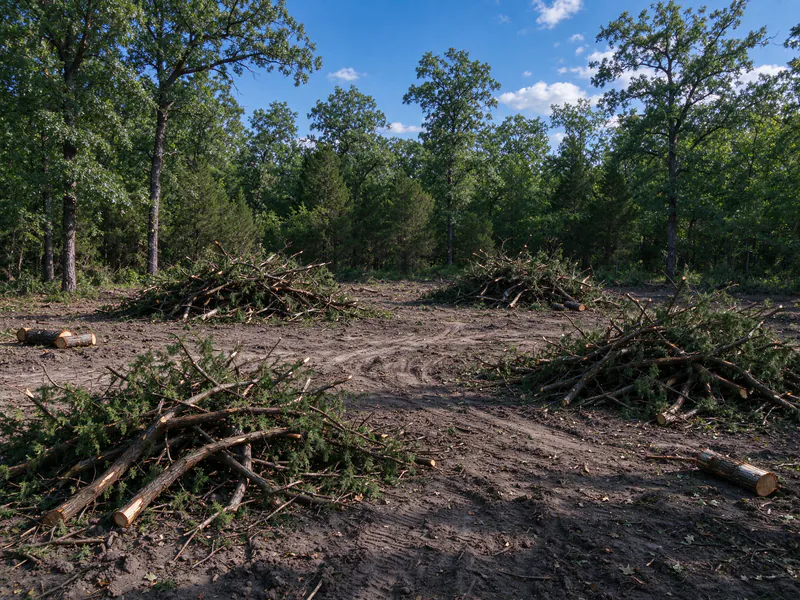
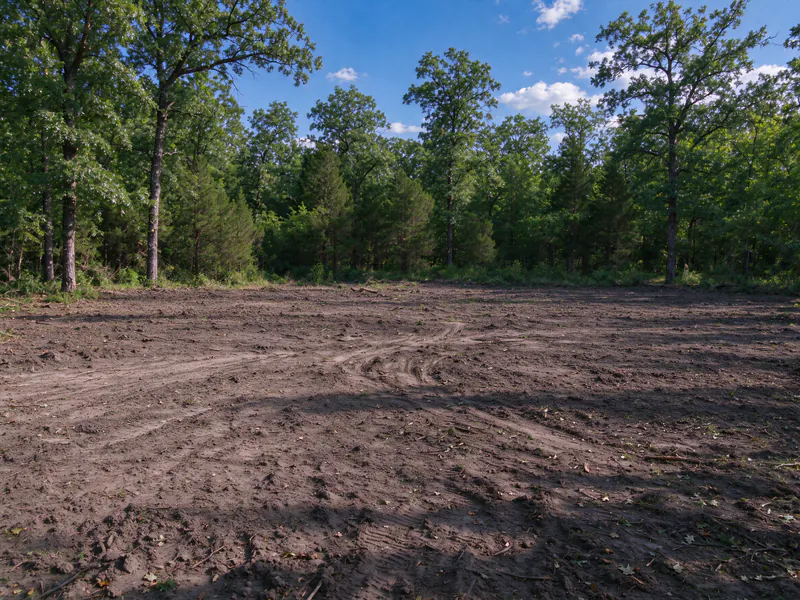
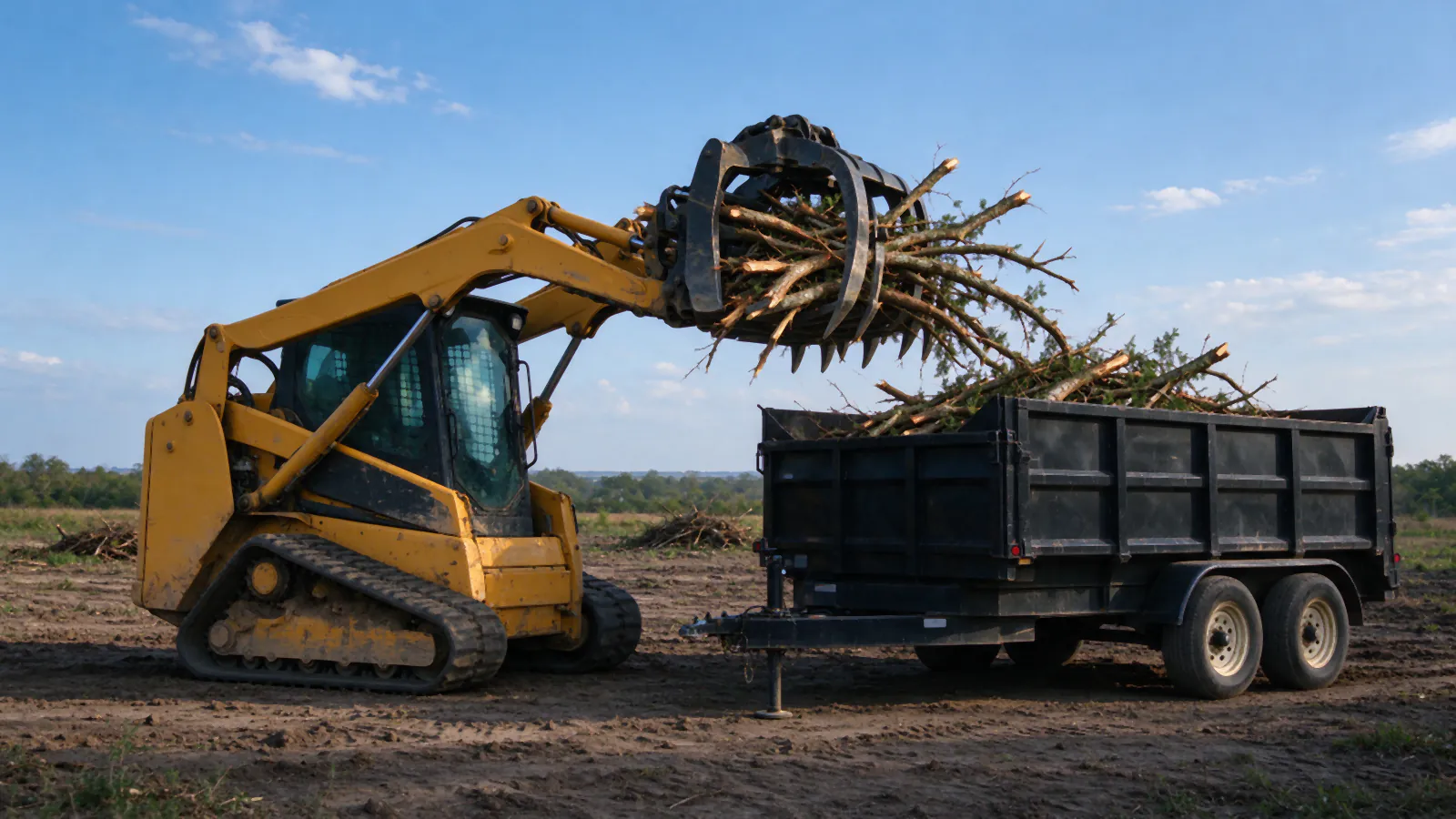
Hauling takes everything off the property: logs, root balls from stump removal, piles left from earlier work, and debris that is not wood at all. A grapple on a loader or a grapple truck picks up tangled brush that would take hours by hand, and dump trailers carry it to a facility. Hauling leaves the cleanest ground, which is why building pads cleared by clearing and grubbing usually go this route. It is also the costliest path per acre, because every load means loading time, driving time and a tipping fee at the gate.
Burned, where the rules allow
Burning is legal only in narrow conditions here, covered in the next section. Even where it is allowed, a burn pile needs clean wood, hours of attendance, the right wind and a burn day, and it leaves ash and a scorched patch that grows little for a while.
Buried
Burying brush and stumps in a pit avoids a haul but trades it for a soft spot. Wood underground rots, the fill above it sinks and the low place keeps sinking for years. A burial pit never belongs anywhere a structure, drive or septic field might go, and on a lot that will be sold, a buyer’s builder may find it later.
Why debris piles are bigger than the brush looked
Standing brush hides its volume. Once cut, limbs spring apart and stack with air between them, so a modest thicket becomes a pile far bigger than the space it grew in. Cedar is the worst offender, with dense, springy branches that resist packing, which is part of why cedar clearing leans on mulching rather than hauling. That loose volume is what fills trucks: a dump trailer of uncompacted brush can be full by volume while carrying little weight. Grinding or chipping before loading packs far more into each trip.
Weight works the other way. Logs and root balls are heavy, and soil clinging to root balls is heavier still, while landfills charge brush by the ton. Shaking soil off root balls before loading, and keeping concrete, wire and trash out of the wood, keeps a brush load priced as brush. Old T-posts, barbed wire and dumped junk turn up during fence line clearing on many rural tracts, and the walk-through can reduce those surprises but not eliminate them.
Not sure what to do with the piles?
Send a few photos and the acreage. The walk-through decides what gets mulched, what gets hauled and what can stay.
Burning brush around Denton: what the rules allow
The short answer is no inside the city and rarely in the county. The Denton Fire Marshal’s Office states plainly that it does not allow open burning within city limits. Outside the city, the county allows land-clearing burns only under state exceptions and only on a declared burn day, and Denton County’s air-quality status makes the exception narrow.
Denton County is part of the Dallas-Fort Worth ozone nonattainment area. Under TCEQ rule 30 TAC 111.209, burning brush from land clearing in a nonattainment county is allowed only when no practical alternative exists, meaning no option that is economically, technologically, ecologically and logistically viable. On most tracts, mulching or hauling is that alternative. Where a burn does qualify, state rules require it to start no earlier than an hour after sunrise and end an hour before sunset, stay attended, burn in winds of 6 to 23 mph and sit at least 300 feet downwind of off-site structures with people in them unless they agree in writing.
The Denton County Fire Marshal decides each morning between 8 and 9 a.m. whether it is a burn day; the status line is 940-349-2840. Brush, timber and yard trimmings are acceptable; lumber, construction material, tires, plastic and rubber are not. Drought brings mandatory county burn bans, most often in the dry late-summer months, and a ban can stop burning for weeks.
Towns add their own steps. Sanger issues a city open-burn permit and still routes holders to the county’s burn days. Justin lets the owner of a vacant lot burn weeds or grass only with a fire chief’s permit and the fire department present. Roanoke has its own burn permit with an inspection. The burning brush in Denton guide walks through each one.
Ash wood and the emerald ash borer quarantine
Emerald ash borer was identified in Denton in 2020, and the City of Denton counts ash as about 4% of its trees. Denton County sits inside the Texas Department of Agriculture’s emerald ash borer quarantine, along with Cooke, Wise, Collin, Dallas, Tarrant and other counties. The quarantine regulates moving ash wood and firewood out of quarantined areas, and the department lists treatments required before regulated material moves.
For a clearing job, that means ash is not loaded for a trip to a sawmill or a firewood buyer outside the area. It is mulched, chipped or taken to local disposal with the rest of the brush. If a stand includes ash and someone has suggested selling the logs, can timber pay for land clearing explains why that rarely works out around Denton even without the quarantine.
What the ground looks like when the debris is gone
The finish depends on the path. Mulched ground is covered with a layer of chips and shredded wood. Hauled ground is bare, with grapple scrapes and tire tracks at the loading spots, which are raked and smoothed; on Denton’s clay, bare ground then needs cover before the next hard rain, which erosion control covers. Burned spots leave ash and baked soil. Wherever the scope includes it, the finish is written down: what was removed, what stayed and where it went.
What debris removal costs
No public per-acre figure exists for haul-off, so debris is priced from its parts. The disposal part is public. At the City of Denton Landfill, 1527 S. Mayhill Road, brush costs $30 a ton for a Denton customer with pieces up to 12 feet, $35 a ton for longer pieces and $40 a ton for non-Denton customers, with a $26.50 minimum a load. Construction and demolition debris costs $66.50 a ton and clean concrete $23.50 a ton, which is why trash and concrete are sorted from the wood. Denton’s residential curbside service takes up to 4 cubic yards of brush a week at no extra charge, with larger piles billed at $75 per staff hour in 15-minute increments; it suits yard trimming, not a cleared lot.
The trucking part follows local wages and distance. Heavy and tractor-trailer truck drivers in the Dallas-Fort Worth metro earn a mean $30.16 an hour against $28.71 nationally (BLS OEWS). A wage is not a billing rate: the billed price also carries the truck, fuel, insurance and overhead. Beyond that, the number of loads, the distance to the facility, loading time, whether mulch can stay and whether any burning is allowed set the total. The cost per acre guide shows how haul-off sits inside a clearing price, and clearing land in Denton puts debris in the context of the whole job. For piles of brush already on the ground, brush clearing and lot clearing often fold the cleanup into one scope.