Last Updated:
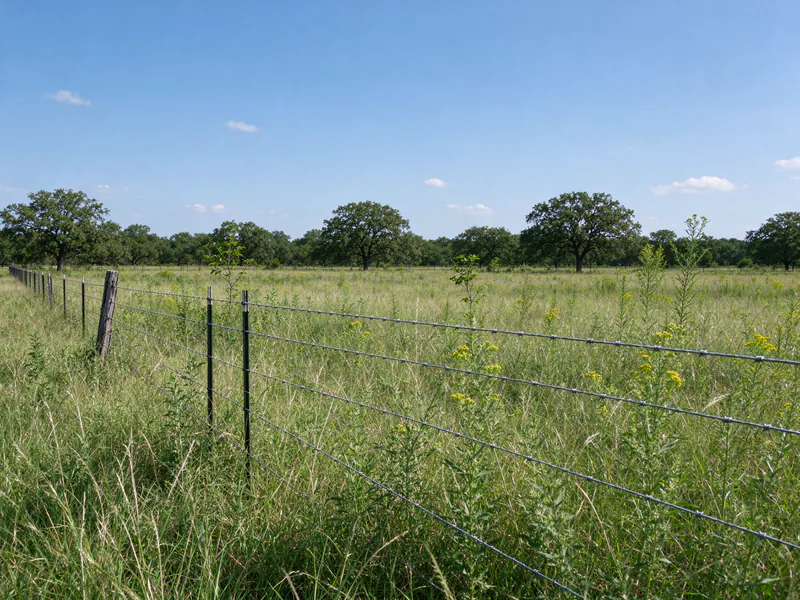
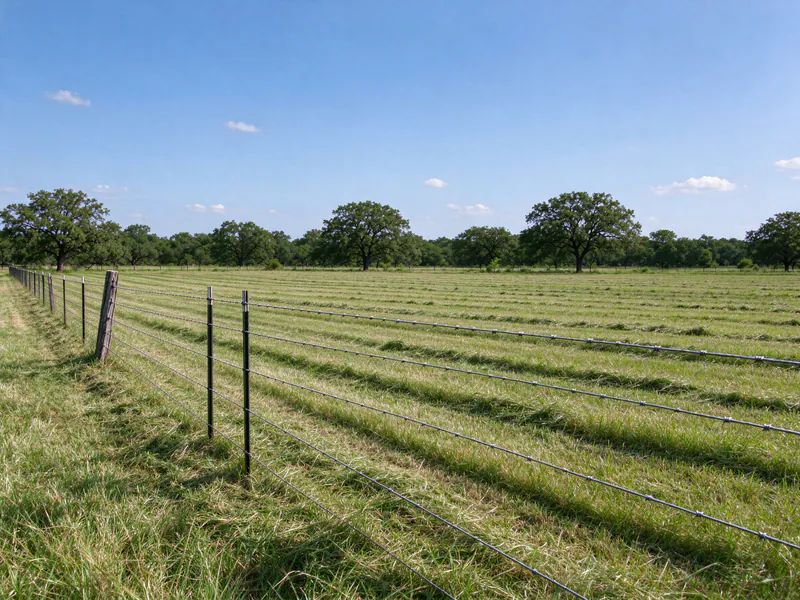
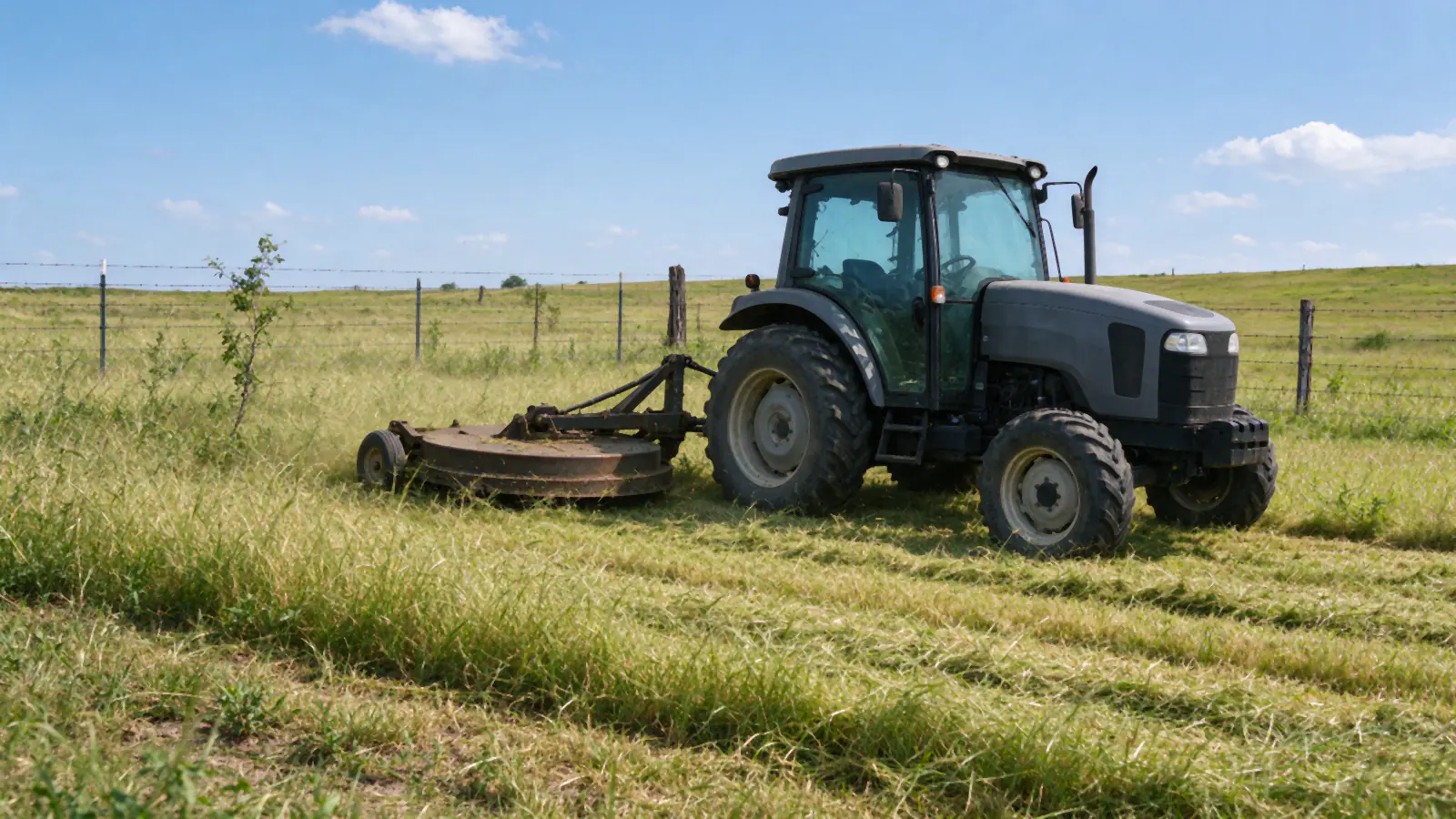
Post Oak Land Clearing Denton offers and manages brush hogging across Denton and the west and north of Denton County, with the work done by licensed and insured contractors. Brush hogging means shredding tall grass, weeds, briars and small saplings with a rotary cutter, usually pulled behind a tractor. It is the job for open ground that has gotten ahead of a regular mower: a pasture gone to weeds, a vacant tract, a field edge filling with seedlings. It cuts what stands above the ground and leaves the roots alone, which is exactly why it suits grass and exactly why it will not clear woods.
What happens on the first visit
The first visit is mostly about what the grass is hiding. Expect a walk of the ground to find and flag stumps, rock, old T-posts, loose wire, culvert ends and holes, a look at how tall and how woody the growth is, and a check of gates, slopes, ditches and wet spots against the machine that will do the work.
Most of the risk on a brush hogging job is invisible from the road. A stump hidden in waist-high grass can break a cutter’s gearbox; a coil of old fence wire wraps around the blade spindle; a T-post left from a fence long gone becomes a projectile. The walk finds what it can and marks it, and anything too big for the cutter is noted with the method that would handle it. Site history helps: a field that held a homestead, a dump spot or an old fence row deserves a slower look. Nothing about a walk catches every buried object, so the cutter still runs at a pace that lets the operator stop.
How a rotary cutter works and where it stops
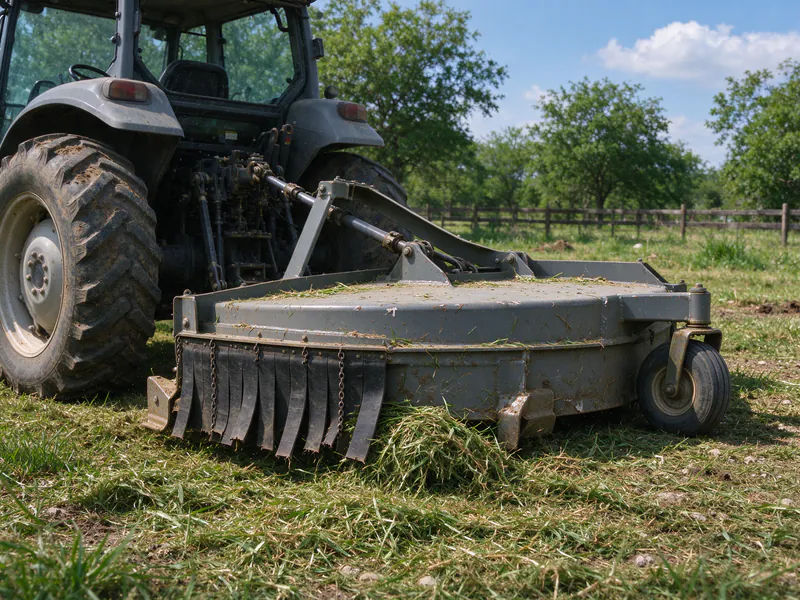
A rotary cutter is a steel deck with two or more heavy blades hung loosely from a spinning hub, driven by the tractor’s power take-off. The blades swing out with speed and swing back when they strike something solid, and a round stump jumper under the hub rides up over low obstacles. That design lets it chew through tough growth that would wreck a finish mower, at the price of a rough cut several inches high and a layer of shredded thatch left behind.
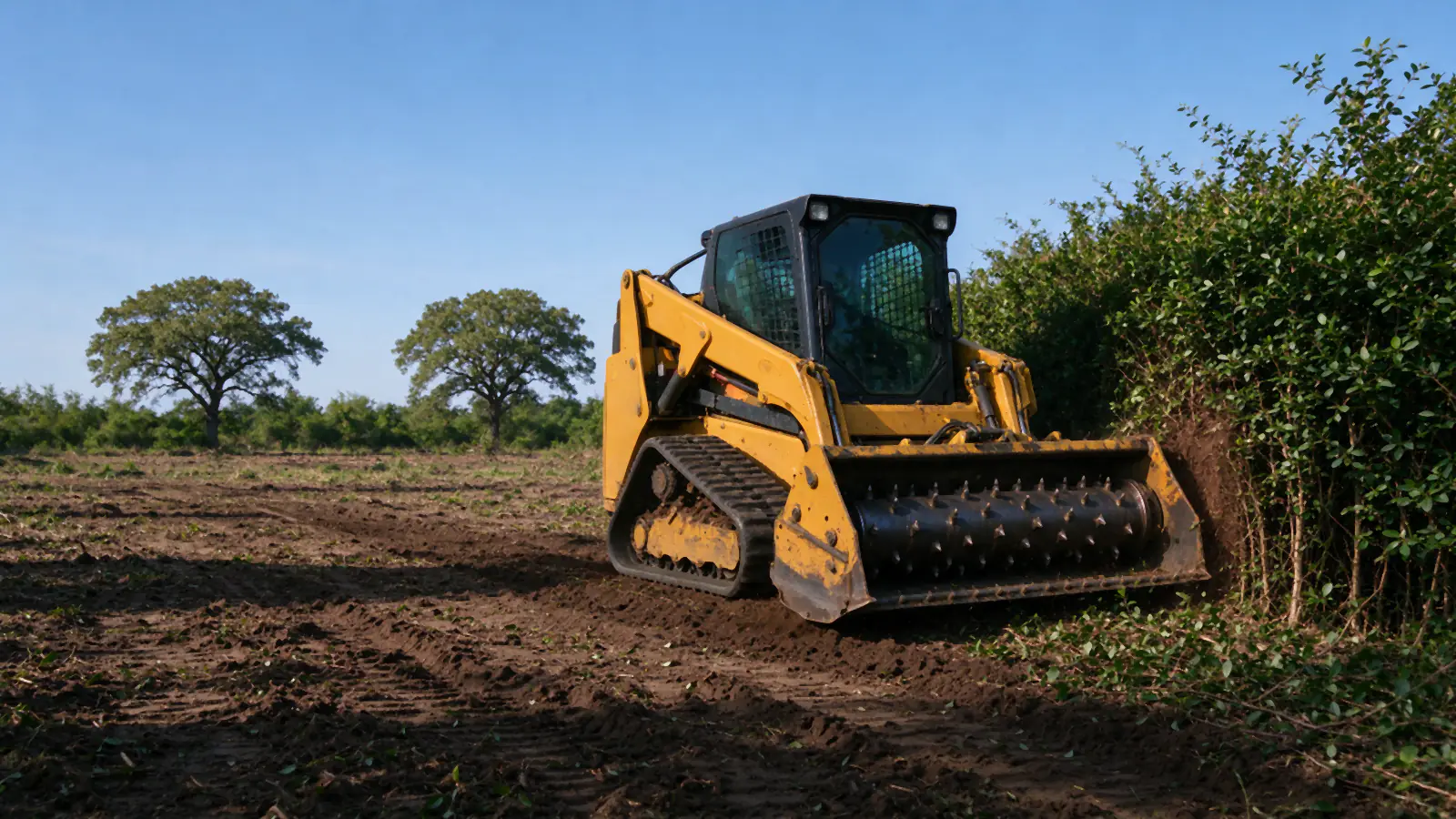
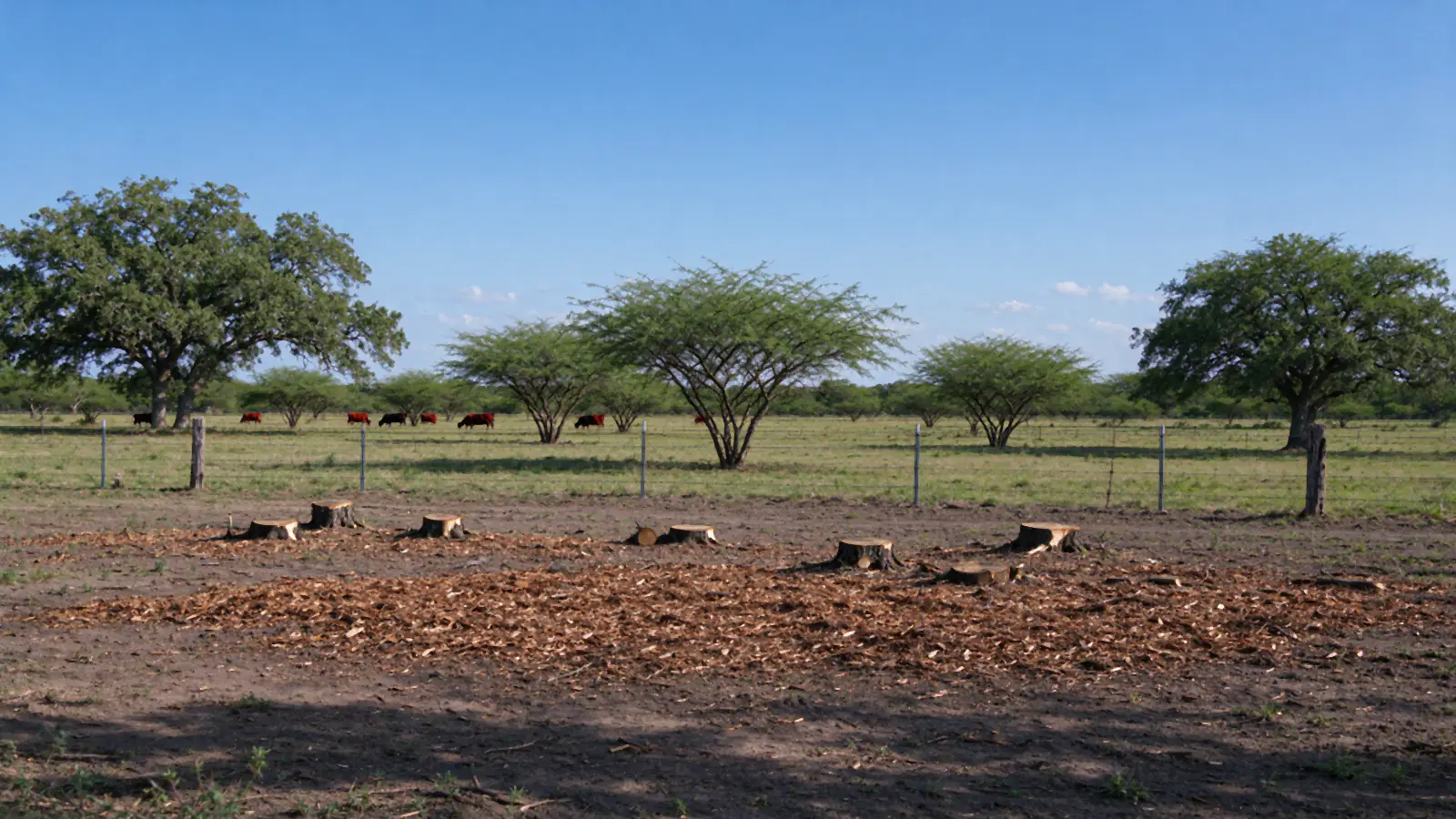
Cutters are rated by their makers for a maximum stem size, a couple of inches on most tractor models and more on heavy-duty ones. Within that rating, saplings are shredded cleanly. Beyond it, stems bend under the deck and spring back, or split into angled, sharp stubs. Those stubs are the hidden cost of pushing a cutter too far: they puncture tires and can injure livestock and horses. When a field has crossed from weeds and seedlings into saplings and young trees, brush clearing or forestry mulching takes the stems to ground level instead.
Fenced lots and narrow gates
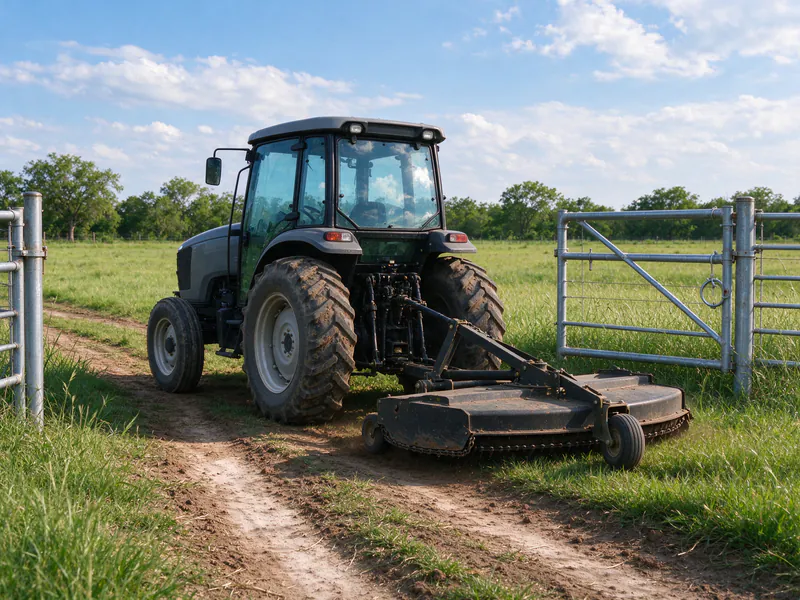
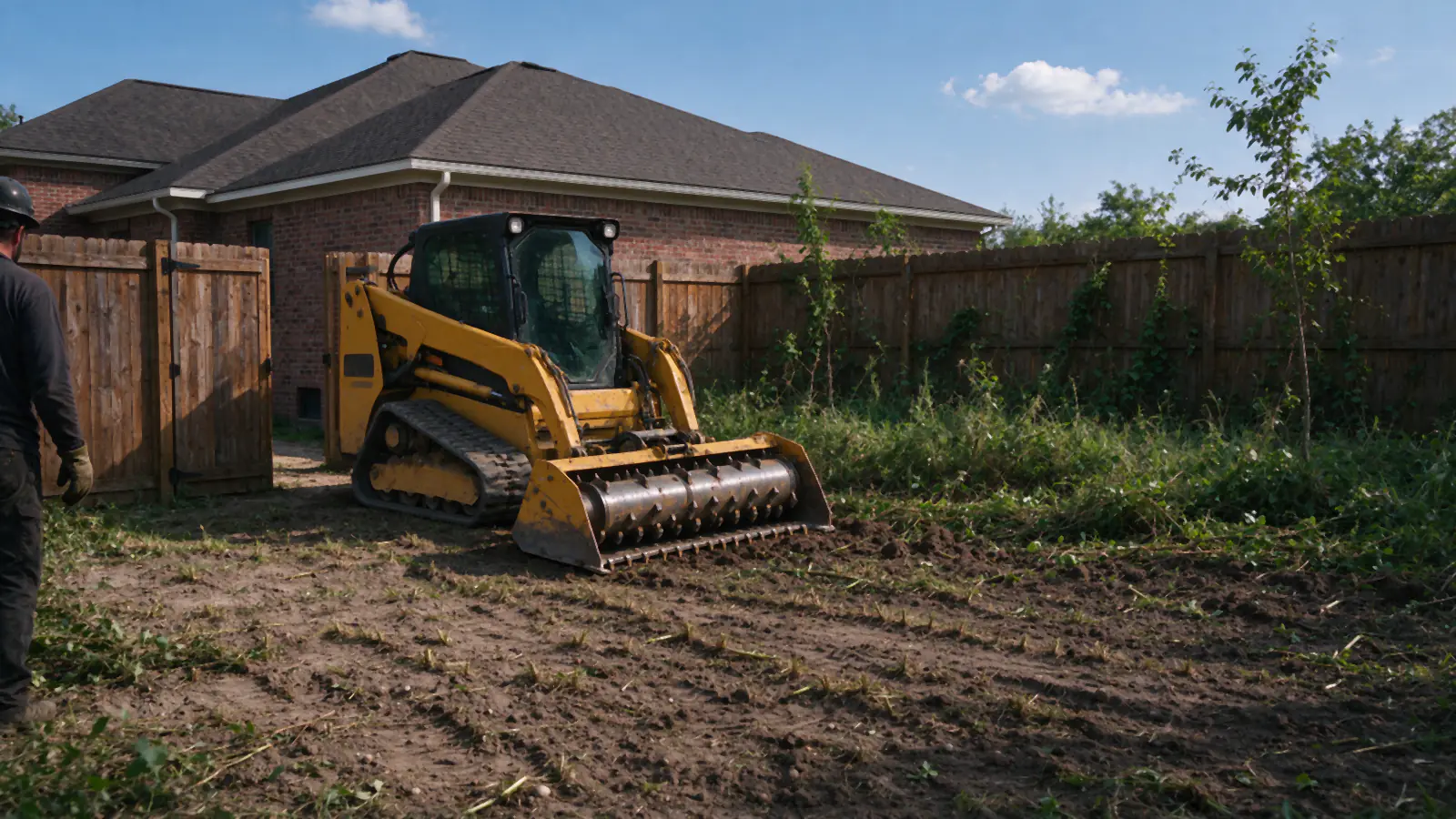
Homeowners report trouble finding anyone between a regular mowing service and a skid-steer clearing setup, especially for a fenced backyard that has gone wild. The constraint is usually the gate. A tractor with a rotary cutter needs a wide opening and room to turn, while many backyard gates were built for a push mower. The walk-through measures the gate against the machine, and where the answer is a smaller machine or a removed fence panel, the plan and the price say so. A backyard grown past saplings is covered on overgrown lot clearing.
Thrown objects and setbacks
The same swinging blades that shred brush can fling rock, glass and metal well beyond the deck. Cutting direction is planned so the discharge points away from houses, roads, vehicles and stock, and people stay well clear of a running cutter. Along road frontage and near homes, the last passes are made slowly with the discharge turned inward. Overhead lines matter on tall equipment too: Texas law keeps any machine 6 feet from a high-voltage line unless the line operator has arranged otherwise.
Timing the mowing
When the cutter runs changes what it accomplishes, and Denton’s weather sets the windows.
Weeds are best shredded before they set seed, so a pass in late spring and another in late summer keep the seed bank from refilling. Woody resprouters behave differently. Mesquite and honey locust shredded once come back from root-crown buds as several stems where one stood, so mowing holds them down but does not kill them; pasture clearing covers taking them out for good. Redcedar seedlings, on the other hand, cannot resprout, so a shredding pass that catches them small removes them permanently.
Ground conditions decide the rest. May and October are Denton’s wettest months, and the Sanger and Slidell clays west and north of the city stay slick at the surface after rain, so tractor tires spin and leave ruts that bake into ridges. July and August are the driest months and the firmest ground, but dry grass and a blade striking rock can throw sparks. Late-summer burn bans in Denton County are a fair signal that the grass is dry enough to treat that risk seriously, keeping water at hand and avoiding windy afternoons. When to clear land in North Texas explains the seasons in more detail.
Field too tall for your mower?
Send the acreage and a photo. The walk-through checks what is hiding in the grass before the cutter runs.
Holding cleared ground with follow-up passes
Brush hogging is also how cleared land stays cleared. After pasture clearing or mulching, seedlings and resprouts come back from the seed bank and the roots left in the ground. A shredding pass once or twice a growing season keeps them at a size a cutter can handle, so the land never drifts back to a mulcher job. The keeping brush from growing back guide lays out a schedule, and follow-up passes can be booked as their own visits.
Inside Denton, the city’s vegetation rule adds a reason to keep the schedule. Grass and weeds must stay at 12 inches or less. On tracts of 5 acres or more, that rule applies within 100 feet of an open street and within 100 feet of a neighbor’s improved property, and cultivated hay must be mowed within 20 feet of adjacent improved property. Areas that must stay natural, such as mapped sensitive areas and conservation easements, are exempt and should be left uncut.
What the ground looks like after
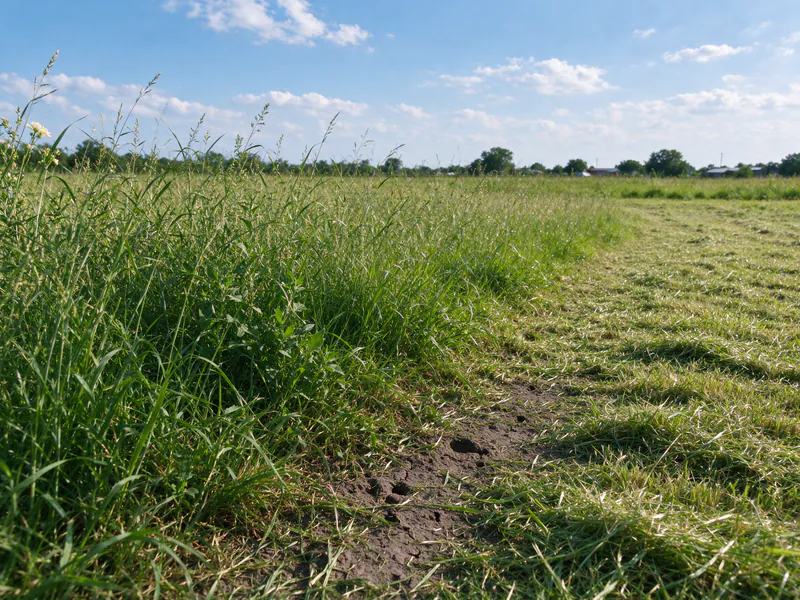
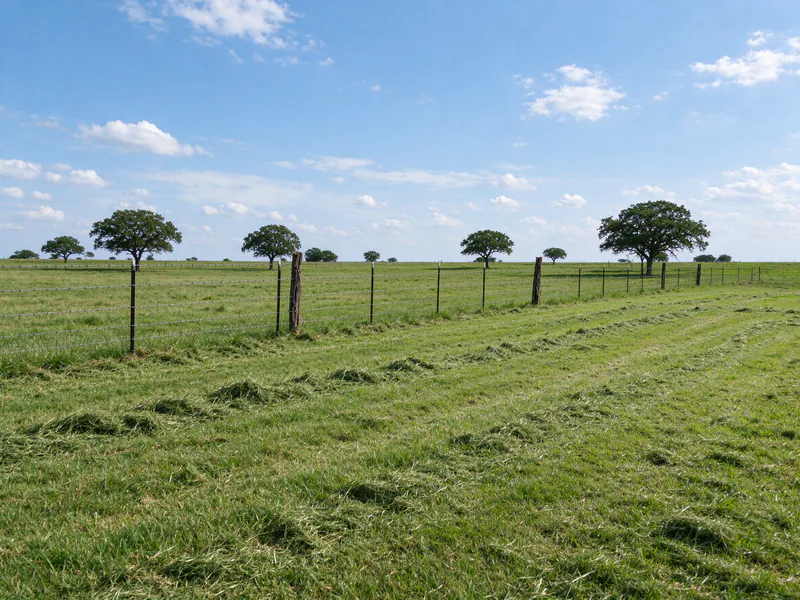
The finish is a rough cut, not a lawn. Grass is left several inches tall with a layer of shredded thatch on top, which settles, shades the soil and breaks down over the following weeks. Nothing is raked, piled or hauled, so there is no debris bill. Trash that turns up in the grass, such as wire, tires and scrap, is set aside or hauled as agreed. Saplings within the cutter’s rating are shredded to short stubs; anything larger is left standing and noted. Mowing does not open the soil, so it stays far above the 16-inch depth that calls for a Texas811 ticket, and the ground is ready to mow again as soon as it grows.
What brush hogging costs around Denton
The Texas A&M AgriLife custom rate survey puts pasture shredding at about $40 an acre in its East region, which includes Denton County. That is a farm-and-ranch figure for open pasture with a tractor and rotary cutter, where the cutter can run in long, steady passes.
Several things push a job above that figure. Small acreage carries the same trip to the site as a large field, so a one-acre lot costs more per acre. Saplings near the cutter’s limit slow the pace, and so do slopes, ditches, hidden debris and tight fenced corners. Growth beyond the cutter’s rating is a different job, priced as brush clearing or mulching rather than shredding. The cost per acre guide puts shredding beside the other methods, the cost calculator gives a first range, and clearing land yourself vs hiring helps if you are weighing a rented cutter.