Last Updated:
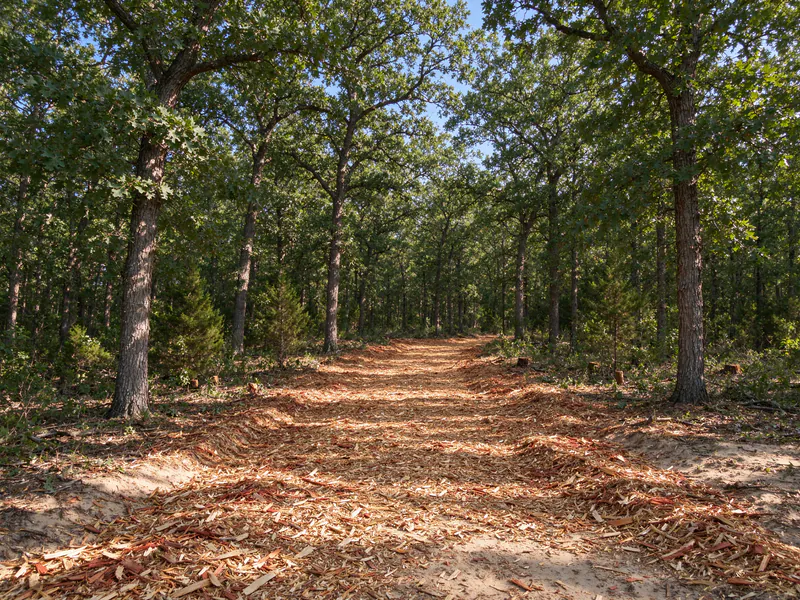
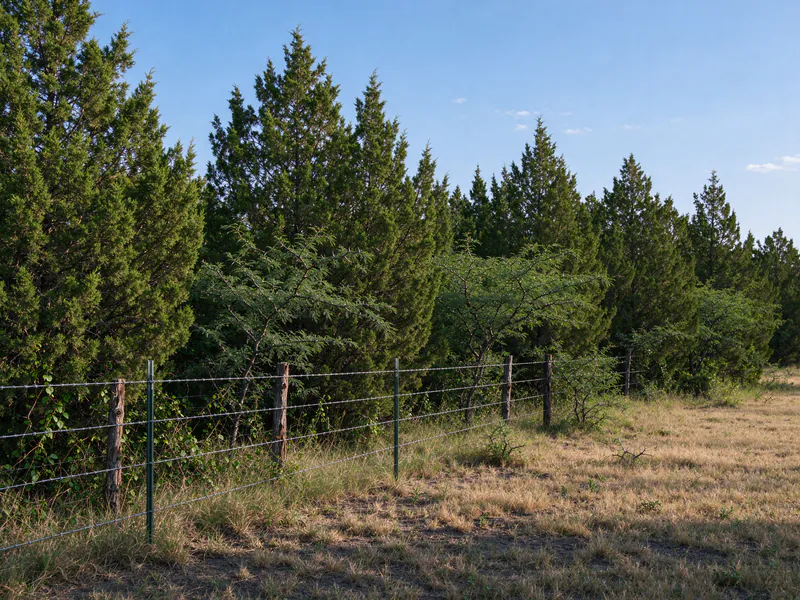
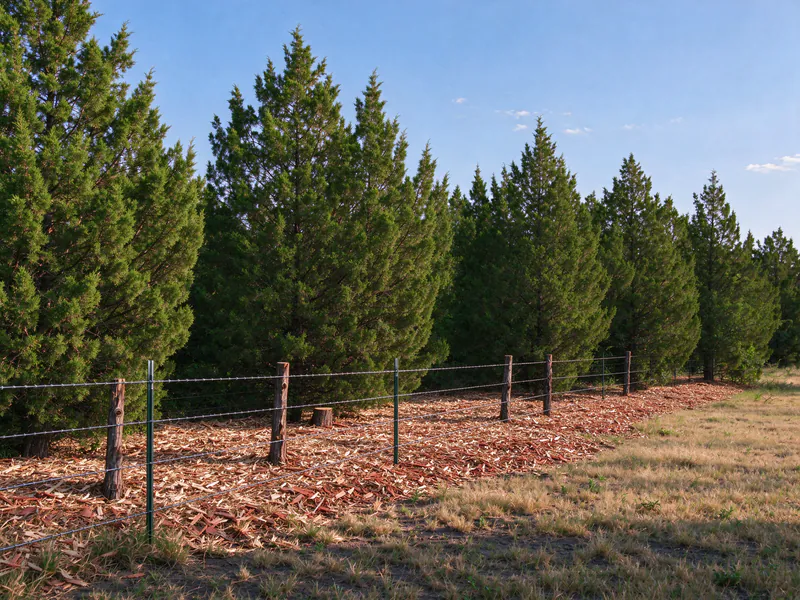
Post Oak Land Clearing Denton offers and manages forestry mulching across Denton and the west and north of Denton County, with the work done by licensed and insured contractors. A forestry mulcher grinds brush, cedar, vines and small trees where they stand and spreads what it makes back over the ground. Nothing gets piled, burned or hauled, the topsoil stays put and the roots keep holding the soil. That makes mulching the usual answer for pastures, trails, fence lines and wooded acreage, and the wrong answer, on its own, for a house pad.
What happens on the first visit
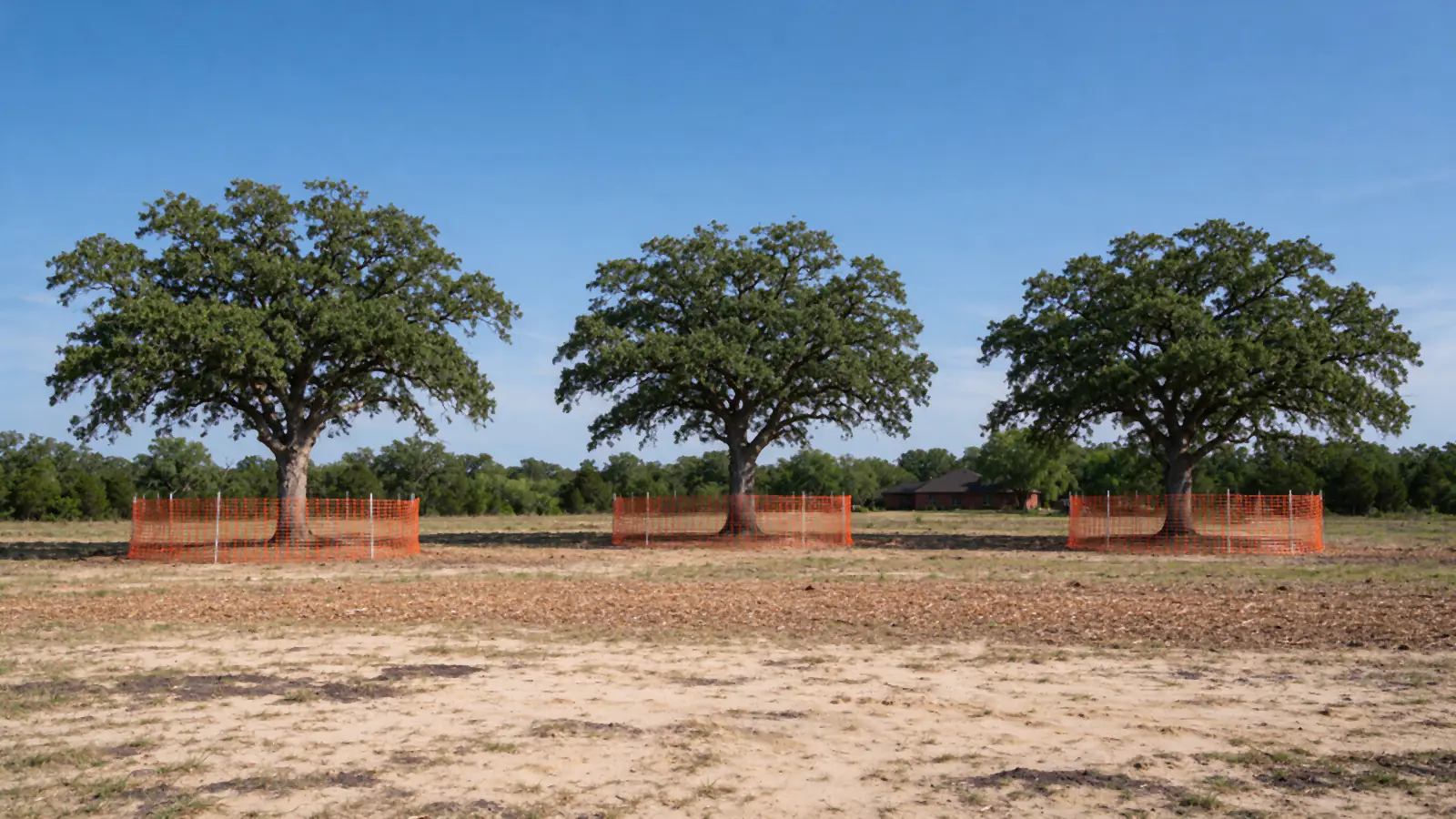
The first visit sets the limits of the job and decides whether mulching is the right method at all. Expect a walk of the boundary, flags on every tree that stays, a look at stem sizes and species, a check for wire, old fencing and buried junk, and a read on how wet the ground is and where a machine can get in.
The walk also settles the paperwork. Inside Denton city limits that means asking which trees are protected and whether the job needs a clearing and grading permit; outside the city it means the town’s rules or the county’s. Overhead lines get noted, because a mulcher working within 6 feet of a high-voltage line needs an arrangement with the line operator first. By the end you should know what comes out, what stays, which permits apply and what the ground will look like afterward.
How a mulching head works and what it leaves behind
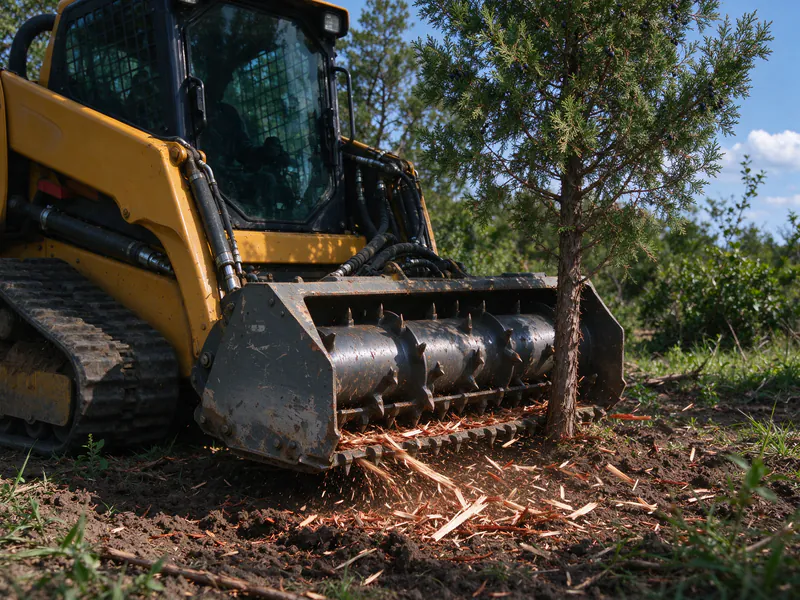
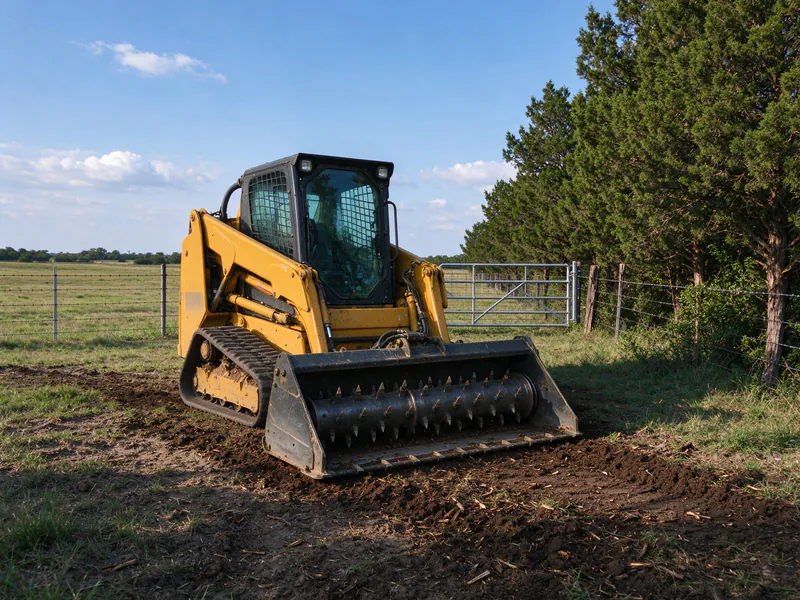
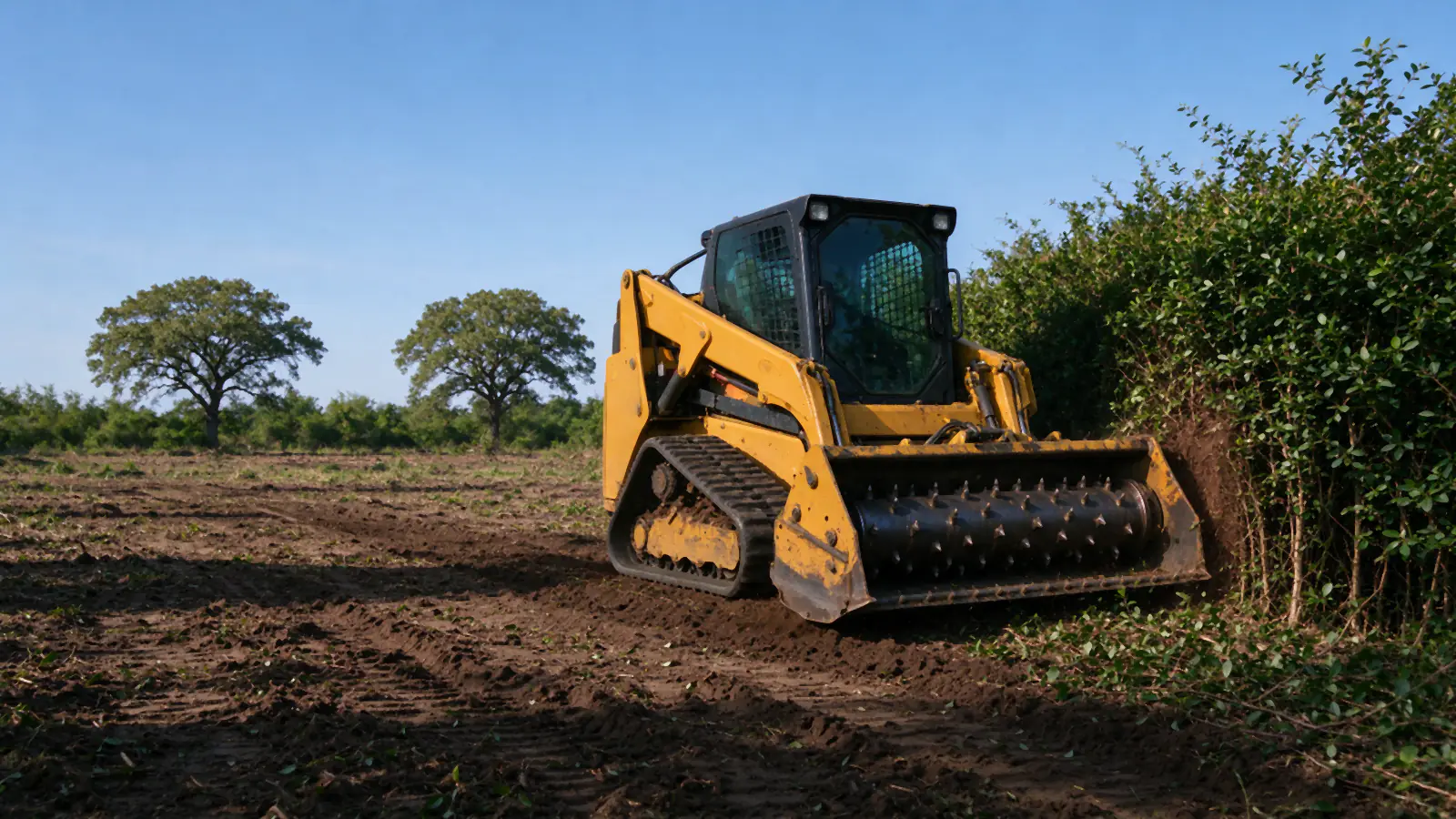
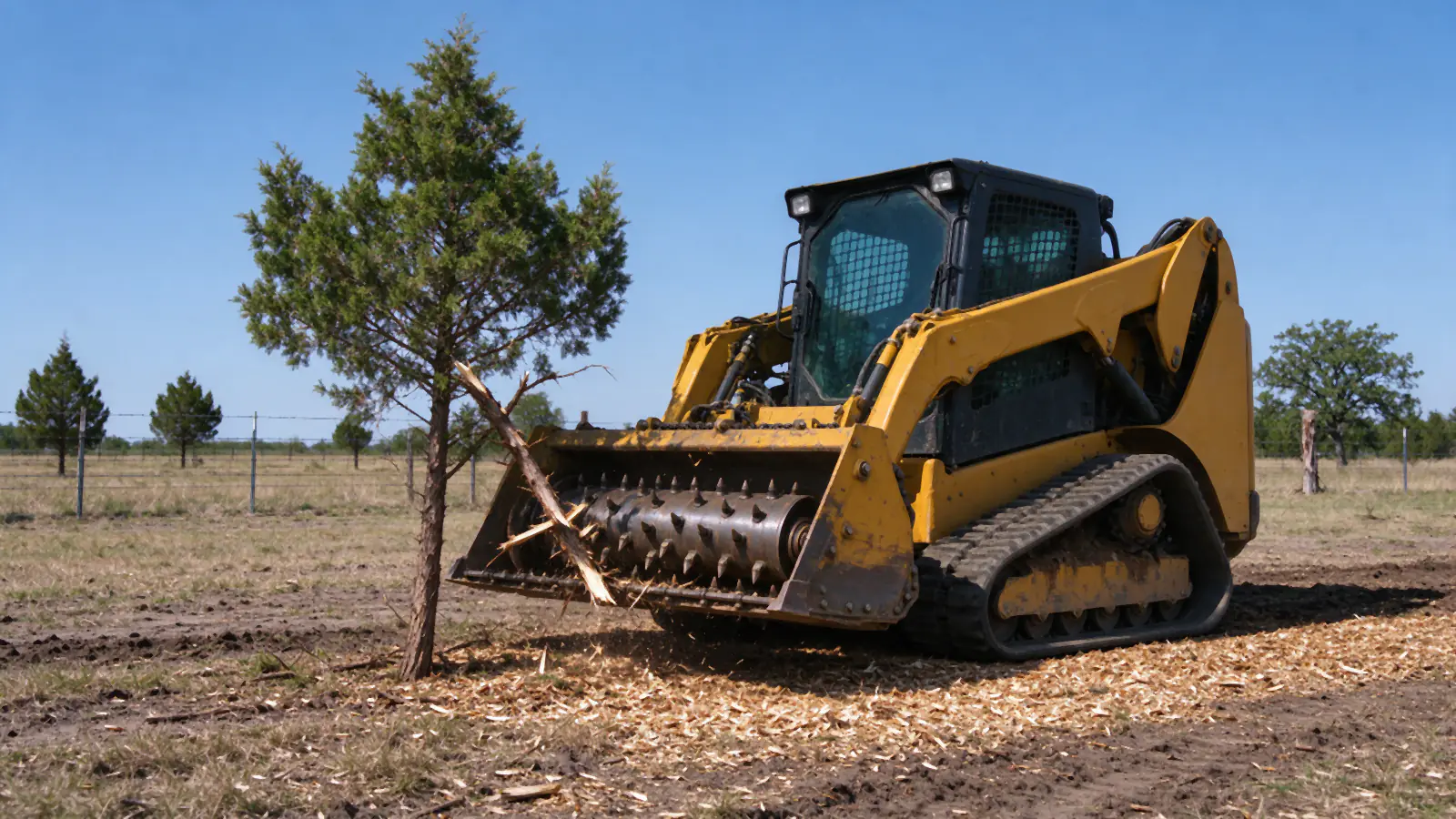
A forestry mulcher is a heavy drum lined with carbide or steel teeth, spinning on the front of a tracked carrier. The operator walks the drum into brush from the top down, so a cedar is reduced to chips in a few passes instead of being cut, dragged and stacked. That single step is why mulching costs less than clearing and hauling on light to moderate growth: the machine that cuts the brush also disposes of it.
Stumps at grade, roots in the ground
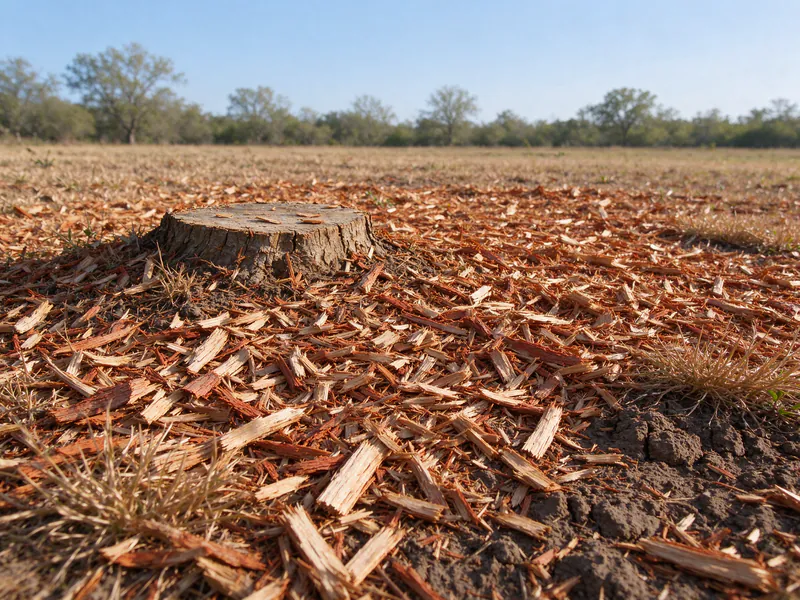
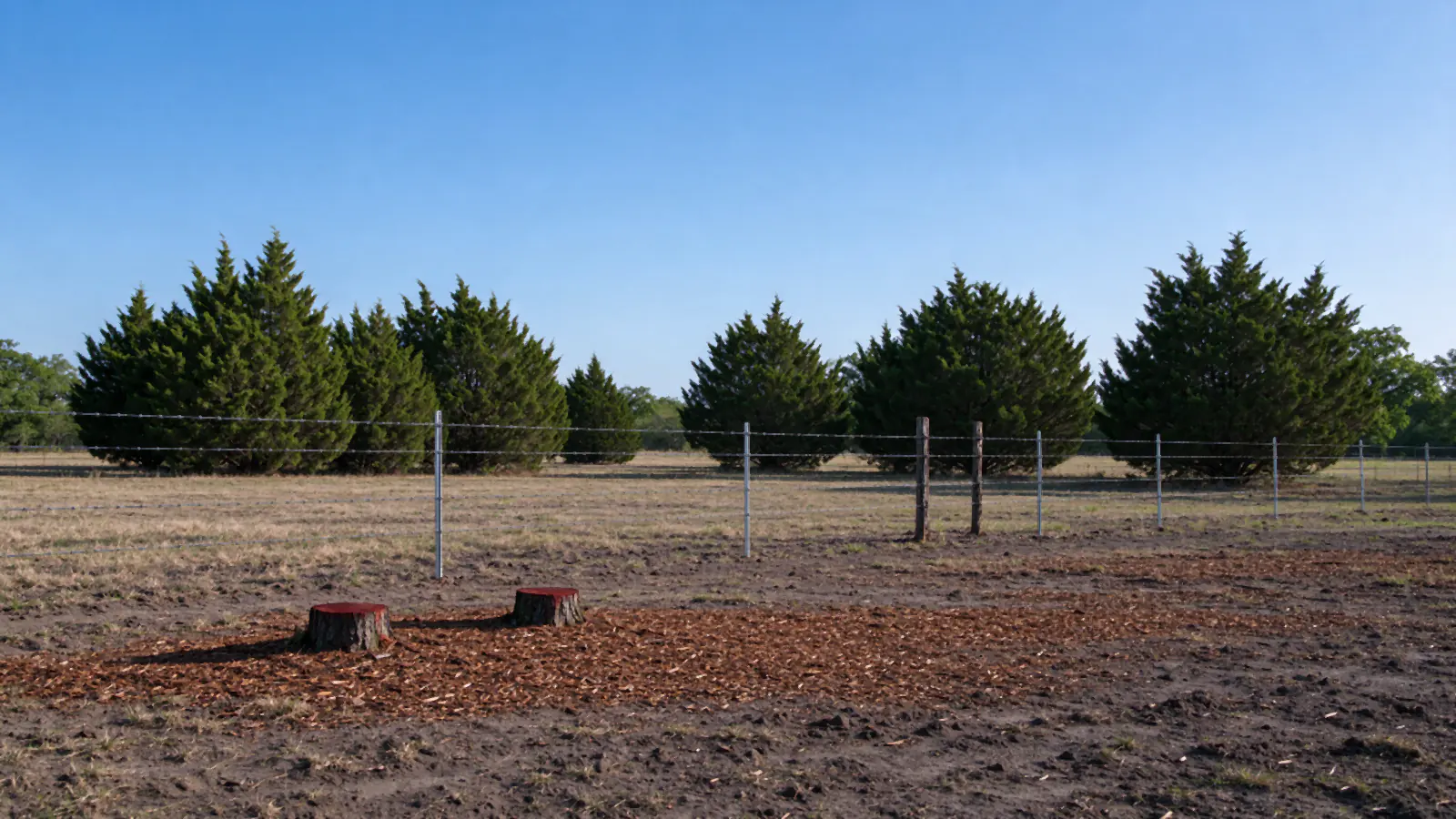
The drum finishes each stem at or just above ground level. It does not pull stumps, and it does not remove roots, so mulching is not grubbing. On a pasture or a trail that is the point, since the roots keep holding soil while they rot. On a building pad it is a problem, because organic material under a slab settles as it decays. When a pad, drive or pond sits inside a mulched area, that footprint is cleared and grubbed separately or the remaining stumps are ground below grade.
The mulch layer on Denton clay
Mulched ground ends up under a layer of chips and shredded fiber, typically a couple of inches deep in light brush and deeper where dense cedar stood. On the west side of the county that layer matters. Sanger clay and Slidell clay, mapped around Krum, Sanger, Ponder and Justin by the USDA soil survey, are hydrologic group D soils: they shed rain fast and shrink and swell with moisture. Bare clay seals under raindrop impact and then runs off, carrying sediment with it. A mulch layer breaks the impact, slows runoff and keeps the surface open, which is a large part of why mulched ground holds up through Denton’s wettest months, May and October, while scraped ground washes. On the sandier Cross Timbers soils south and east of town the same layer keeps loose sand from blowing and gullying once the brush is gone. See erosion control after clearing for ground that needs more than mulch.
What a forestry mulcher can and can’t take
A mulcher handles brush, vines, saplings and cedar up to moderate trunk sizes well, and slows down as stems get bigger and wood gets harder. Larger hardwoods, rock, buried metal and saturated clay are the real limits, and any of them can change the method or the price.
Stem size is the first limit. A compact track loader with a mulching head works quickly through brush and saplings and starts to bog on hardwood trunks somewhere past 6 to 8 inches; dedicated mulching carriers take larger trees, at a higher machine rate. Big oaks and pecans are usually felled and handled another way, or left as keepers.
Cedar density is the second. Eastern redcedar is soft, but a thicket of it carries far more wood per acre than mixed brush, so production drops and the mulch layer gets deeper. That is why a dense cedar stand costs more per acre than open brush even though each tree grinds easily. The cedar clearing page covers stands that are mostly juniper.
Rock and debris are the third. Gravelly loams show up in parts of the county, and old fencing, T-posts, wire and dumped concrete hide in brush along fence lines. Teeth that hit rock or steel break, so suspected debris gets flagged on the walk and cleared by hand first.
Wet clay is the fourth. Tracks spread the weight, but saturated group D clay still ruts, and ruts on clay bake into ridges that are hard to mow for years. The fix is timing; when to clear land in North Texas explains the seasons.
Not sure mulching fits your land?
Send the acreage and a few photos. The walk-through decides between mulching, grubbing and selective clearing.
How forestry mulching fits Denton’s tree and burn rules
Mulching does not sit outside the rules. Inside Denton city limits, the Denton Development Code treats every post oak 6 inches in diameter or more as a heritage tree, and a cedar between 6 and 18 inches can count as a protected quality tree, while mesquite and honey locust are listed as non-protected. On undeveloped land, removing protected trees needs a tree removal permit, currently $425, and mitigation of $200 per caliper inch applies where trees are not replaced or preserved. Clearing beyond 2,000 square feet generally needs the city’s clearing and grading permit, currently $453, unless an exemption applies; the agricultural exemption covers crop operations but not tree removal. The Denton tree removal permit guide walks through the steps.
Burning is where mulching earns its keep. The Denton Fire Marshal’s Office does not allow open burning inside city limits. Denton County sits in the Dallas-Fort Worth ozone nonattainment area, so under TCEQ rules a land-clearing burn outside city limits is allowed only when no practical alternative exists, and only on a county burn day. Grinding brush in place is that alternative on most tracts. More on the burn path is in burning brush in Denton, and creek-side ground has its own limits covered in clearing near creeks and floodplains.
Mulching works at the surface, well short of the 16-inch depth at which Texas law requires a Texas811 locate ticket, but a ticket is still called wherever stumps are ground lower or roots are dug. Whether a mulching job counts toward the TCEQ stormwater permit, which starts at 1 acre of disturbed soil, depends on how much ground is actually opened up; that is a site-by-site question, not a blanket answer.
After the mulcher leaves
Mulched ground is not finished landscaping, and it is not a building site. Grass returns through a thin layer within a growing season, and seeding right after the work speeds that up on bare spots. Resprouting species need attention: mesquite, honey locust and privet push new shoots from the roots left behind, so a mowing pass or two, or a targeted follow-up, keeps them down. Keeping brush from growing back covers that schedule, and the method comparison in forestry mulching vs land clearing lays out when a property needs both.
What forestry mulching costs around Denton
A typical North Texas range for forestry mulching is $1,400 to $3,500 an acre for light to moderate growth. Dense cedar, larger trees, slopes and small acreage push a job above that range, and a single walk-through is what turns a range into a price.
The drivers are the ones a mulcher feels. Stem size and cedar density set how fast the drum moves. Acreage matters because moving a tracked machine on a trailer costs the same for half an acre as for ten, so small jobs carry a higher cost per acre. Wet clay, rock, hidden wire and debris slow production, and trees that stay need a careful path around their root zones. Stump grinding below grade, haul-off of larger logs and erosion control are added only when the job needs them.
The land clearing cost calculator gives a range for your acreage without a phone call, and the cost per acre guide explains how mulching compares with clearing and grubbing and with brush clearing for lighter growth. For a property with trees worth keeping, selective clearing is often paired with mulching of the understory.