Last Updated:
Post Oak Land Clearing Denton offers and manages cedar clearing across Denton and the west and north of Denton County, with the work done by licensed and insured contractors. The cedar here is eastern redcedar, Juniperus virginiana, the tree that lines fence rows, fills old pastures and closes the edges of oak woods. It is easier to kill than most brush, because a cedar cut low enough cannot come back. It is harder to keep away, because birds keep planting new ones. A good cedar job deals with both halves.
What happens on the first visit
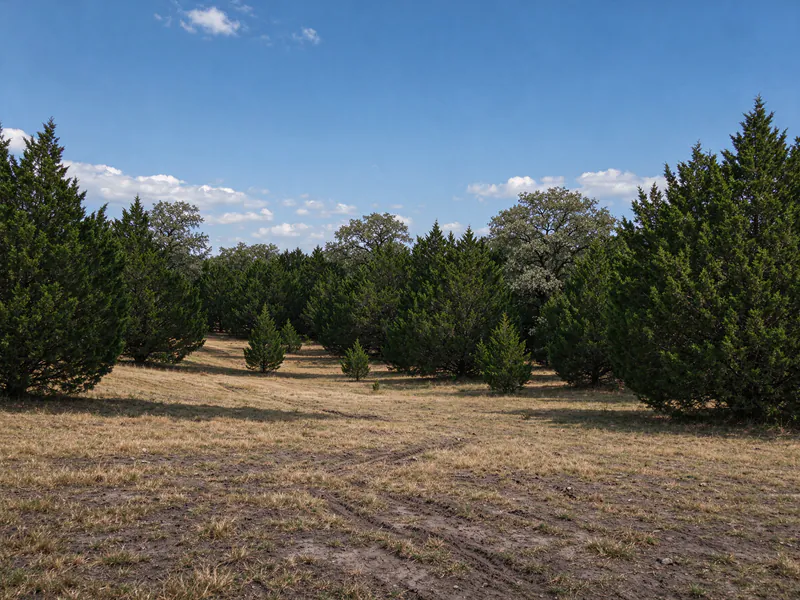
The first visit maps the cedar: how big the trees are, how close together they stand and what is growing under them. Scattered cedar in a pasture, a cedar row along a fence and a closed stand where no grass grows underneath are three different jobs with different machines and different prices.
The walk also flags what stays, whether that is a big shade cedar by the house, the oaks the cedar is crowding, which turns the job into selective clearing, or a fence buried in a cedar row. It looks for wire grown into trunks, rock, wet ground and slopes, and it settles whether city tree rules apply, because inside Denton a cedar of a certain size can be a protected tree. You leave with a method, a finish level and a list of any permits or exemptions to file.
Cut below the lowest green limb
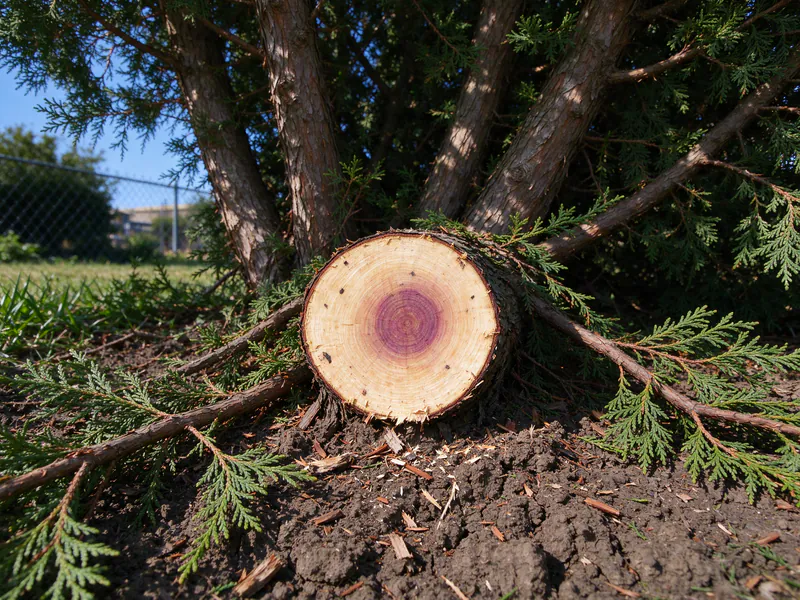
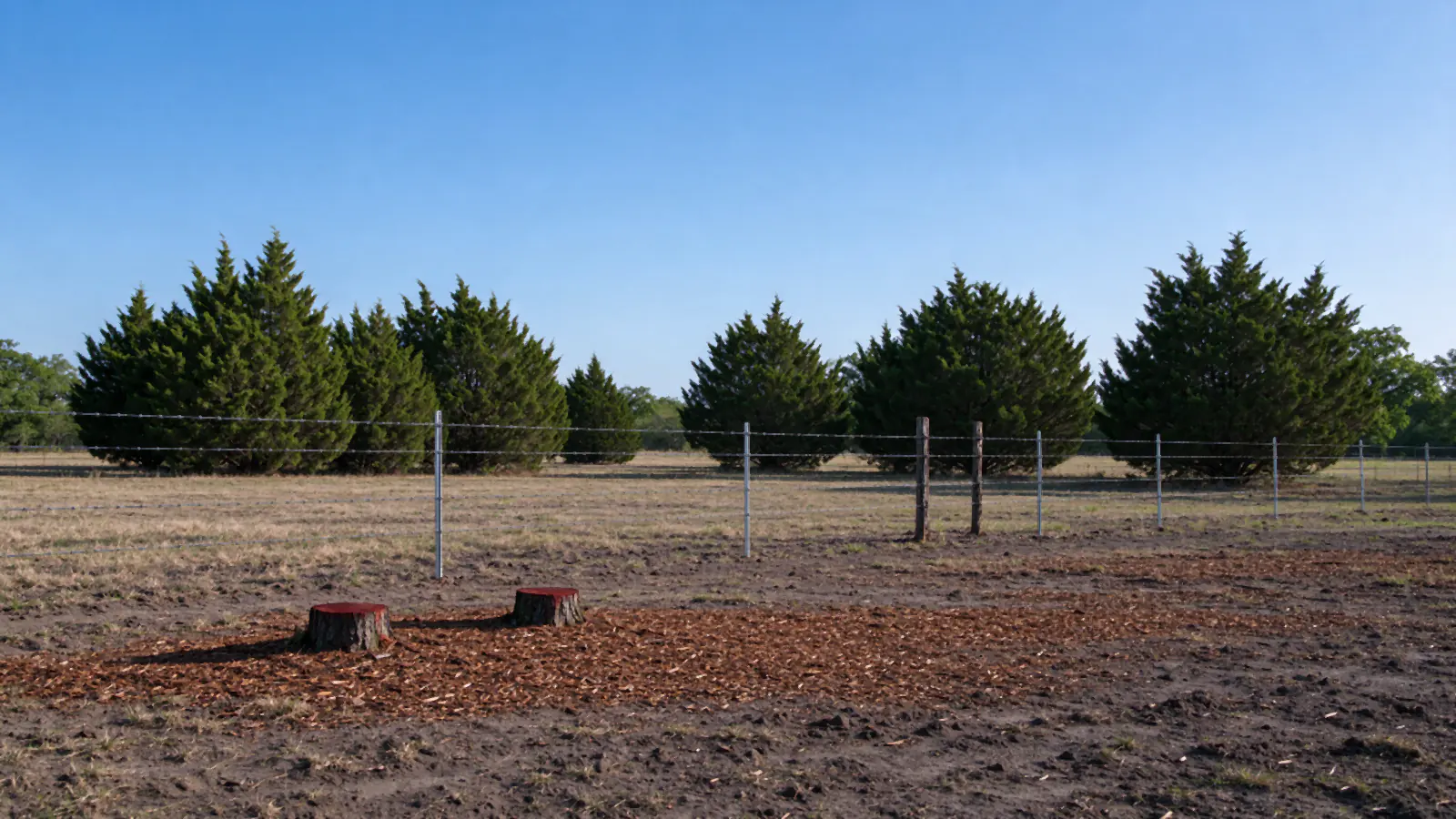
Eastern redcedar does not resprout from its stump or roots. It grows only from living green foliage, so a cedar cut below its lowest green limb dies. That one fact sets the standard for every cedar job: the cut goes low enough that no green branch is left on the stump.
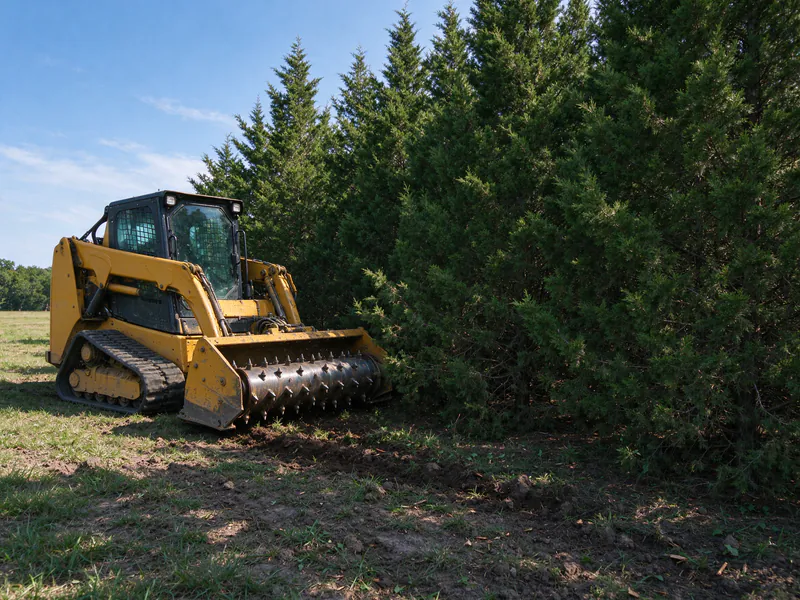
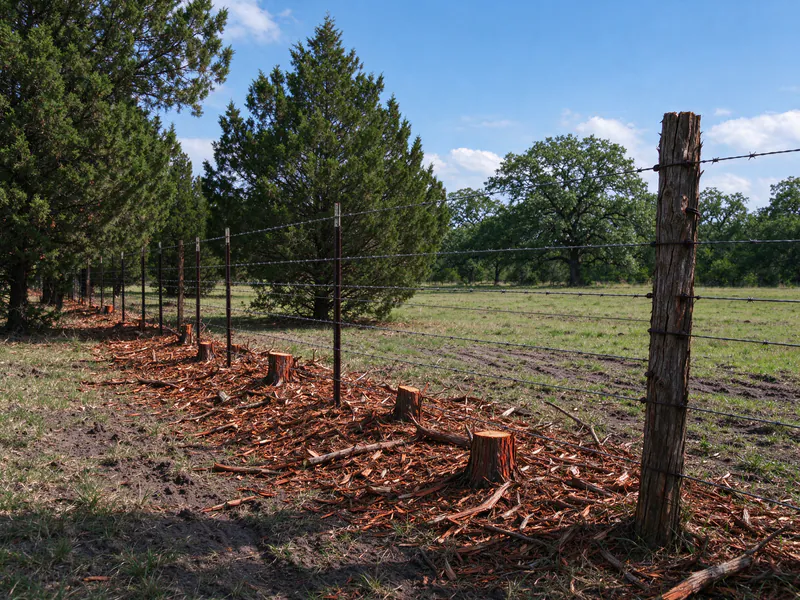
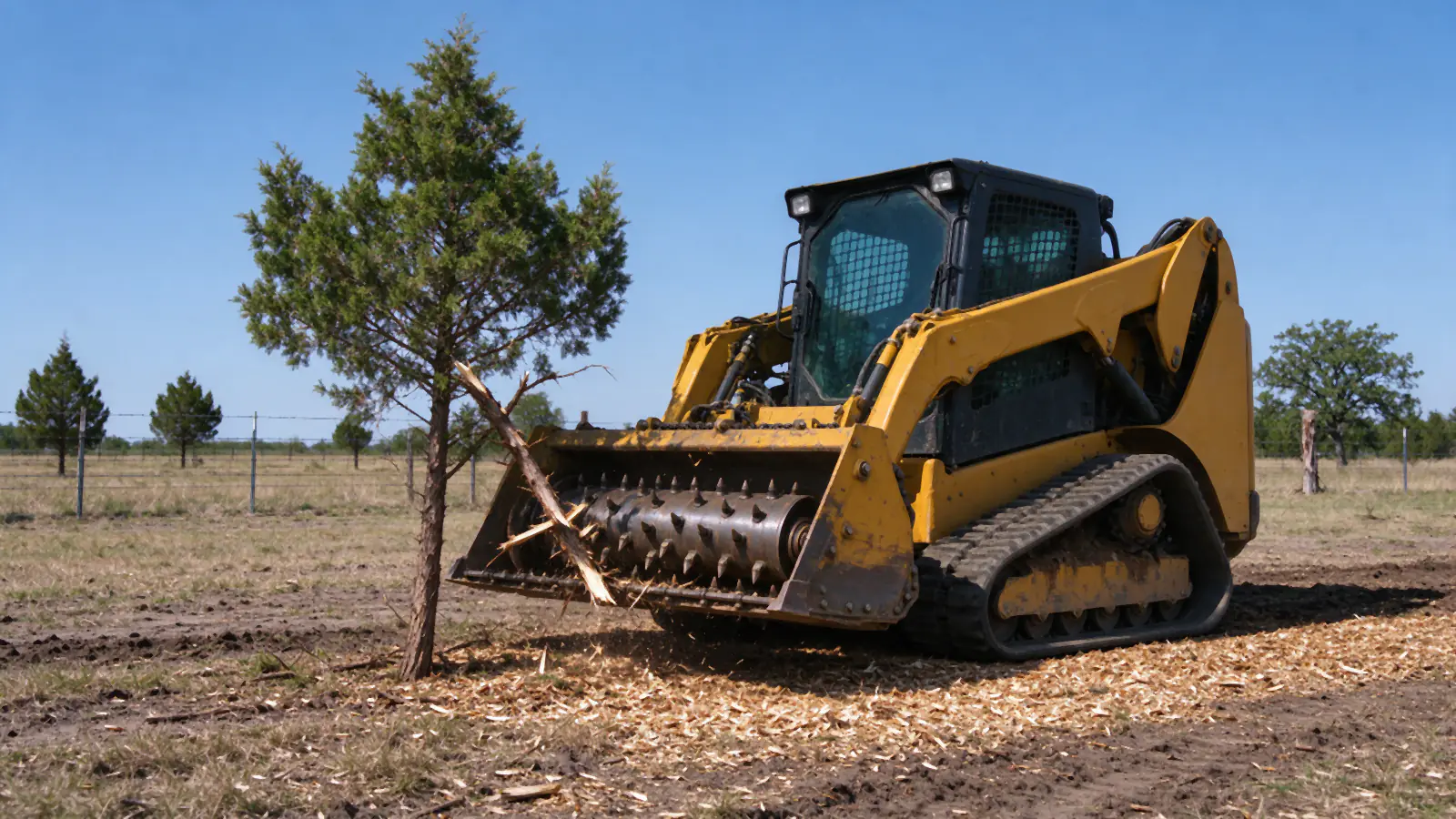
A stump cut a foot high with a green limb still on it keeps growing as a bush, and the job has to be done again. A forestry mulching head handles this by grinding each tree down to grade, and saw crews cut flush at the ground. This is different from mesquite and honey locust, which carry buds on the root crown below ground and come back as a cluster of stems when they are only topped. On mixed ground, the cedar part of the job stays done while the resprouters need follow-up.
New cedar arrives from seed. Birds eat the blue, berry-like cones and drop the seed where they perch, which is why cedar follows fence lines and lone trees across a pasture. Seedlings a mower can reach are easy to keep down; the trouble starts when a few years pass without mowing and the seedlings grow past what a shredder can take. A shredding pass every year or two in open pasture, covered on brush hogging, keeps that from happening.
Texas articles on cedar often describe Ashe juniper, the Hill Country “mountain cedar.” The Denton County cedar is the eastern species, so methods and expectations are written for it here. Homeowners report hearing that cedars should come out because they use too much water; the decision on this page rests on things that can be checked on the ground, such as lost grazing, blocked fences, crowded oaks and access.
Cedar taking over a pasture or fence row?
Send the acreage and a few photos. The walk-through sets the method, the finish and any permits.
Density changes the job
Cedar wood is soft and grinds easily, but density sets the price. A closed stand carries far more wood per acre than scattered trees, so a mulcher moves slower, and the chips pile deeper. A pasture with a cedar every 30 feet and a cedar break where branches touch are different jobs even at the same acreage.
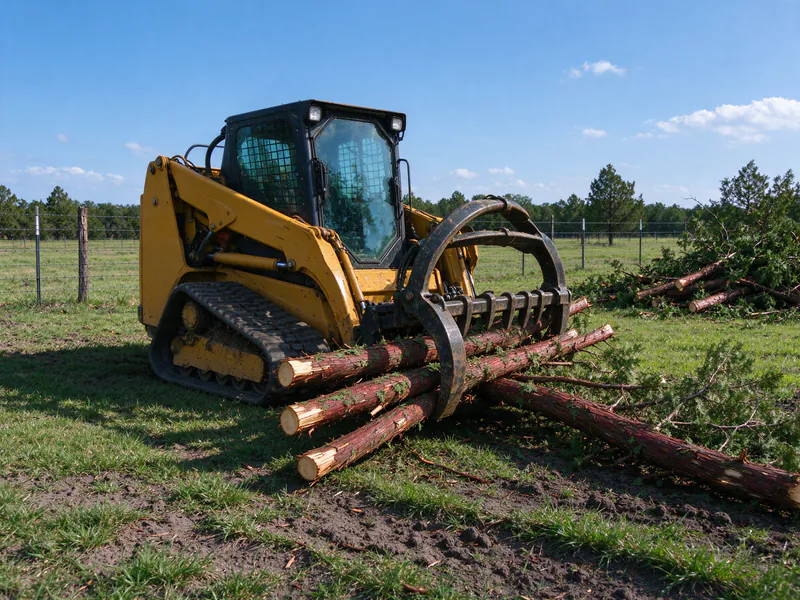
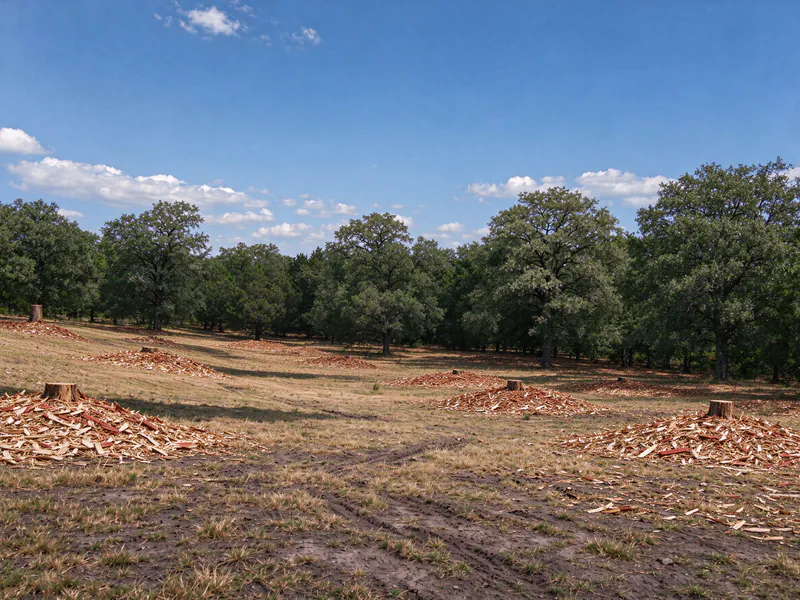
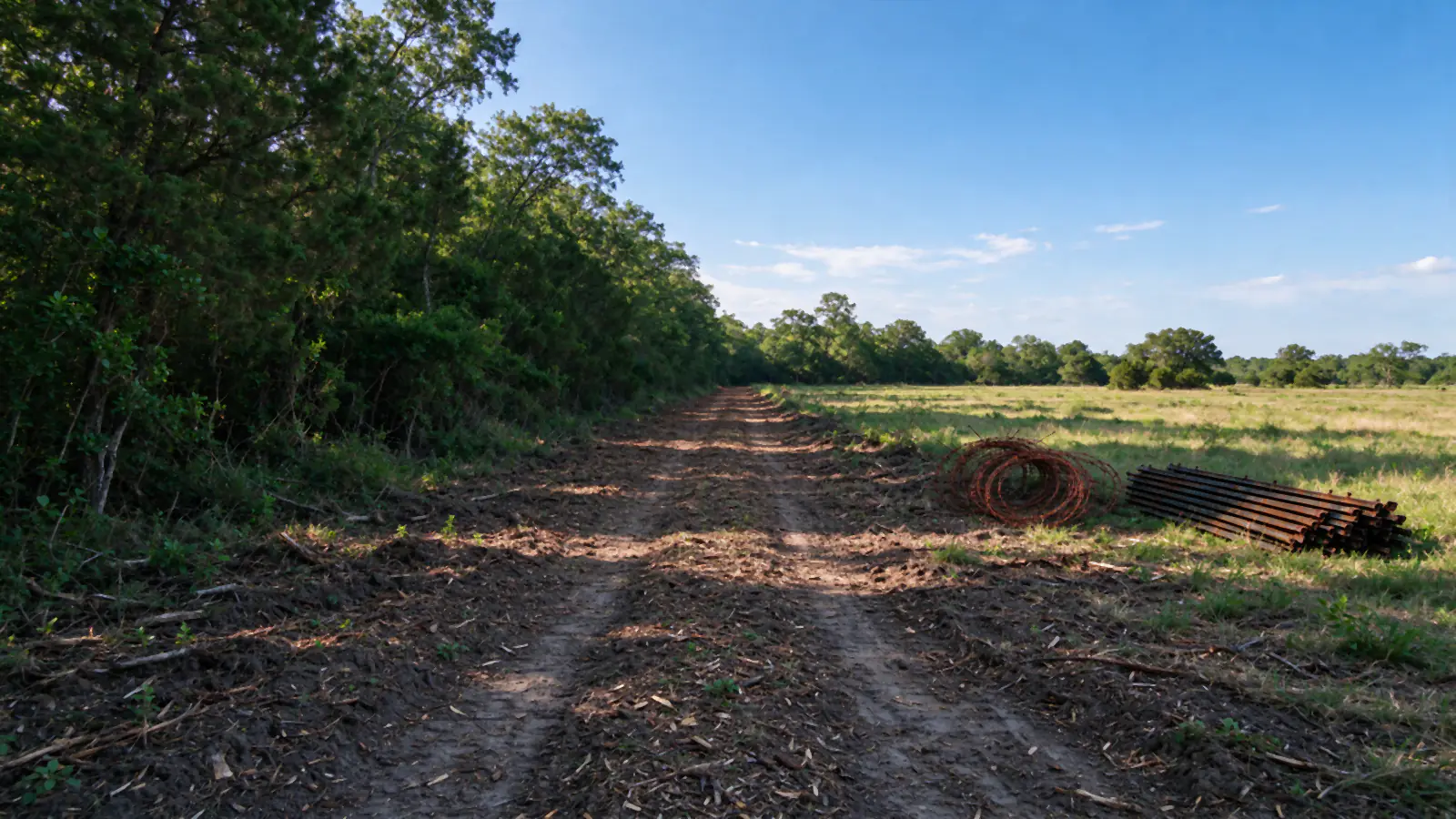
Scattered cedar in pasture is the light end: each tree is mulched or cut in a few minutes, and the grass between them is already there to take back the ground. Cedar rows along fences sit in the middle, slowed by the wire. Wherever a trunk has grown around the fence, the mulcher stops short and a saw finishes it, because a drum full of wire is a broken drum. Fence line clearing covers that work in detail. Closed stands are the heavy end. Under them the ground is often bare needle litter, so once the cedar is gone there is no grass waiting, and the mulch layer is what holds the clay until seed and rain bring cover back. Trunks past what a skid-steer mulching head handles comfortably are felled and cut into pieces first.
Cedar inside Denton city limits
Inside Denton city limits, cedar can be a protected tree. On land the city’s tree rules cover, a healthy cedar 6 to 18 inches in diameter counts as a quality tree and one over 18 inches as a heritage tree, measured 4.5 feet above the ground. Mesquite and honey locust are on the unprotected list; redcedar is not.
That surprises people clearing a cedar thicket on raw land inside the city, because the trees they think of as brush count toward tree preservation, removal permits and mitigation. The permit is currently $425, and mitigation runs $200 per caliper inch where trees are not preserved or replaced. Lots with an existing single-family home are exempt, and so are agricultural operations, though the city still asks for an exemption submittal on eTRAKiT, and the clearing and grading permit’s agricultural exemption covers crop soil work, not tree removal. Cedar under 6 inches falls below the protected classes, but the code ties tree removal permits to trees 3 inches and up, so small cedar on regulated land still belongs in the permit conversation. The Denton tree removal permit guide has the filing steps; in the ETJ and the smaller towns, tree rules are confirmed per address.
What happens to the cedar
Most cedar is mulched in place. Hauling is for yards and small areas where chips can’t stay, and burning is limited by law. Inside Denton city limits there is no open burning. Outside them, Denton County sits in the Dallas-Fort Worth ozone nonattainment area, so a land-clearing burn is allowed only when no practical alternative exists and only on a county burn day; burning brush in Denton covers the steps.
Hauled cedar goes to the City of Denton Landfill at $30 a ton for a Denton customer with pieces 12 feet or shorter, $35 for longer pieces and $40 for non-Denton customers. Straight trunks can be kept as firewood or posts. Selling cedar does not pay for a clearing job as a rule, and the cedar guide covers what to do with the wood and the ground afterward.
Cedar on farm and ranch land
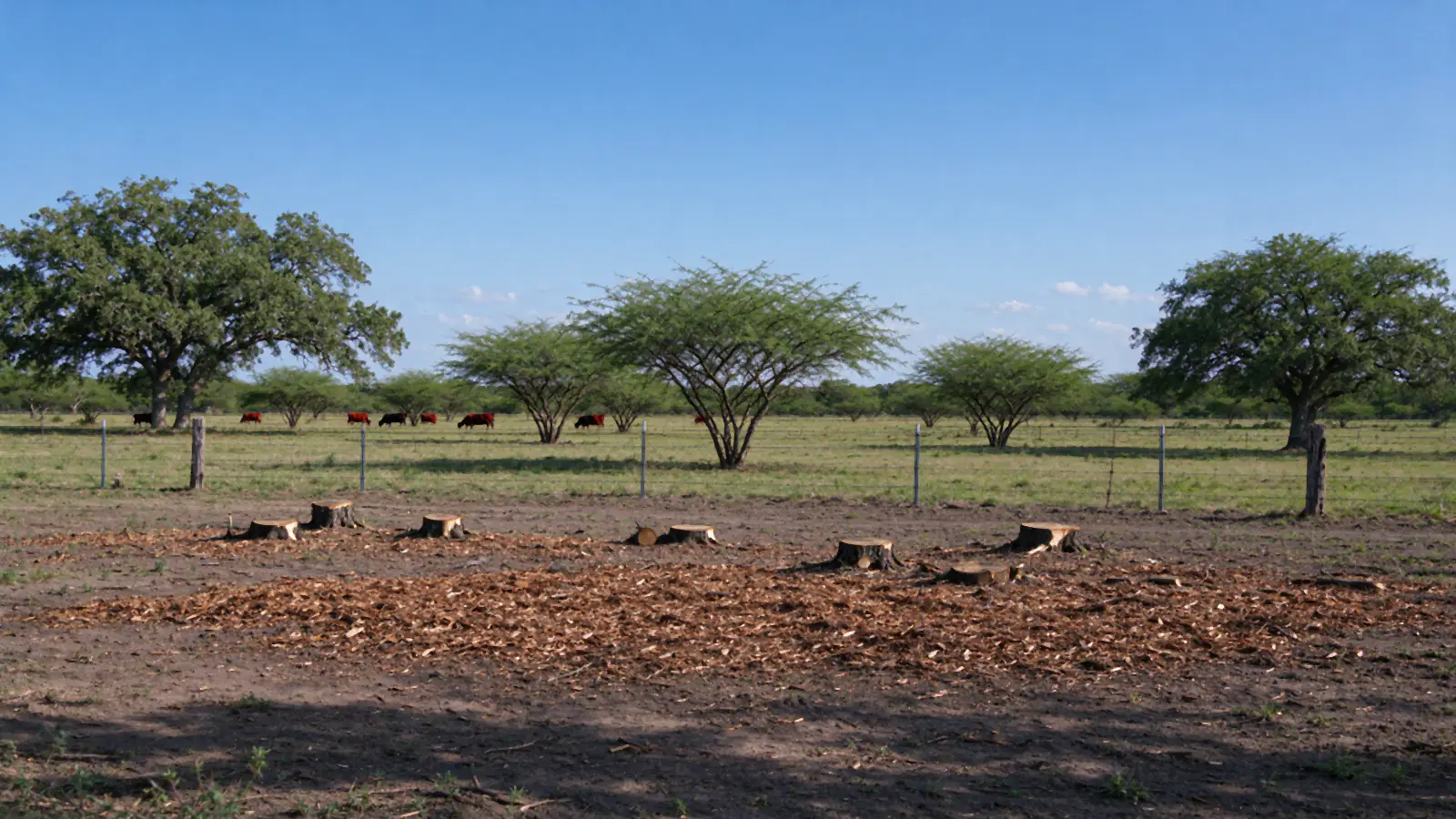
On agricultural land, cedar clearing is brush management, and that has two consequences. USDA’s Natural Resources Conservation Service offers EQIP cost-share for brush management on qualifying farm and ranch land with a resource concern. Applications are taken year-round, with a fall ranking date each year, and clearing for a homesite does not qualify. And clearing to improve a pasture keeps the land in agricultural use, while clearing it for a house can change its use and trigger the three-year rollback tax under Texas Tax Code 23.55. The ag exemption guide explains the line.
What cedar clearing costs
No separate published price exists for cedar alone; it prices with land clearing by density. Typical North Texas ranges run $1,500 to $3,500 an acre for light growth such as scattered cedar, $2,500 to $4,500 for moderate growth with trees up to about 8 inches, and $3,500 to $6,500 or more for dense cedar and larger trees. Forestry mulching of light to moderate growth typically runs $1,400 to $3,500 an acre.
What moves a cedar price is the trunk size and how close the trees stand, how deep the mulch can stay, wire and fences in the cedar rows, rock, slope, wet clay, hauling if chips can’t stay, and permits inside Denton. The land clearing cost calculator gives a range for your acreage, and the cost per acre guide explains the drivers. Where the cedar is part of a wider pasture recovery with mesquite and brush, pasture clearing is the page that covers the whole job.