Last Updated:
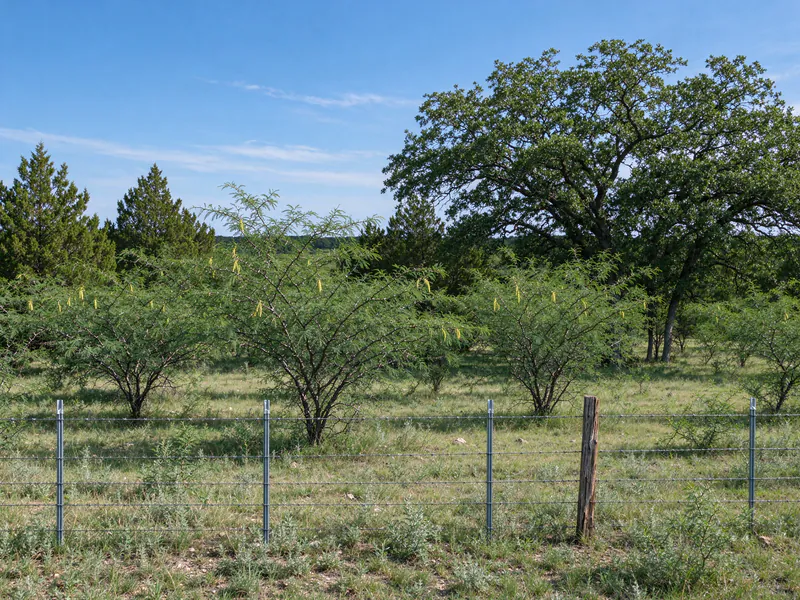
Post Oak Land Clearing Denton offers and manages pasture clearing across Denton and the west and north of Denton County, with the work done by licensed and insured contractors. Pasture clearing takes woody encroachment back out of grazing land: eastern redcedar, mesquite, honey locust, and in some places ornamental pear and hackberry. The aim is grass, not bare ground, so most of the root system and sod stay put and a few good shade trees stay standing. What works depends on the species, because cedar and mesquite respond to cutting in opposite ways.
What happens on the first visit
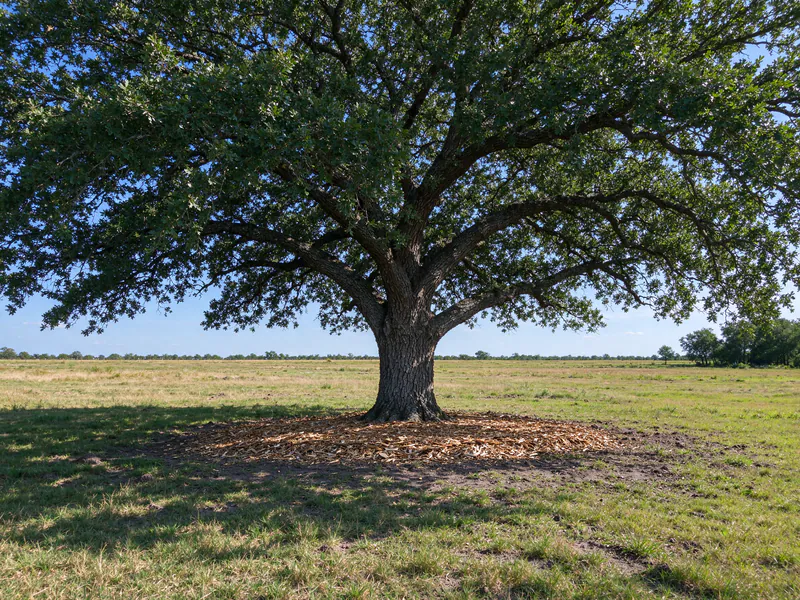
The first visit maps the brush by species and sets a method for each. Expect a walk of the pasture with you, a read on how thick the cedar, mesquite and honey locust are and how big the stems run, flags on shade trees and fence lines that stay, and notes on water lines, troughs, wet draws and gates.
The walk also covers the questions that sit beside the clearing. Is the land under agricultural appraisal, and will it stay in grazing? Is cost-share part of the plan? Will any debris be burned, and is the tract inside a city? Inside Denton city limits, agricultural operations are exempt from the tree preservation rules, though the exemption is still claimed through Building Safety with a no-fee submittal; the clearing and grading permit exemption covers crop soil work but not tree removal, so a city pasture job is checked case by case. Most pasture around Krum, Ponder and Sanger sits outside the city, where the town or county rules apply and are confirmed per address.
Why brush takes over Grand Prairie pasture
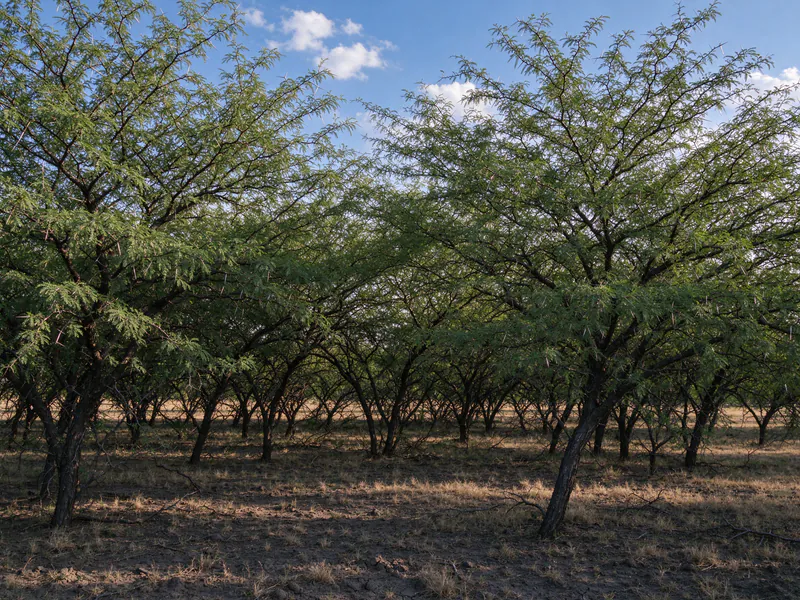
West and north of Denton, the county sits on the Grand Prairie: open grassland on heavy clay that has long been grazed and farmed. Left alone, that grass does not stay open. Birds carry redcedar berries to every fence post and lone tree, and cattle eat mesquite and honey locust pods and drop the seeds across the pasture. Without fire to kill seedlings, they take hold, and each one shades and dries the grass under it. Cedar in particular catches rain in its canopy and litter, so less water reaches the soil beneath it. A few scattered trees become a stand, and a pasture that once carried stock starts carrying brush.
The longer it goes, the more the job changes. Seedlings a mower can shred become saplings a mower cannot, and saplings become trees that need a mulcher or an excavator. That is the line between brush hogging and pasture clearing.
Matching the method to the species
Cedar: cut low and it stays gone
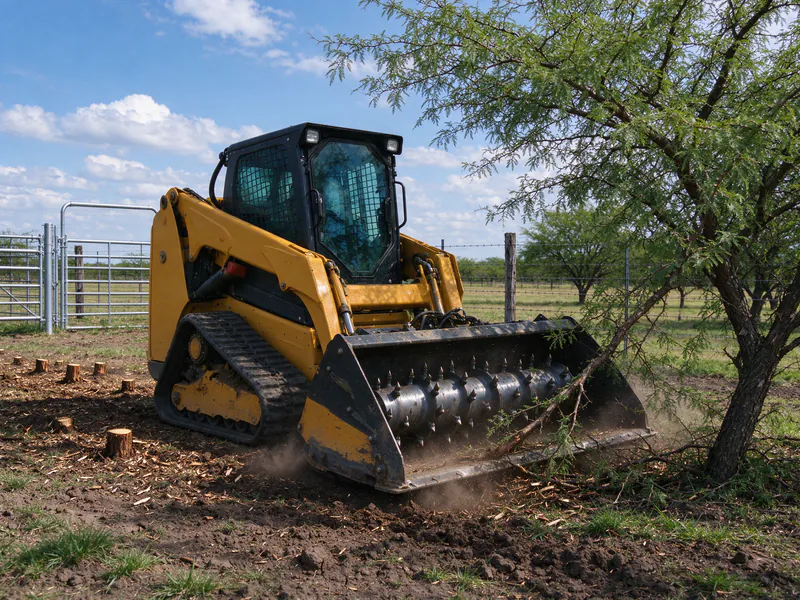
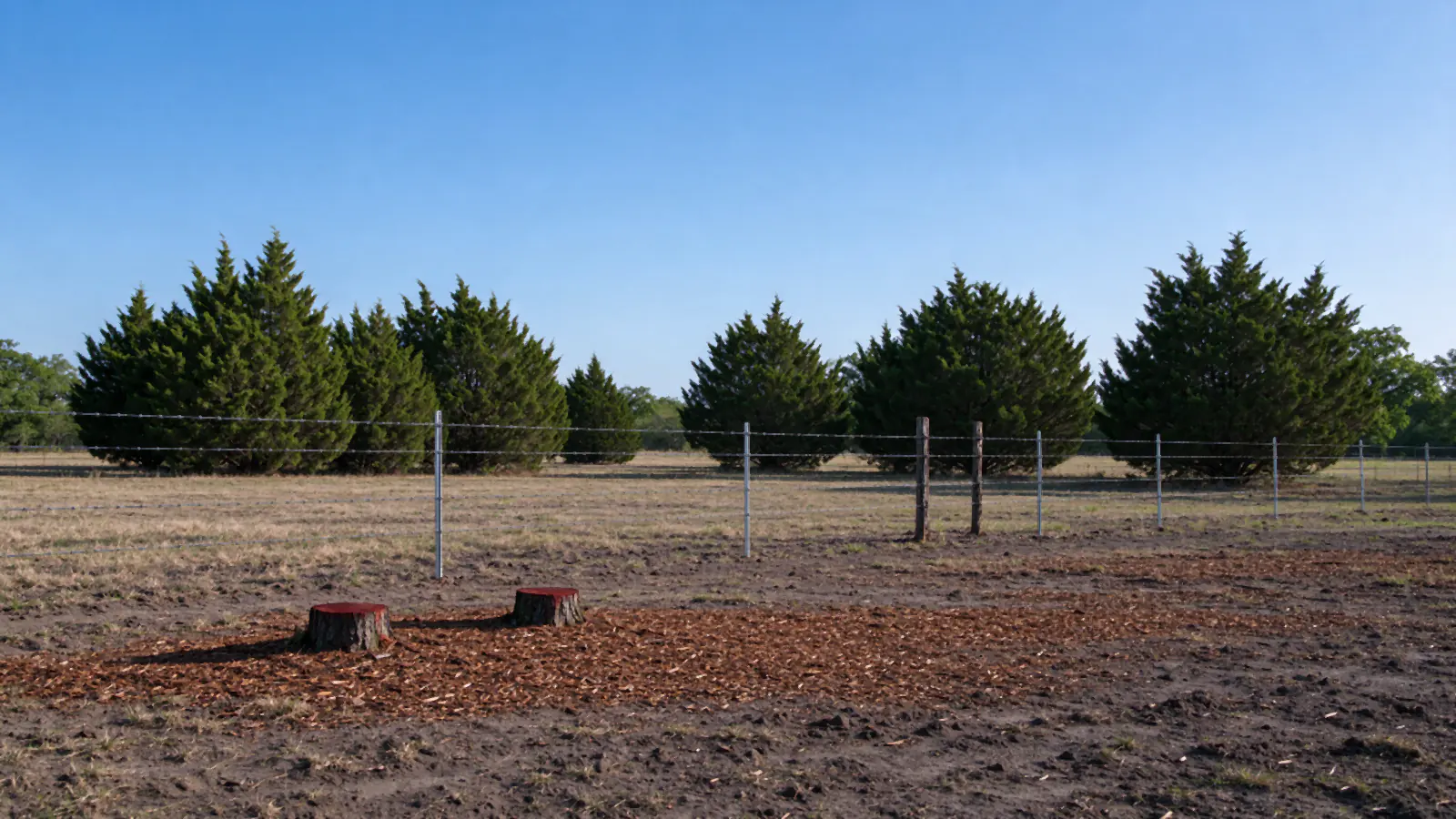
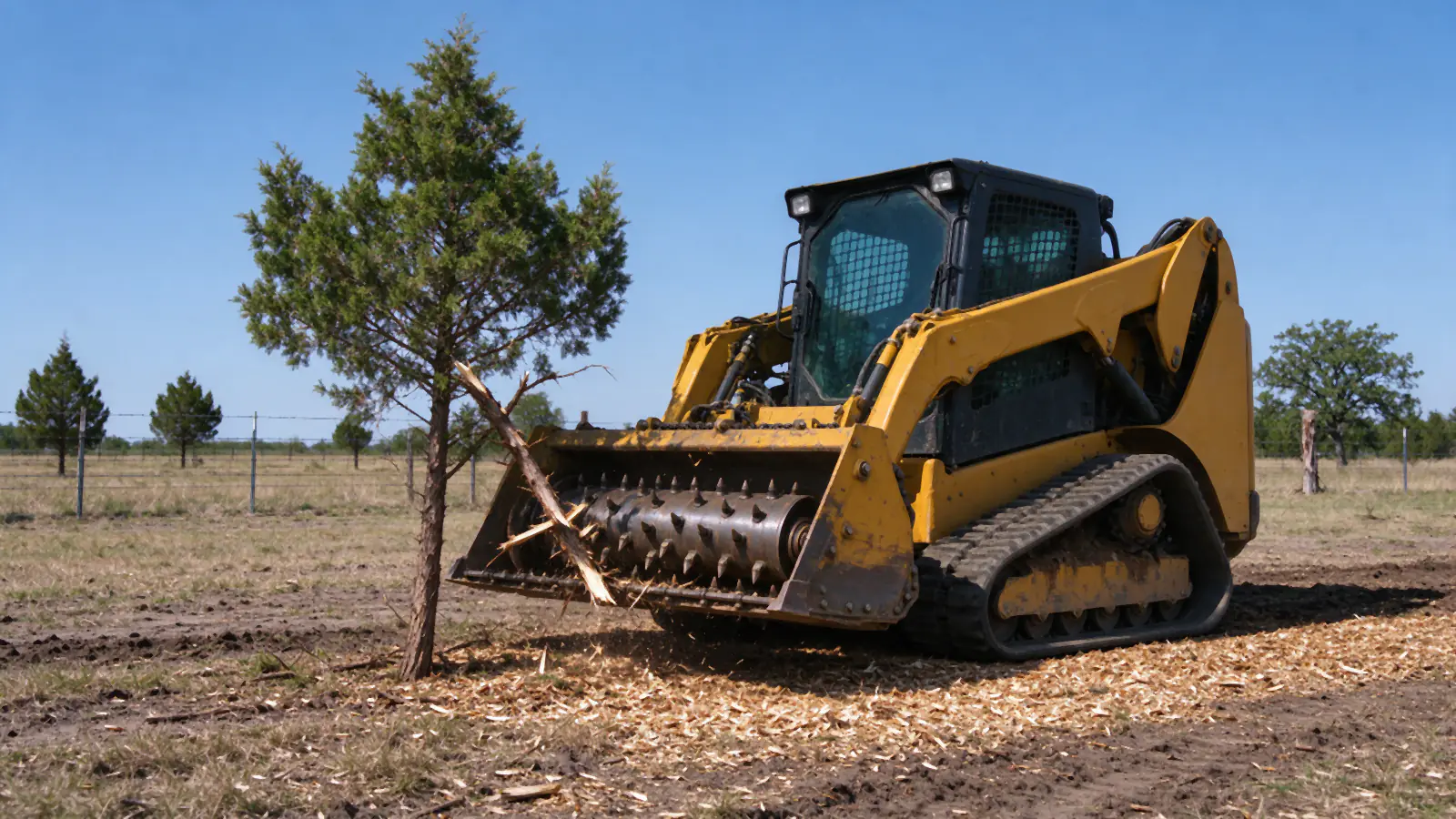
Eastern redcedar cannot sprout from its stump or roots. Cut it below its lowest green branch and the tree is dead, which makes a forestry mulcher the efficient tool: the head grinds the tree into the pasture, leaves the roots to rot in place and keeps the sod intact. Dense cedar costs more per acre than mixed brush because of the sheer amount of wood, and the mulch layer gets thicker where the cedar stood. The cedar clearing page covers stands that are mostly juniper. On regulated land inside Denton, a cedar 6 to 18 inches across can count as a protected quality tree, which is one more reason the exemption question is settled first.
Mesquite and honey locust: the roots fight back
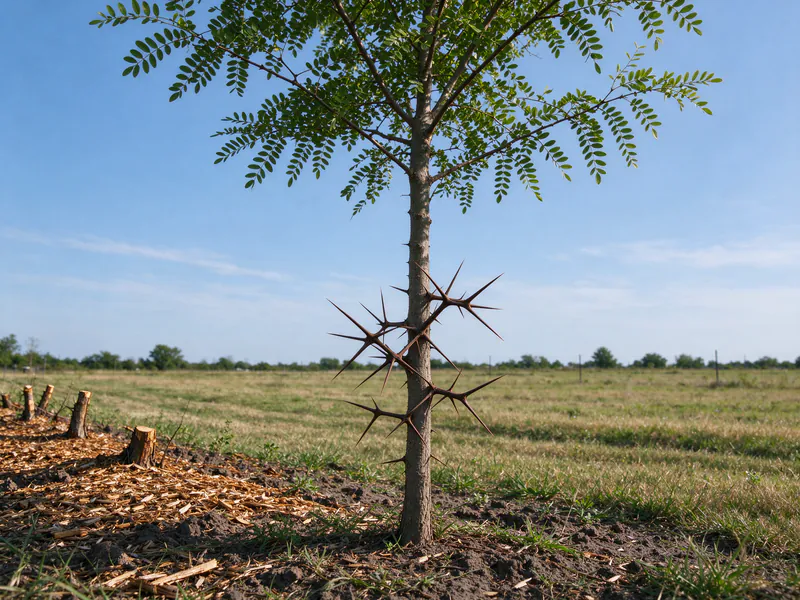
Mesquite and honey locust resprout. Both carry dormant buds on the root crown just below the ground, and when the top is cut, shredded or mulched those buds push up several new stems in its place. A pasture of single-trunk mesquite shredded once can turn into a pasture of multi-stem mesquite bushes. Two approaches work. Digging out the root crown with an excavator removes most of the buds and fits scattered trees, at the cost of a disturbed patch at each one; clearing and grubbing explains the digging. For dense brush, mulching followed by mowing or individual plant treatment over the next season or two wears the roots down without tearing up every square yard of sod. Herbicide work is a separate scope from the clearing. Inside Denton both species are listed as non-protected, so they carry no tree permit there.
Scattered trees and dense thickets
Density changes the machine as much as species does. Scattered trees across open grass are picked off one at a time, and the machine travels lightly between them. A thicket is worked continuously, and the per-acre cost reflects how much wood stands on each acre. Most Denton-area pastures are a mix, so a job often combines mulching in the thick patches with spot digging in the open.
Ag valuation and cost-share before you clear
Clearing brush to keep land in grazing is a different thing for taxes than clearing it for a house. Texas Tax Code 23.55 imposes a rollback tax when land appraised as 1-d-1 open-space agricultural land changes use: the difference between the taxes paid and market-value taxes for each of the three preceding years. Pasture improvement keeps the agricultural use; a homesite carved out of the same pasture may not. The Denton Central Appraisal District decides how a partial change is treated, so confirm with it before clearing ag-valued land. The ag exemption and land clearing guide goes through the questions to ask.
For cost-share, USDA NRCS runs EQIP brush management (practice 314) for agricultural producers with an identified resource concern. Payments cover part of the practice cost, applications are ranked, and the local USDA Service Center takes them year-round with a fall ranking date each year. The program has its own planning steps, so talk to the Service Center before scheduling machines. The EQIP brush management post explains the pattern.
Brush taking over your grazing?
Send the acreage and photos of the worst patches. The walk-through sets a method for the cedar, the mesquite and the rest.
Debris, finish level and the first season after
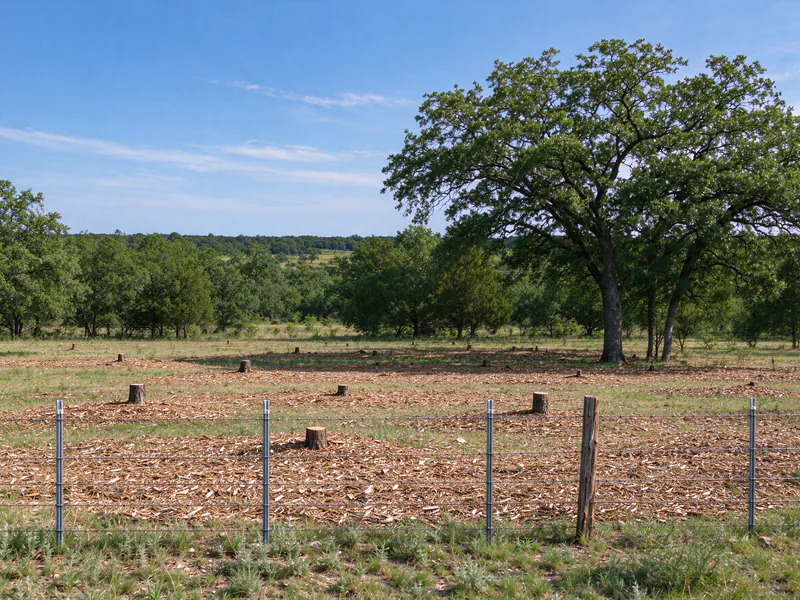
Most pasture clearing leaves nothing to haul. Cedar and brush are mulched in place and spread, which covers the clay and keeps it from sealing and washing in Denton’s wet months, May and October. Root balls dug from mesquite and honey locust are ground, piled away from the grass or hauled. Burning is a narrower option than people expect: Denton County sits in the Dallas-Fort Worth ozone nonattainment area, so TCEQ allows a land-clearing burn only when no practical alternative exists, and only on a county burn day called each morning. Unincorporated residents also need a Controlled Burn Permit, and late-summer burn bans can stop burning for weeks. The burning brush in Denton guide covers the steps.
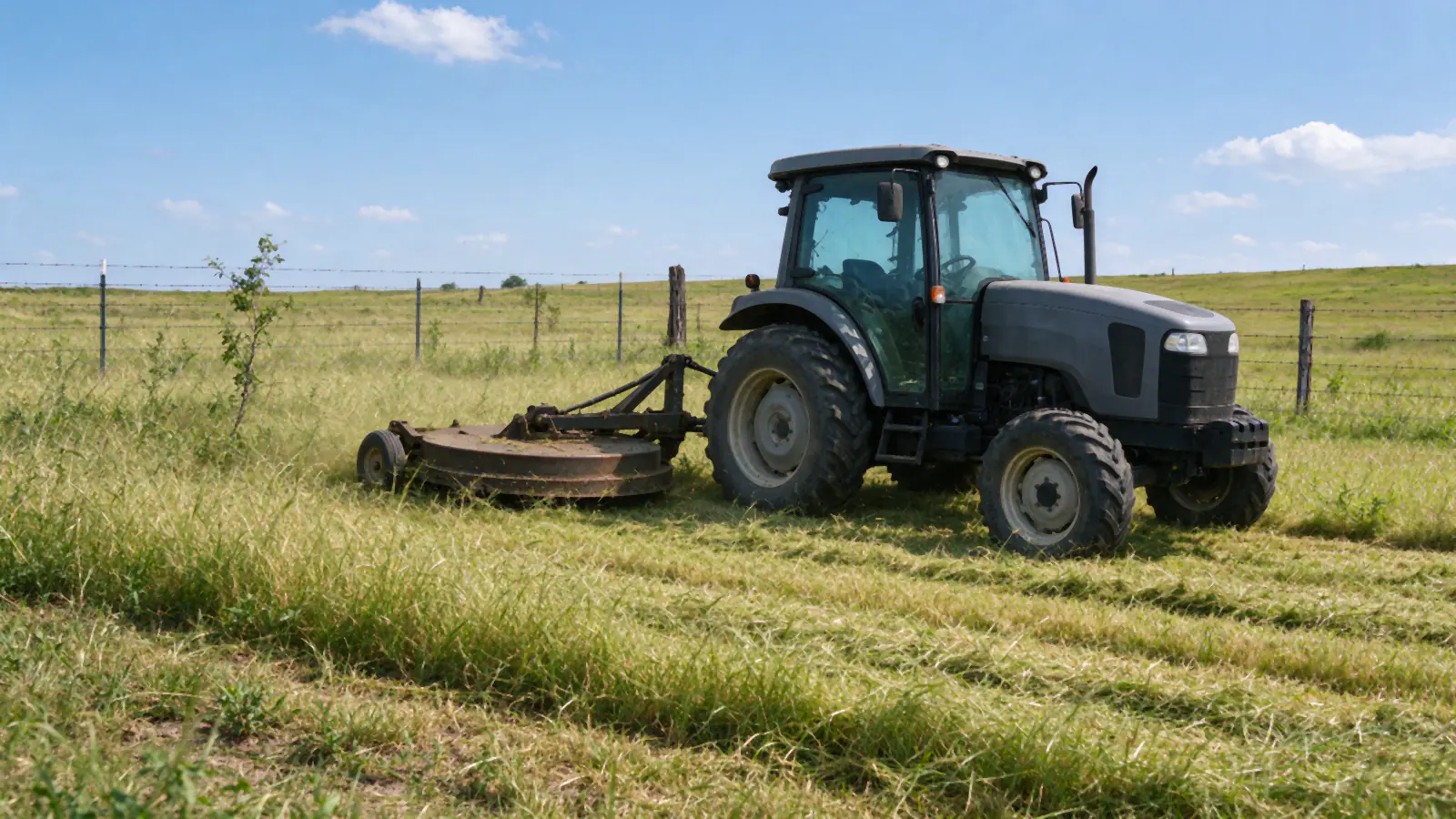
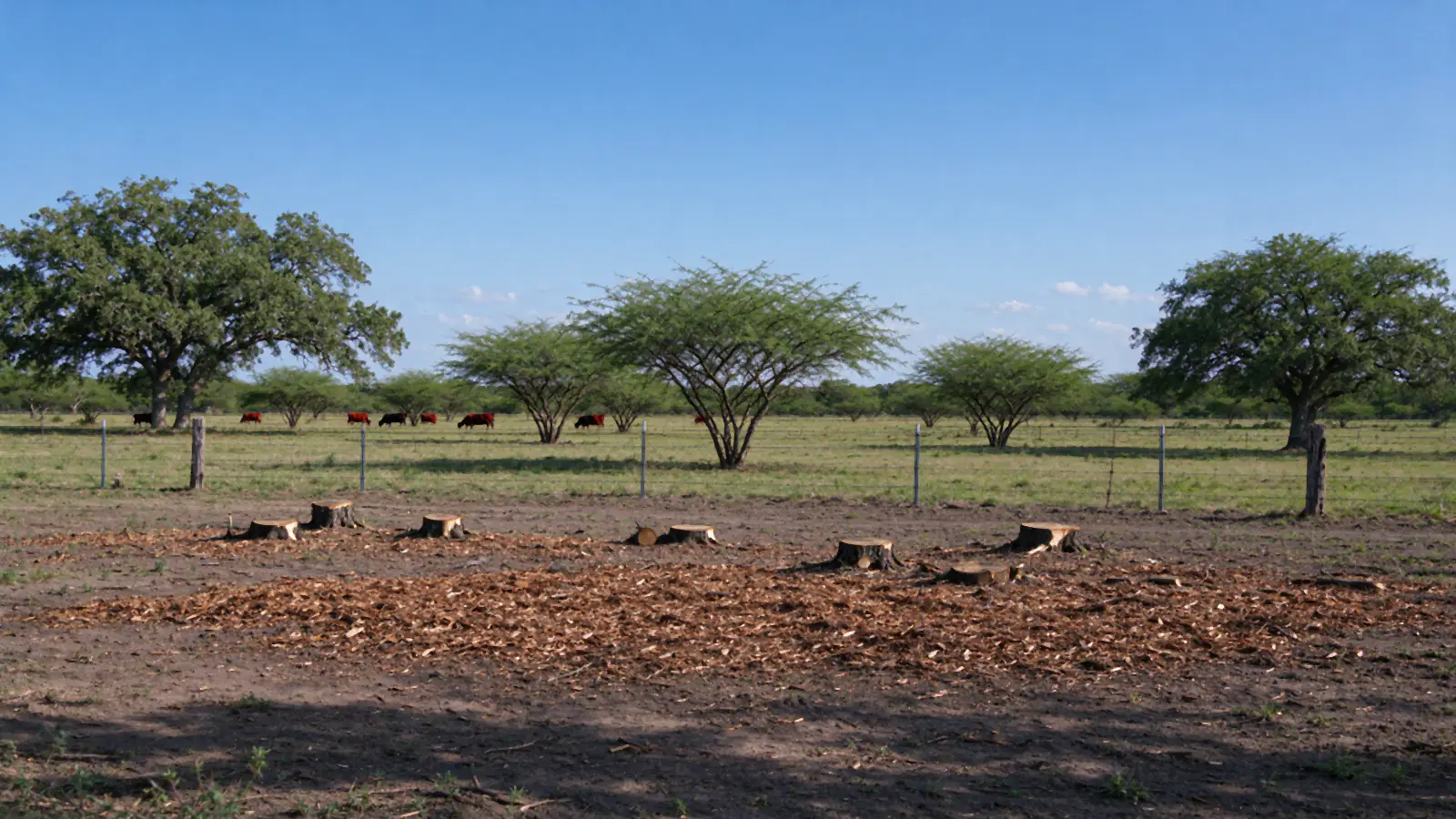
The finish is a pasture with stumps at or below grade, holes filled, thorny limbs out of the grass and a mulch layer where the thickets stood. It is not reseeded. Grass returns through a thin mulch layer within a growing season, and bare spots from digging can be seeded as a follow-on step worth planning with the county extension office or NRCS. Resprouts are the thing to watch: a mowing pass or two in the first season, timed for when new mesquite shoots are still soft, keeps them from rebuilding. The keeping brush from growing back guide sets out that schedule. Timing matters for the clearing itself too, since tracks on wet Sanger or Slidell clay leave ruts that bake hard and rattle a hay rake for years; when to clear land in North Texas covers the seasons.
What pasture clearing costs around Denton
A typical North Texas range for forestry mulching is $1,400 to $3,500 an acre for light to moderate growth, which covers much mixed pasture brush. Heavier ground follows the typical land clearing ranges: $2,500 to $4,500 an acre for moderate brush with small trees and $3,500 to $6,500 or more for heavy cedar or larger trees. Digging scattered mesquite is priced by tree count and size rather than acreage.
Large open pasture is where acreage works in your favor, because the cost of moving a machine to the site spreads over more ground. For follow-up mowing, the Texas A&M AgriLife custom rate survey puts pasture shredding at about $40 an acre in its East region, which includes Denton County. EQIP, where it applies, offsets part of the clearing, not all of it. The cost per acre guide and the land clearing cost calculator give a range for your acreage, and fence line clearing covers the overgrown rows along the edges.