Last Updated:
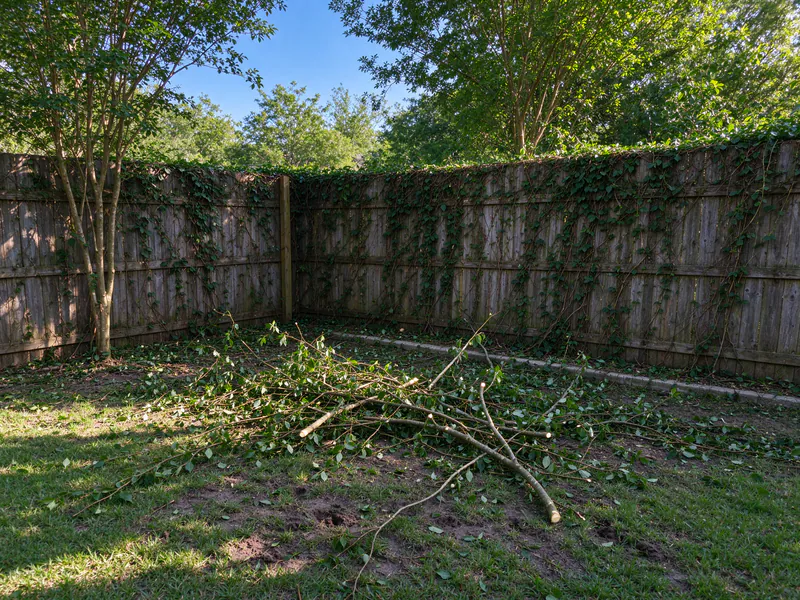
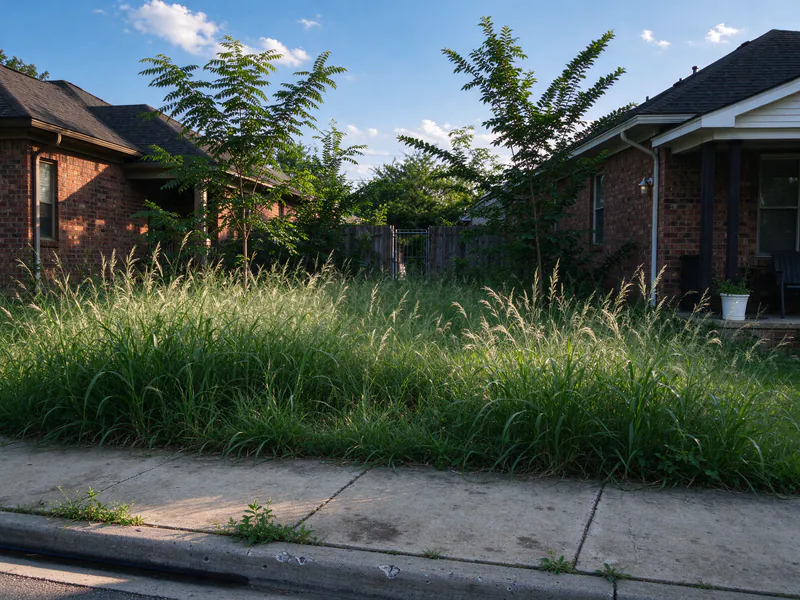
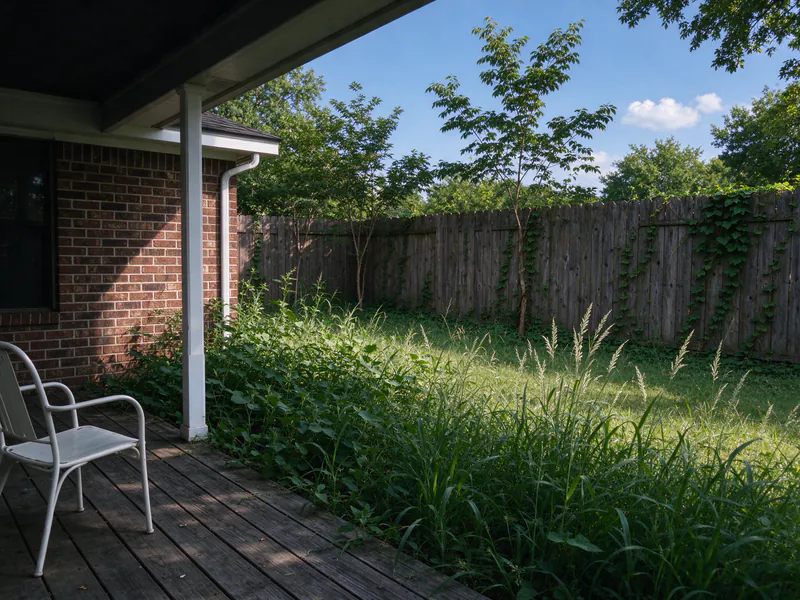
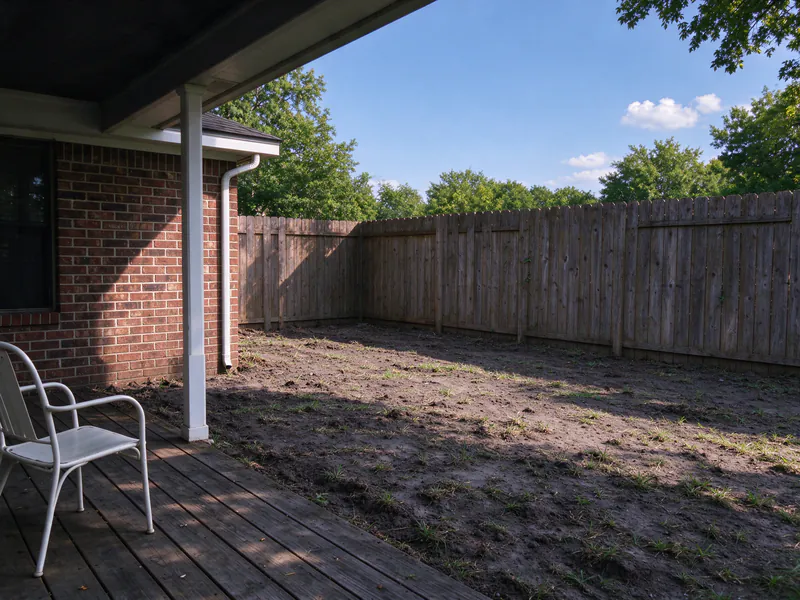
Post Oak Land Clearing Denton offers and manages overgrown lot clearing in Denton and the west and north of Denton County, with the work done by licensed and insured contractors. An overgrown lot is one that has gotten past what a mower can take: grass and weeds at chest height, vines up the fence, saplings in the flower beds and the back corner gone to thicket. It usually comes to light in one of three ways, through a letter from code enforcement, an inherited or long-vacant property, or a house about to be listed. The aim is narrower than lot clearing: get the ground back to something that can be mowed and kept, without taking trees that should stay.
What happens on the first visit
The first visit finds the property lines, the way in and whatever is hiding in the growth. Expect the gate width to be measured, fences and neighbors’ improvements noted, and a slow walk for septic lids, meter boxes, irrigation heads and cleanouts that a blade would break. Trees worth keeping get flagged so they are worked around rather than cleared with the brush, the same approach selective clearing takes on wooded ground.
Overhead lines get a hard look. Inside Denton, Denton Municipal Electric prunes vegetation within at least 10 feet of its lines and asks residents not to trim around them, so limbs touching a service drop or a line are left for the utility; call DME at (940) 349-7000. Across much of the rural county the line belongs to a cooperative or another utility, which is checked for that address. If a code notice is involved, its deadline sets the schedule, and the walk ends with a plan that meets the notice rather than one that clears more than it asks.
Denton’s weed rule and what code enforcement checks
Denton’s vegetation code requires grass and weeds to be kept at or below 12 inches. It also sets limb clearances: at least 7 feet over sidewalks, 13.5 feet over streets and 12 feet over alleys. Where growth passes 48 inches and is an immediate danger, the city may abate it without notice.
Those numbers define what a code-driven job has to deliver: the height brought down, the overhanging limbs raised, and the cut material gone. That is a smaller scope than a full clearing, and it should be priced that way. Discarding yard waste into the street or the right-of-way has been prohibited since January 1, 2025, so cut brush cannot be staged in the gutter while the work goes on.
Large tracts work differently. On 5 acres or more, the height rule applies to the strip within 100 feet of an open street and within 100 feet of a neighbor’s improved property under different ownership, not to the whole tract. Cultivated hay is exempt if it is mowed within 20 feet of neighboring improved property, and land that must stay natural, such as a mapped sensitive area along a creek or a conservation easement, is exempt too and should stay uncut; clearing near creeks and floodplains explains those limits. Outside Denton, each town’s weed rule is confirmed per address.
Getting through a backyard gate
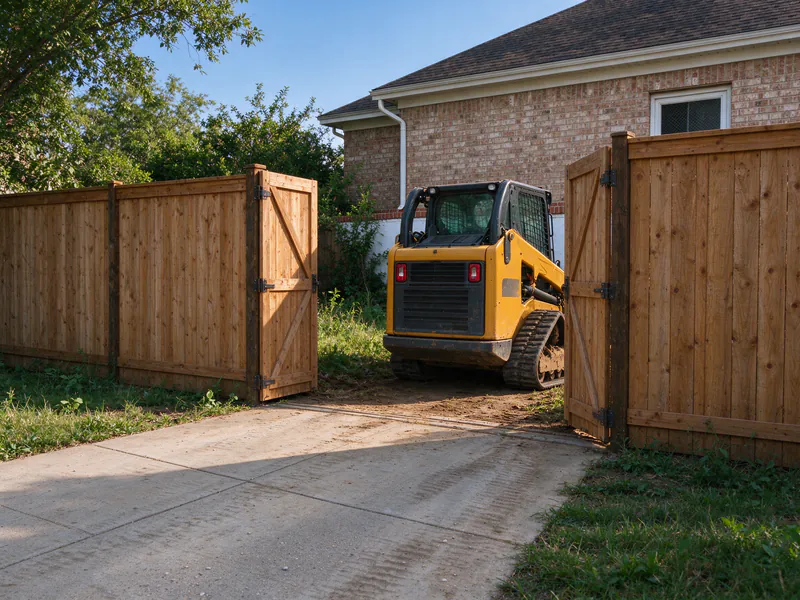
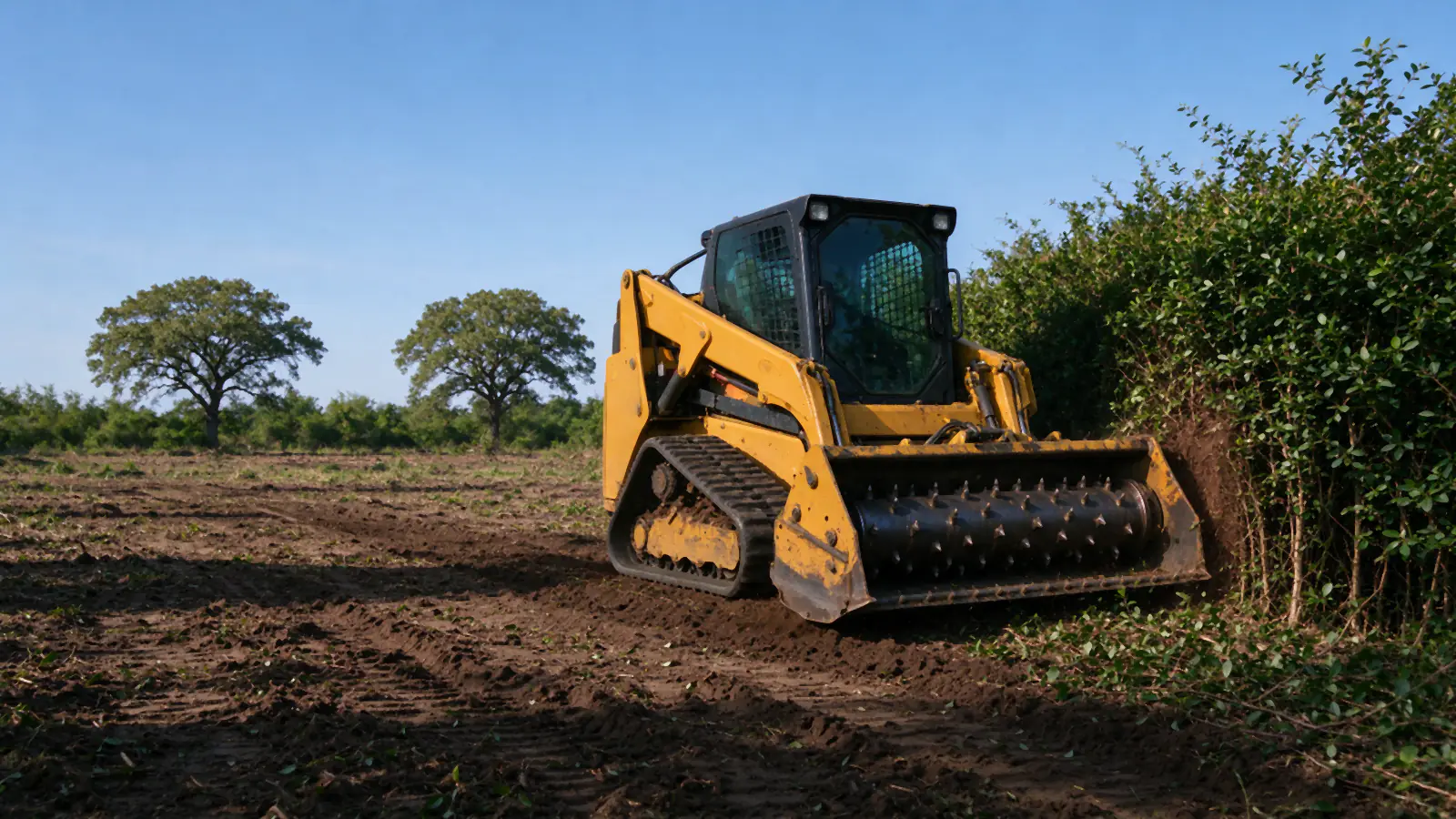
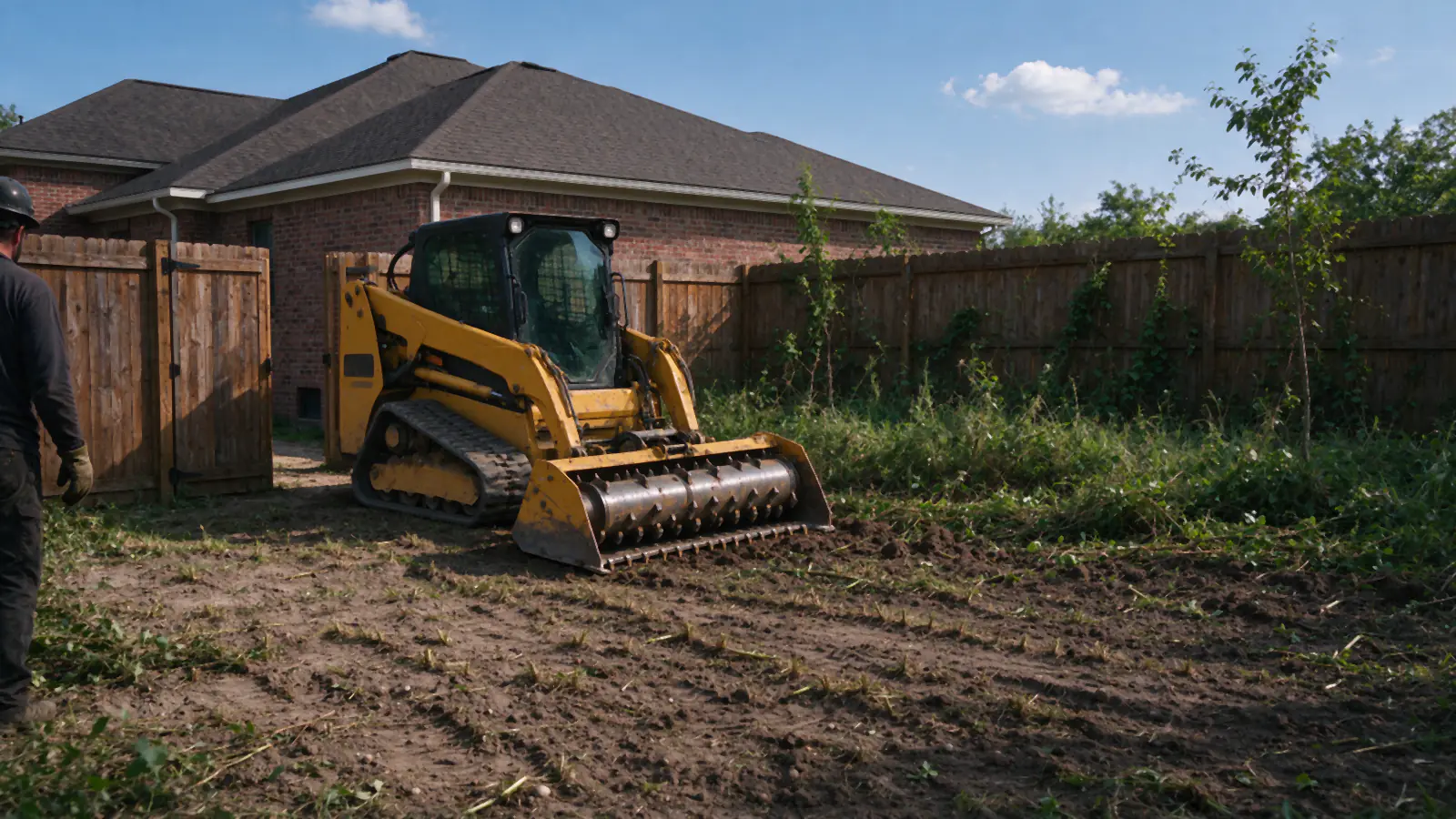
Most backyard jobs are limited by the gate, not the growth. A compact track loader needs a wider opening than a garden gate, and where none fits, the work is done with walk-behind brush cutters, string trimmers and saws, and the brush is carried out by hand. Removing a fence panel and resetting it afterward is sometimes cheaper than days of hand work, agreed with the owner first.
Homeowners report backyards with weeds as tall as a person and no way to get a riding mower through the fence; that is the kind of job this page is about. Inside the fence, the machine stays off septic drain fields, irrigation lines and soft clay after rain, where tracks leave ruts that bake hard by August. On a small yard the difference between a machine and hand work is mostly time, and time is most of the price.
Trees on an occupied home lot are generally exempt from Denton’s tree preservation rules, but the city’s tree removal page still states that any tree to be removed needs a permit submittal, with exemptions filed through Building Safety on eTRAKiT; a substantiated exemption has no fee. Mesquite, honey locust and ornamental pears are not protected in any case. The power lines guide covers trees near service drops.
Got a code notice or a deadline?
Send the notice date, the gate width and photos. The walk-through sets a scope that meets the notice.
What turns up in a neglected lot
Hidden debris is the risk that sets this job apart from routine brush work. Years of growth hide wire, T-posts, old fencing, bricks, glass, tires, appliances and dumped concrete, and any of them can break a mulcher tooth or throw a fragment. A sweep on foot before any machine starts reduces that risk; it does not remove it, so machines work slowly into unseen ground.
Trash also changes where the material can go. The City of Denton Landfill’s brush rate covers clean green waste, so tires, lumber and household junk are separated from the brush rather than mixed into the load. None of it belongs in a burn pile either: tires, plastics, lumber and construction material are on Denton County’s list of materials that may not be burned. Trash removal is listed separately on the estimate so you can see what it adds.
Where the cut brush goes
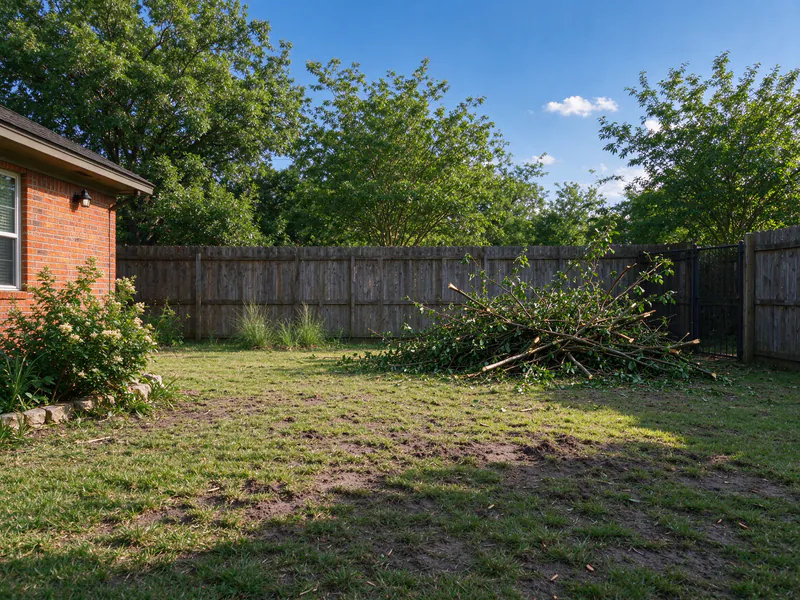
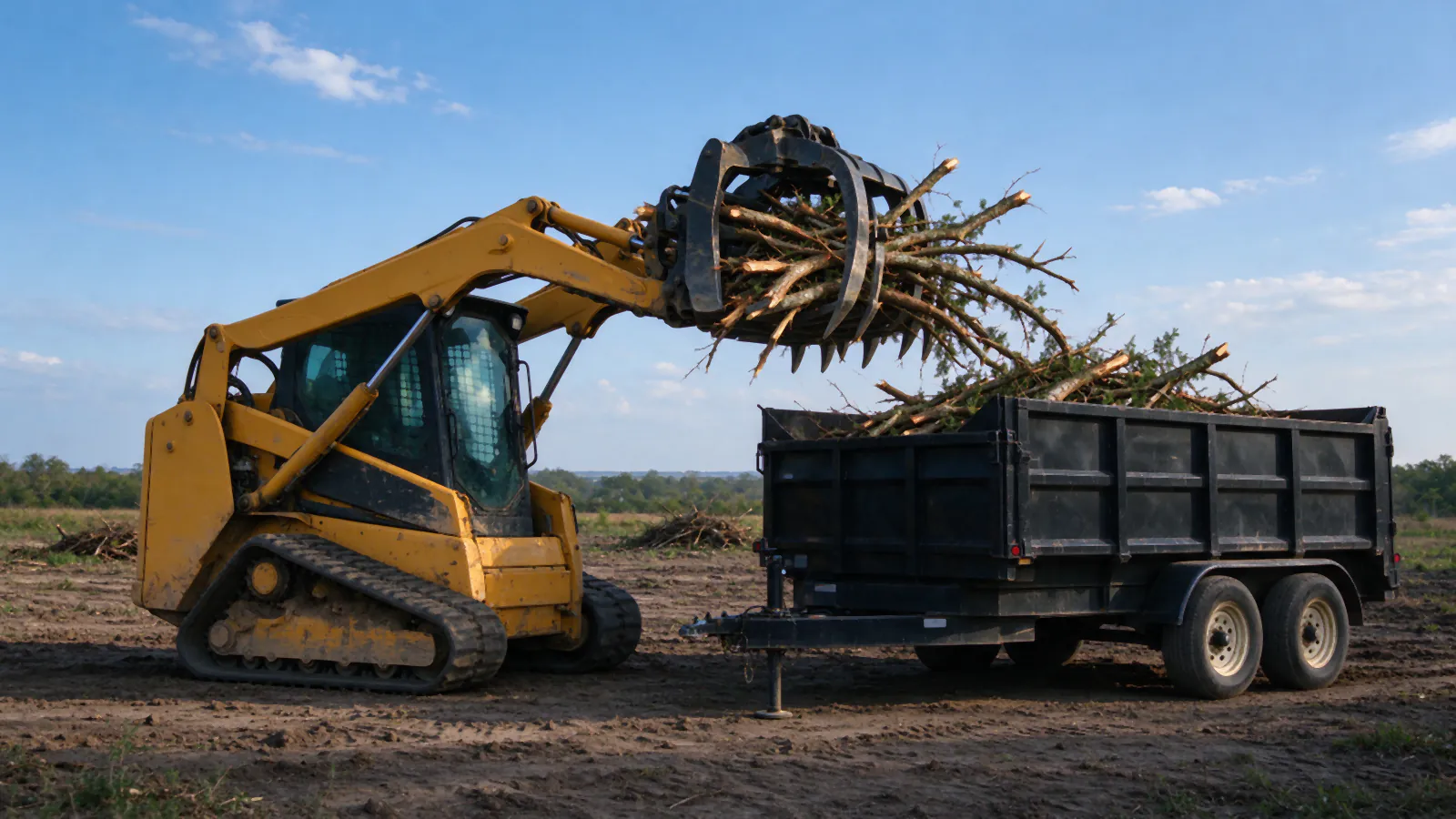
Within Denton city limits, cut brush has three destinations: curbside pickup within the weekly limit, mulching on site, or hauling. Burning is not one of them, because the Fire Marshal’s Office does not allow open burning in the city.
Curbside service takes up to 4 cubic yards a week at no extra charge, about the size of four washing machines. Limbs go out in 4 to 8 foot lengths, in one pile, cut ends toward the street, at the curb by 7 a.m. and 4 feet from the carts, and piles over the limit are billed to the utility account. A yard left for several seasons usually produces more than one week’s allowance, so the balance is mulched and spread on the lot or hauled. The landfill on Mayhill Road takes brush at $30 a ton for a Denton customer with pieces 12 feet or shorter, $35 for longer pieces and $40 for non-Denton customers, with a $26.50 minimum per load. In Krum, city brush service takes bundled 4-foot lengths or a monthly call-in pickup, which suits trimming more than a cleared lot. Land clearing debris removal covers larger loads, and county burn rules for land outside the city are in burning brush in Denton.
After the cut: keeping it mowable
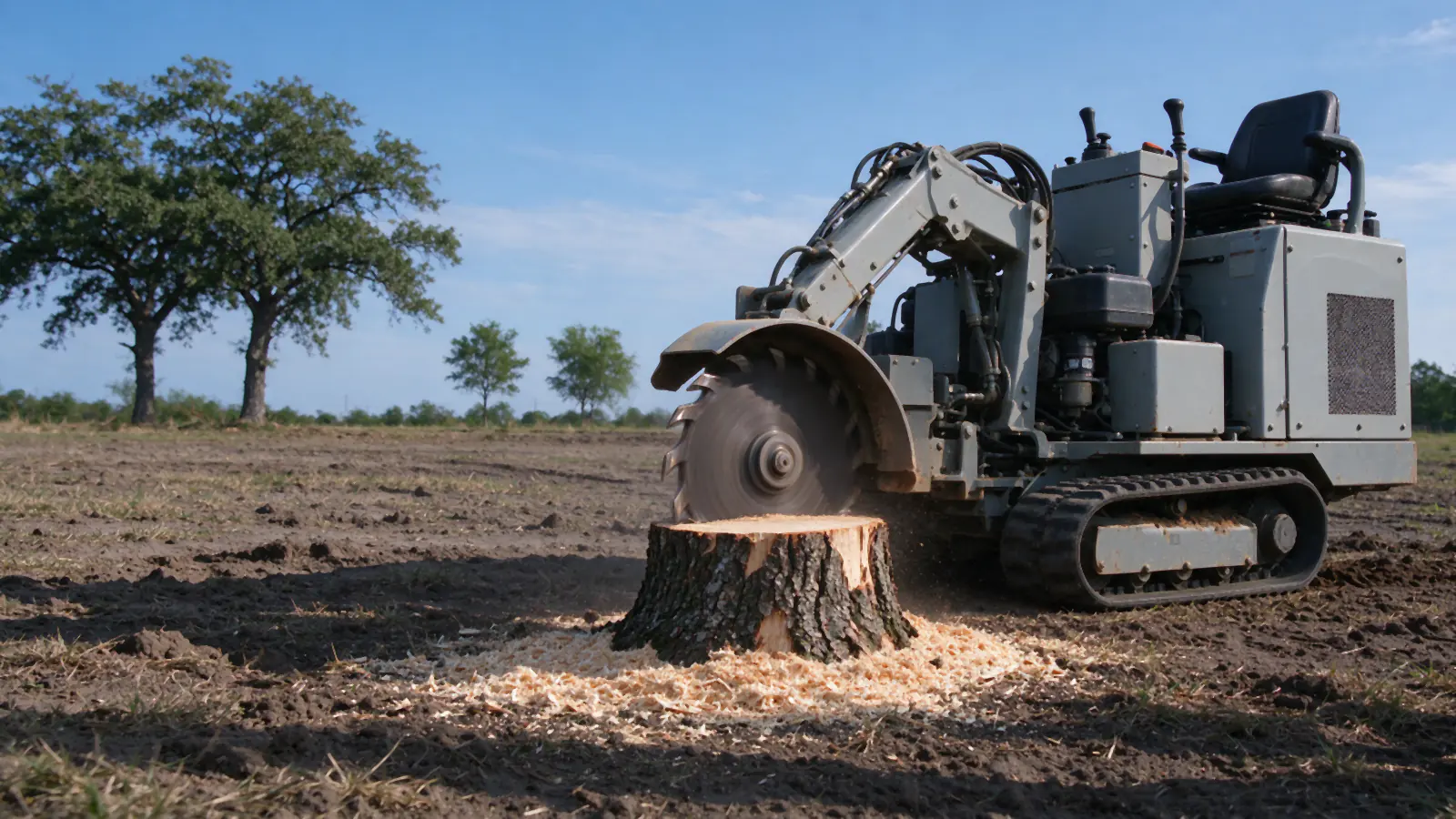
Once the lot is cut back, regular mowing keeps it there, but some plants push back. Privet, greenbrier, honey locust and hardwood saplings resprout from the roots left behind, so the first growing season usually needs a mowing pass every few weeks and spot work on resprouts. Sapling stumps cut flush can be ground out where they would catch a mower; stump grinding and removal covers that.
Bare patches of clay seal and wash in the first hard rain, especially in May and October, Denton’s wettest months, so seeding thin spots or leaving mulch on them is worth the small cost. For a lot with real thicket rather than tall weeds, brush clearing explains the root question in more detail, and the regrowth guide lays out a first-year schedule.
What overgrown lot clearing costs
There is no honest per-acre figure for a backyard. Small in-town jobs are priced by the machine or hand time they take plus disposal, and the trailer haul and setup cost the same whether the yard is a quarter acre or one acre. For context, typical North Texas land clearing runs $1,500 to $3,500 an acre for light brush, and the Texas A&M AgriLife custom rate survey puts pasture shredding at about $40 an acre in the East region, which includes Denton County. That shredding figure is for open grass a tractor can drive across, not a fenced yard full of saplings.
What moves the price on an overgrown lot: gate width and whether a machine fits at all, how much woody growth there is compared with weeds, the volume of brush beyond the curbside allowance, trash to separate and haul, stumps that need grinding, slope and wet ground. Limbs near power lines stay with the utility and add nothing. The land clearing cost calculator gives a starting range by acreage. The cost per acre guide explains why small lots carry a higher rate per acre, and clearing land yourself vs hiring helps weigh a rental weekend against hiring the work out.