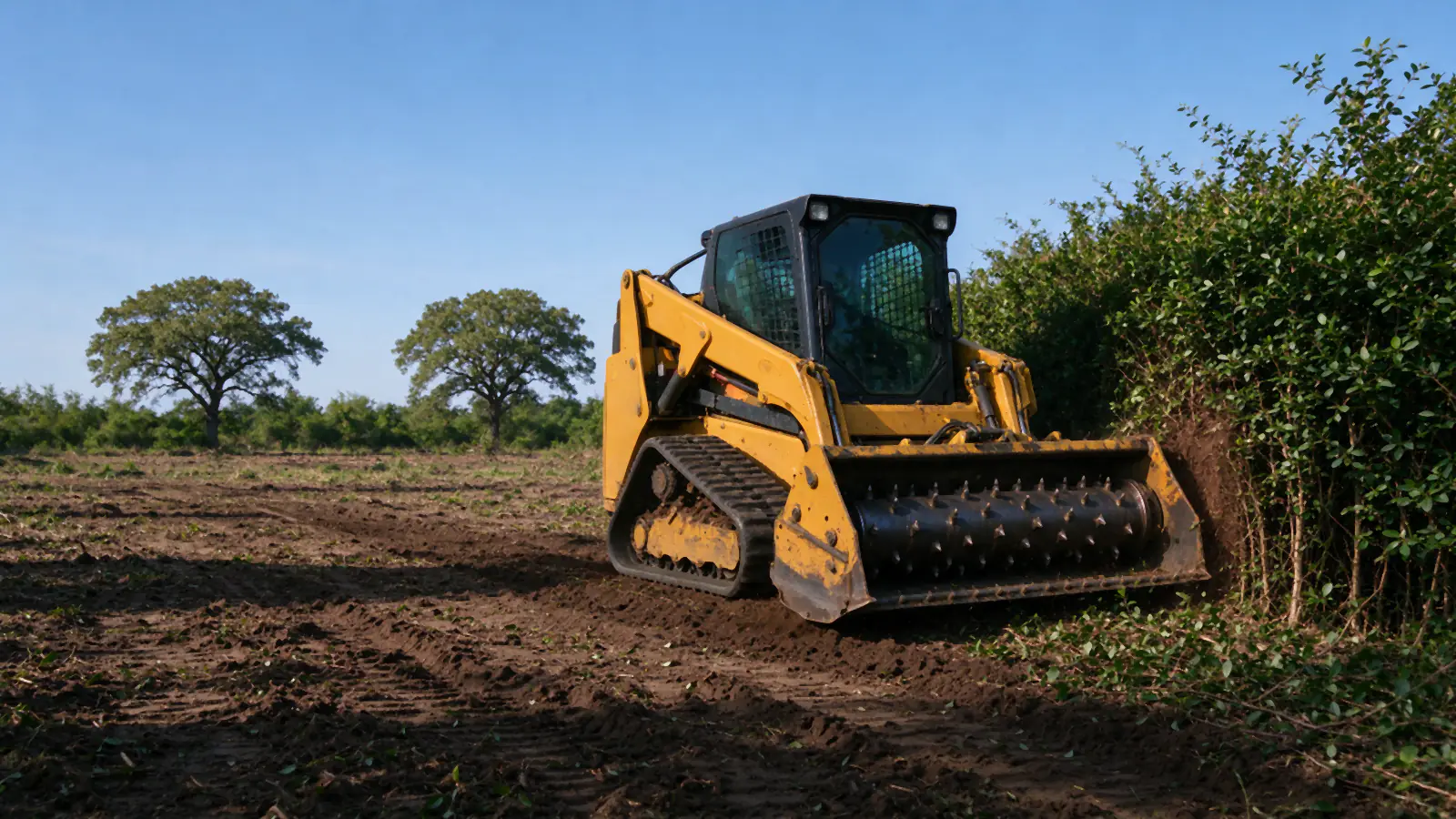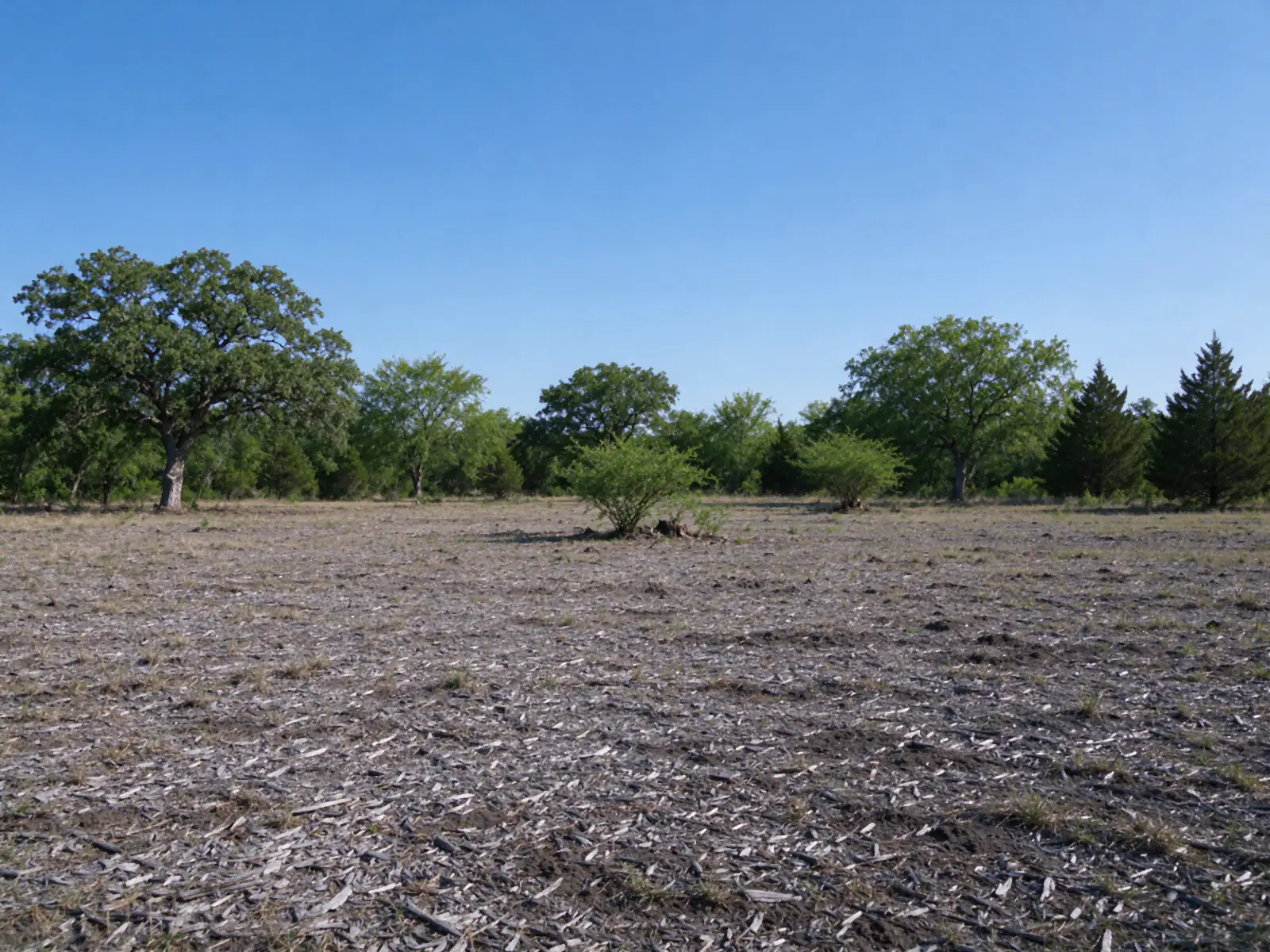
Brush grows back from two places: roots and root crowns left in the ground, and seed already in the soil. Keeping it back means matching the clearing method to the species, then following up through the first one or two growing seasons with mowing, spot treatment of resprouts and grass that can compete. No single pass stops everything.
Post Oak Land Clearing Denton offers and manages brush clearing across Denton and the west and north of Denton County, with the work done by licensed and insured contractors. This guide covers what happens after the machines leave, which is where most of the long-term result is decided.
Why brush comes back
Cutting a woody plant removes its top, not its ability to grow. The roots hold stored carbohydrates and, in many species, buds that sit idle while a trunk is standing. Remove the trunk and those buds wake, fed by the reserves below ground. The plant is effectively starting over with a mature root system already in place, which is why a resprout can grow several feet in one season.
Seed is the second source. Years of brush leave a seed bank in the top inch or two of soil, and birds keep adding to it, especially along fence rows where they perch. Cedar berries pass through birds and land wherever they roost. Clearing lets light reach that seed, and the first warm, wet spell brings it up.
The method decides which source dominates. Forestry mulching leaves roots and covers the soil, so you get resprouts but fewer seedlings. Clearing and grubbing pulls many root crowns but exposes bare soil, so you get fewer resprouts and more seedlings. The forestry mulching vs land clearing guide sets the two side by side.
Which species come back, and how
| Species | Comes back from | What keeps it down |
|---|---|---|
| Eastern redcedar | Seed only; a stump cut below the lowest green branch dies | Low cut or mulch at grade; mow or pull seedlings while small |
| Mesquite | Buds on the root crown below ground | Remove the crown by grubbing, or treat cut stumps and resprouts; repeated mowing |
| Honey locust | Root crown and root suckers | As for mesquite; watch for suckers well away from the old stump |
| Chinese privet | Roots, stumps and abundant seed | Repeated cutting plus treatment of resprouts; check creek edges for seedlings |
| Greenbrier and briars | Underground tubers and runners | Persistent mowing through the season; grass cover that shades the ground |
| Callery (Bradford) pear | Root suckers after cutting | Treat cut stumps promptly; mow suckers before they set thorns |
| Hackberry and cedar elm | Stump sprouts | Grinding the stump below grade, or mowing sprouts while soft |
Cedar is the easy one, which is a large part of why cedar clearing by mulching works so well in North Texas. Mesquite and privet are the hard ones. City of Denton staff have documented Chinese privet along the length of a Pecan Creek tributary, where an approved plan set a 95% eradication goal over 3.52 acres of creek buffer, a reminder that privet is a multi-year project. The cedar guide covers juniper in depth.
The first year after clearing
The first growing season is when roots try hardest to rebuild, and the first year of follow-up costs a fraction of clearing again. A workable plan around Denton looks like this:
- Right after clearing. Seed any bare soil with grass suited to the use, so the ground is not left to whatever seed is waiting. On slopes and near ditches, cover it; erosion control covers the options.
- Spring flush. Resprouts and seedlings come fast with the spring rains; NOAA’s normals put May, at 4.52 inches, as Denton’s wettest month. Walk the ground in late April or May and note where resprouts cluster.
- Before resprouts harden. Mow or shred while new stems are soft and green. Each cut forces the root to spend reserves on another flush, and repeated cuts in the growing season drain it.
- Midsummer. Growth slows in the heat of July and August. This is the time for spot treatment of persistent resprouts, by the owner or a licensed applicator the owner arranges, with herbicide applied according to the label.
- Fall. October is Denton’s second-wettest month and brings a second flush. Mow again before frost, and pull or cut young cedars while they are knee-high.
From the second year, most cleared ground needs a mowing or two a year and an eye on fence lines, creek edges and the spots where stumps were thickest. A brush hog pass on open pasture runs about $40 an acre in the Texas A&M AgriLife custom rate survey for the East region, which is cheap insurance against starting over.
What to do after forestry mulching
Mulched ground recovers well when the chip layer is thin and even. Grass and forbs push through a light layer within a growing season, helped by the topsoil and seed bank the mulcher left alone. Thick mats are slower, because they shade the soil and because wood chips tie up some nitrogen at the soil surface while they decay. The fix is mechanical: spread heavy piles thinner rather than leaving windrows.
What to plant depends on the use. On pasture, a grass mix suited to grazing; on a lot you plan to mow, a turf grass; on woods you want open, nothing at all except some patience. Seed into the thin spots in the right season, so the grass is established before the next flush of brush. Do not expect the mulch itself to stop root sprouts. It suppresses some seedlings, and that is all. The forestry mulching page explains what the layer does on Denton clay.
Stumps and regrowth
Whether a stump comes back depends on the species and on what is left of the crown. Stump grinding chews through the crown, which ends regrowth on many trees, but suckering species send shoots up from roots the grinder never reached. Grubbing removes the crown and the main roots, which is the most reliable mechanical answer on mesquite, at the cost of more disturbed soil. A mulcher leaves the stump at grade with its crown intact, so mulched mesquite will resprout unless it is followed up.
On ground with hundreds of mesquite or honey locust stems, the practical choice is usually between grubbing once with a root rake or clearing and grubbing pass, and mulching plus two or three seasons of follow-up. The first costs more up front and opens the soil; the second costs less up front and asks more of you later.
Clearing brush that keeps coming back?
Send photos of the regrowth and the acreage. The walk-through identifies the species and matches the method to what is growing.
Grazing, goats and grass as long-term control
A dense, healthy grass stand is among the cheapest long-term brush controls available, because it shades out seedlings and competes for water. Overgrazing works the other way, opening gaps that brush fills. On pasture clearing jobs, the follow-up plan matters as much as the clearing.
Goats browse leaves, vines and tender resprouts, which makes them useful for keeping regrowth down once the woody stems are gone. They do not remove stems or roots, and they need fencing and management. The goats vs mulcher post compares them with machine work.
Rules and programs that touch follow-up
Inside Denton, the city’s vegetation code keeps grass and weeds at 12 inches or less. On tracts of 5 acres or more, it applies within 100 feet of an open street or a neighbor’s improved property, and areas that must stay natural are exempt. A lot that has grown past that height is an overgrown lot clearing job. Creek buffers inside the city restrict clearing outright, so follow-up there is limited to approved invasive removal, as the creeks and floodplains guide explains.
On farm and ranch land, NRCS EQIP can share the cost of brush management, mechanical or chemical, for agricultural producers with an identified resource concern; the EQIP brush management post explains how applications work. For non-native invasives such as Chinese privet, the Texas A&M Forest Service’s Texas Invasive Plant Solutions program has covered 75% of treatment or removal costs, up to $7,000 per landowner. Native cedar is unlikely to qualify. If the land carries an agricultural valuation, the ag exemption and land clearing guide explains how brush work fits it.
Timing the next clearing so it lasts
Clearing at the right time of year helps follow-up. Brush cleared in late fall or winter, when it is dormant, puts its first flush into spring, when grass seeded right after clearing is ready to compete. Brush cleared just before the spring rains gets a head start on everything. The when to clear land in North Texas guide covers the seasons.
If regrowth has already taken over a cleared tract, a second pass with the right method usually costs less than the first clearing did. Call (940) 204-6191 or request an estimate with photos of what is coming back.