
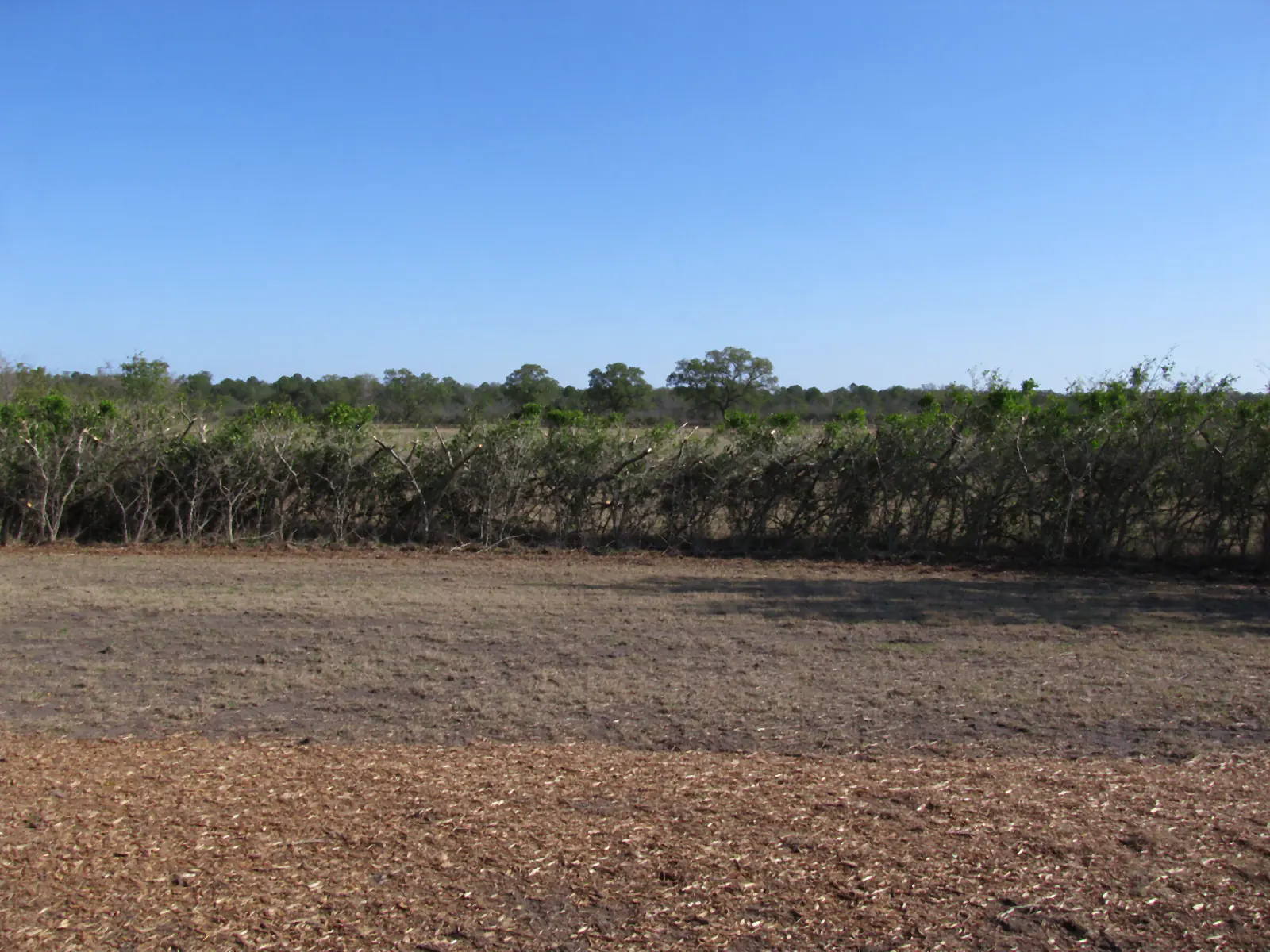
Goats or a machine is a real question in Denton. A resident on the city’s subreddit once asked for a lead on goats to clear brush, and another replied that goats were way cheaper than cutting and mulching everything; a different homeowner, facing a head-high backyard, reported that goat rental was out of their price range. Both can be true, because goats and a forestry mulcher do different jobs. Post Oak Land Clearing Denton offers and manages brush clearing and forestry mulching across Denton and the west and north of Denton County, with the work done by licensed and insured contractors, and this note lays out the difference so you can decide before spring growth starts.
The direct answer
Goats suit vines, briars, poison ivy and soft growth on ground a machine should not touch, and they need repeat visits because they leave stems and roots. A forestry mulcher suits woody brush and small trees you want gone in one pass, leaving a mulch layer and stumps at grade. Many properties end up using a machine first and grazing or mowing after.
What goats actually remove
Goats are browsers. They prefer leaves, buds, tender shoots and bark over grass, and they reach as high as they can stand on their hind legs. That makes them good at stripping greenbrier, honeysuckle, poison ivy and the lower leaves of brush, including on slopes, gullies and wet ground where a tracked machine would rut the clay.
What they leave matters as much. The woody stems stay standing, now leafless. The roots are untouched. Anything taller than a goat can reach keeps its crown. Brush that resprouts, such as mesquite, honey locust, privet and hackberry, pushes new shoots from its roots and stumps the next growing season. Repeated browsing of those shoots over several seasons can drain a plant’s reserves; a single visit mostly buys time.
Goats also need a working setup: secure fencing, water, shade, protection from dogs and coyotes, and someone checking on them. They eat ornamentals and young trees as readily as brush and will strip bark when they run short of food, which girdles saplings. Whether livestock can graze on a lot inside city limits, even temporarily, is a question for the city and any HOA, confirmed per address.
What a forestry mulcher removes
A forestry mulcher grinds standing brush and small trees from the top down into chips, in place, and spreads them over the ground. In one pass the stems are gone, the debris is handled and the ground is covered. Stumps end at or near ground level and the roots stay in the soil, which keeps the ground stable but means mulching is not grubbing. The forestry mulching page explains the machine and its limits, and forestry mulching vs land clearing compares it with clearing and grubbing.
The mulcher has its own limits. It needs firm ground and a way in. Saturated Sanger or Slidell clay ruts under tracks, so a wet stretch can delay the work. It cannot work tight against fences, buildings or keeper trees without hand work around them. And it does not stop regrowth by itself: resprouting species still come back from the roots it leaves.
Why spring regrowth is the deciding season
The two methods meet at the same problem: what comes back in spring. Here is how that plays out on common Denton brush.
| Plant | After the mulcher | After goats | What controls it |
|---|---|---|---|
| Eastern redcedar | Does not resprout when cut below the lowest green branch | Young cedar is browsed; larger trees keep their trunk and upper crown | One mechanical pass, then watch for seedlings |
| Mesquite, honey locust | Resprouts from roots and stumps | Leaves and shoots stripped; plant survives | Follow-up mowing, grazing or targeted treatment over several seasons |
| Chinese privet, hackberry | Resprouts from roots | Readily browsed; regrows | Repeated cutting or grazing of new shoots |
| Greenbrier, vines, poison ivy | Ground down with the brush; roots regrow | Readily eaten, including on slopes and in fence lines | Grazing or mowing through the growing season |
| Johnsongrass, tall weeds | Cut with the brush | Eaten, but goats prefer browse | Regular mowing |
The pattern points to an order of work. Mulching in late fall or winter, when the brush is dormant, takes out the woody stems and the cedar in one pass and leaves the ground covered. The spring flush that follows is soft, low growth: exactly the kind goats, a brush hog or a mower handles well. The keeping brush from growing back guide sets out that follow-up schedule, and when to clear land in North Texas explains the seasons on Denton clay.
Deciding before spring growth starts?
Send the acreage and a few photos of the brush. The walk-through tells you what a mulcher would take, what it would leave and what comes back.
Cost: what moves each one
Neither method has a universal price. A typical North Texas range for forestry mulching is $1,400 to $3,500 an acre for light to moderate growth, with dense cedar, larger trees and small acreage pushing past it. Brush hogging is far cheaper per pass: the Texas A&M AgriLife custom rate survey for the East region, which includes Denton County, puts pasture shredding at about $40 an acre.
Goat grazing is priced by the provider, usually around the size of the area, the herd and how long it stays, plus fencing and water. The real comparison is total cost over the time it takes to reach the result you want. One mulcher pass on woody brush, followed by cheap mowing, can cost less over three years than several seasons of grazing to wear the same brush down. On vines and briars across steep or wet ground, the comparison can run the other way. The land clearing cost calculator gives a range for machine work on your acreage.
Rules that apply to both
Neither method gets around the local rules for trees and debris.
- Inside Denton city limits, a post oak 6 inches across or more counts as a heritage tree, and removing protected trees needs the tree removal process. Goats that girdle a protected tree still kill a protected tree.
- Mulching leaves the debris on site, which fits Denton’s rule against open burning inside city limits; grazing produces no debris to move.
- Near creeks, Denton’s riparian buffers and floodplain rules limit vegetation removal of any kind. Clearing near creeks and floodplains explains those limits.
Choosing, by property
- A pasture closing in with cedar and mesquite: mulch the woody brush, then mow, graze or spot-treat the regrowth. Pasture clearing and cedar clearing cover the approach.
- A fenced backyard of vines and weeds: goats, hand work or a walk-behind cutter, depending on access and budget. Overgrown lot clearing covers in-town yards.
- A creek bank or steep draw: low-impact methods first, within the buffer rules.
- A woodland where the big oaks stay: selective clearing of the understory, with keepers protected from both machines and browsing.
Not sure which fits? Call (940) 204-6191 or send a few photos, and the walk-through will tell you what each method would leave behind on your ground.