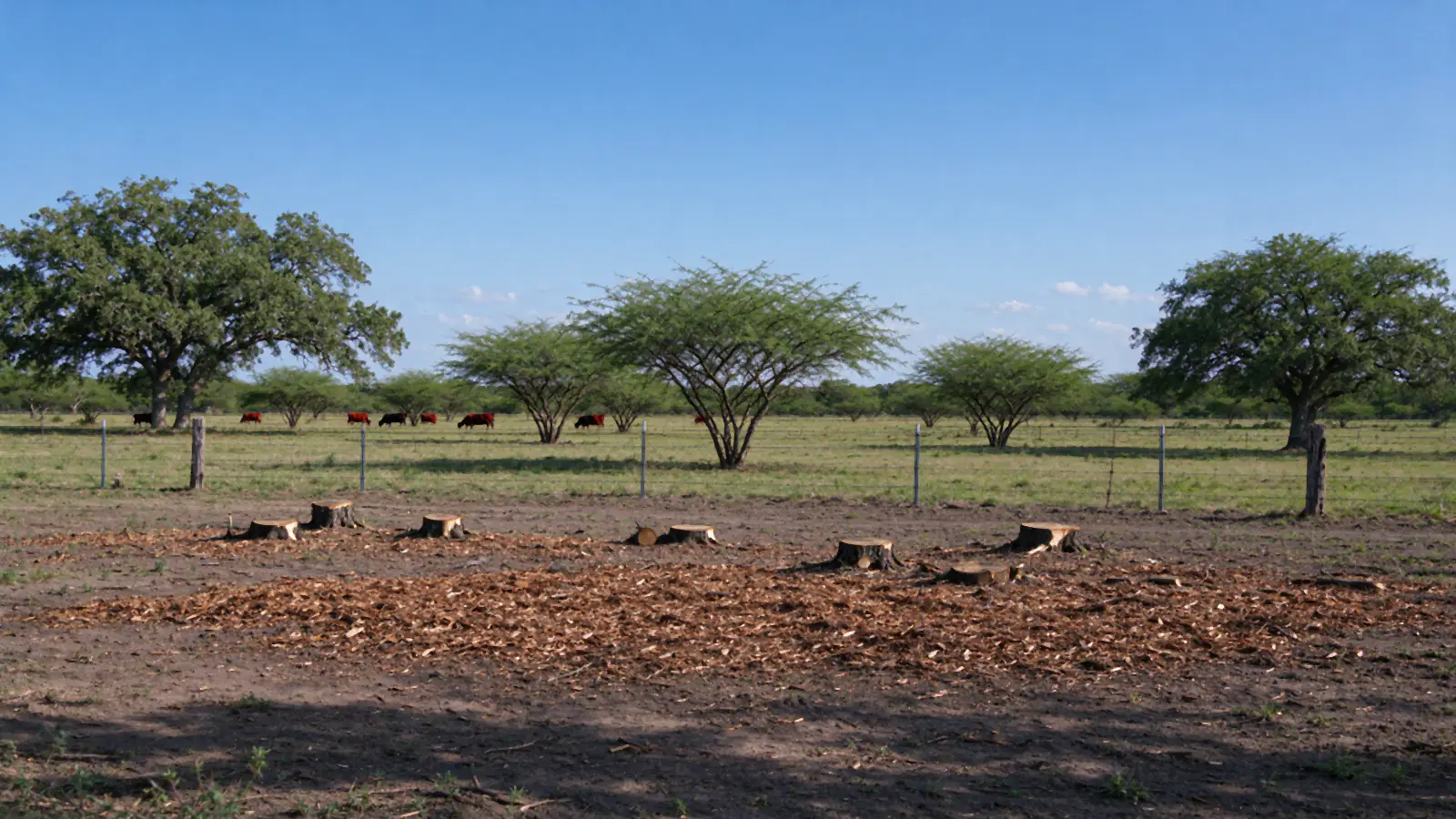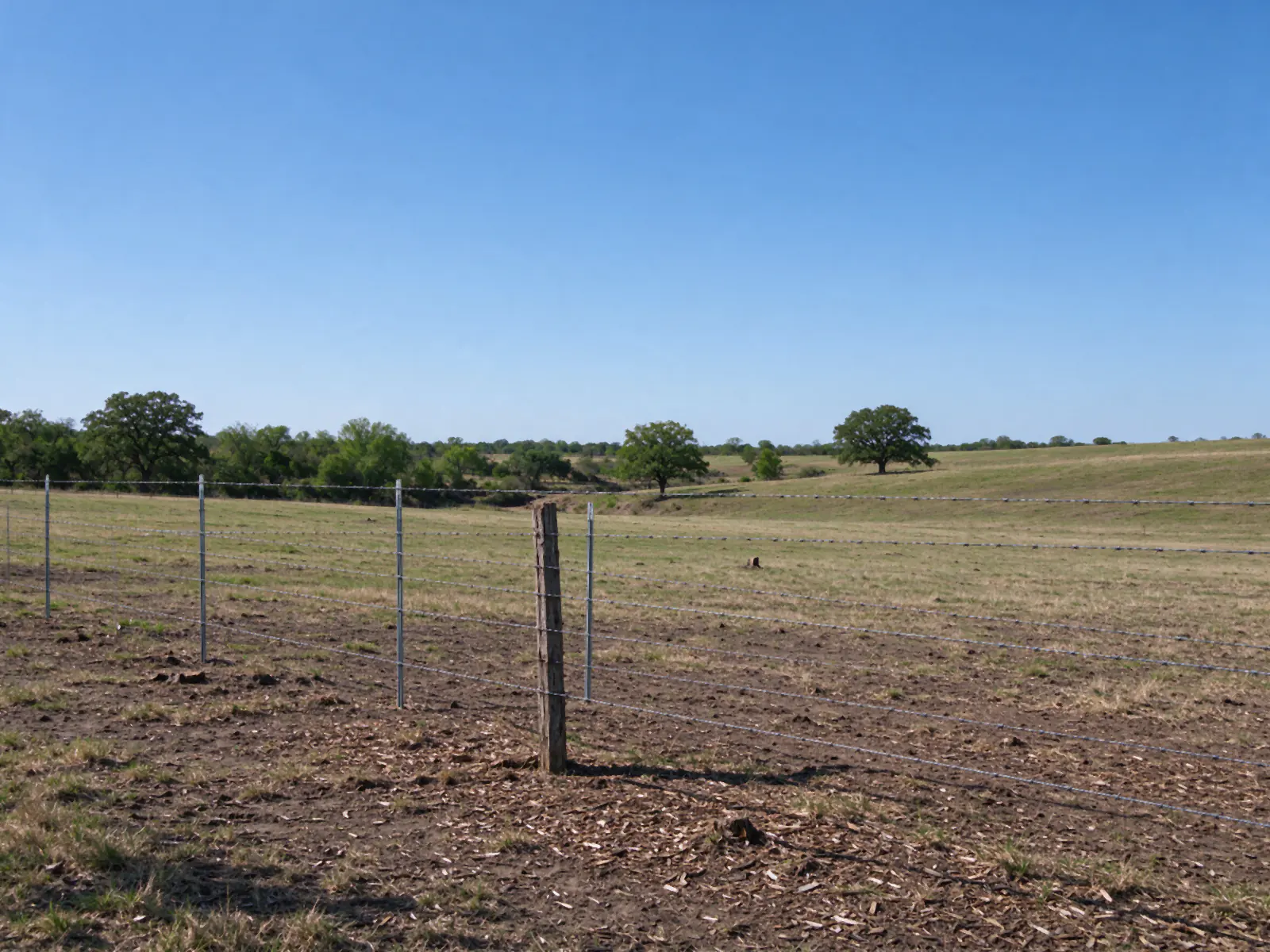
Clearing does not by itself change an ag valuation; the use of the land afterward does. Brush work that keeps land in grazing or hay production fits inside agricultural use. Clearing that turns ag-valued land into a homesite or development can trigger a rollback tax for the three preceding years under Texas Tax Code 23.55. Confirm your parcel with the Denton Central Appraisal District first.
Post Oak Land Clearing Denton offers and manages pasture clearing and other land clearing across Denton and the west and north of Denton County, with the work done by licensed and insured contractors. This guide explains how clearing work sits against the tax rules. It is not tax advice, and a tax adviser or the appraisal district has the final word on any parcel.
What the ag exemption really is
The phrase is shorthand. Texas law lets qualifying open-space land, often called 1-d-1 land after the constitutional section behind it, be appraised on its capacity to produce agricultural income instead of its market value. On fast-growing land around Denton, where market value reflects housing demand, the gap between those two values can be large, and so can the gap in taxes.
Because the land is valued for its use, the valuation lives or dies by that use. Land has to be devoted principally to agriculture to the degree of intensity that is normal in the area, and the appraisal district sets what that means locally. The Denton Central Appraisal District applies its own guidelines for intensity and acreage; this guide does not state a minimum, because the district does, and the answer depends on the type of operation.
Clearing that keeps land in agricultural use
Brush management on grazing land is normal agricultural work. Cedar, mesquite and honey locust crowd out grass, cut carrying capacity and make cattle harder to gather. Taking them out to restore pasture is part of running the land, not a change in what it is.
Methods that keep the ground productive suit this work. Forestry mulching grinds brush in place, leaves the grass roots and seed bank, and gets the pasture back in use within a season or two. A brush hog keeps cleared pasture open at about $40 an acre in the Texas A&M AgriLife custom rate survey for the East region. Fence line clearing restores the boundaries that keep livestock in. On cedar-heavy ground, cedar clearing is usually the first job, because cut cedar does not resprout.
Records help if the use is ever questioned: dates of clearing, acreage treated, grazing leases or hay sales afterward. The point of the paperwork is to show that the land stayed in agricultural production through the work, which is what the valuation turns on.
Inside Denton city limits
Ag-valued land inside the city meets city rules too. The tree preservation section of the Denton Development Code exempts agricultural operations as defined in Texas Agriculture Code 251.002(1). The clearing and grading permit is narrower: its agricultural exemption covers soil disturbance from normal crop operations and expressly excludes tree removal. A pasture job that takes out trees can therefore still need the $453 clearing and grading permit, and the tree exemption has to be claimed through Building Safety. The Denton tree removal permit guide covers the filing. City weed rules also exempt cultivated hay, provided it is mowed within 20 feet of neighboring improved property.
Clearing that changes the use: rollback tax
When land appraised as 1-d-1 agricultural land changes to a non-agricultural use, Tax Code 23.55 imposes an additional tax: the difference between the taxes paid on the ag value and the taxes that would have been paid on market value, for each of the three preceding years the land carried the special appraisal. The tax becomes a lien on the land.
Clearing for a house, a subdivision, a commercial pad or a lot to sell for building is the usual trigger. The machines do not cause the rollback; the new use does. Clear 2 acres of cedar from a pasture that stays a pasture and nothing changes. Clear the same 2 acres for a homesite and the use of that land has changed.
The statute also handles partial changes. If the use changes on only part of a parcel, the additional tax applies to that part. Carving a homesite out of a larger ag tract is the common case around Denton, and it is why the location and size of the homesite matter before anything is cleared. Set the boundary of the area that will change use, talk to the appraisal district and a tax adviser, and then clear to that line. The clearing land to build a house guide covers the site work that follows.
Clearing ag-valued land?
Tell us the acreage and what the land will be used for afterward. The plan can keep pasture work and homesite work clearly separate.
Wildlife management use
Wildlife management use is a way for land already in open-space appraisal to keep a productivity valuation while being managed for wildlife instead of livestock or crops. Under Tax Code 23.51(7), the land must be actively used in at least three of seven listed ways:
- Habitat control
- Erosion control
- Predator control
- Providing supplemental supplies of water
- Providing supplemental supplies of food
- Providing shelters
- Making census counts to determine population
Brush work belongs mainly under habitat control and erosion control, and the difference from pasture clearing is in what is left. A wildlife plan usually wants mottes of oak for cover and mast, brushy edges along draws and fence rows, and openings where forbs and grasses can grow. Selective clearing fits that far better than clearing a tract bare. Mulching cedar out of a post oak woodland, keeping the oaks and opening the understory, is a typical habitat-control project.
The plan itself goes on Texas Parks and Wildlife Department form PWD-885 and is filed with the appraisal district, which applies TPWD’s guidelines, including minimum acreage for the region. Clearing should follow the plan; clearing first and fitting a plan around it afterward invites questions.
Cost-share for brush work on ag land
Some programs share the cost of brush management on working land. None of them pays for homesite clearing.
- NRCS EQIP. Cost-share for brush management and related practices on farm and ranch land with an identified resource concern. Applications are taken year-round, with a fall ranking date each year; check with the local USDA Service Center. The EQIP brush management post explains the process.
- TPWD Landowner Incentive Program. Pays 50% to 75% of project cost for selective brush management and habitat work planned with a TPWD biologist, during periodic proposal rounds.
- Texas Invasive Plant Solutions. A Texas A&M Forest Service program that has covered 75% of treatment or removal costs for non-native invasives such as Chinese privet, up to $7,000 per landowner. Native cedar is unlikely to qualify.
Cost-share and appraisal are separate systems. A practice NRCS funds does not by itself prove agricultural use to the appraisal district, and a valuation does not make a parcel eligible for cost-share.
Tax questions that belong with an adviser
Whether clearing costs are deductible as a farm expense, whether they must be capitalized, and whether any sales tax exemption applies to the work all depend on how the operation is set up. Those are questions for a tax adviser, not a clearing contractor. What a clearing estimate can do is describe the work plainly, by area and purpose, so your adviser has what they need. The cost per acre guide shows how a clearing price is built.
Questions to ask before clearing ag-valued land
- Is the parcel currently appraised as 1-d-1 open-space land, or under wildlife management use?
- Will every cleared acre stay in agricultural or wildlife use afterward?
- If part will become a homesite, where exactly is the boundary, and how large is it?
- Does Denton CAD need anything filed, such as an updated wildlife plan, before or after the work?
- Is the land inside Denton city limits, where tree and clearing permits apply?
- Is any cost-share program open that fits the work?
Ask the Denton Central Appraisal District the first four. For the clearing itself: Call (940) 204-6191 or request an estimate with the acreage and what the land will be used for, and see the regrowth guide for keeping cleared pasture open.