Last Updated:
Post Oak Land Clearing Denton offers and manages commercial land clearing across Denton and the west and north of Denton County, with the work done by licensed and insured contractors. A commercial job is cleared to someone else’s drawings: the site plan, the tree survey and preservation plan, and the erosion control plan. The work itself looks like any other clearing, but the sequence is set by the permits, the trees that must stay and the stormwater rules, and the job ends with a handoff to the grading contractor, not a finished pad.
What happens on the first visit
The first visit checks the ground against the plan. Expect a walk of the limits of disturbance, the preserved trees and their protection fencing, the pad and drive footprints, staging and haul routes, overhead lines and creek edges, plus a look at which permits are already issued and which are still pending.
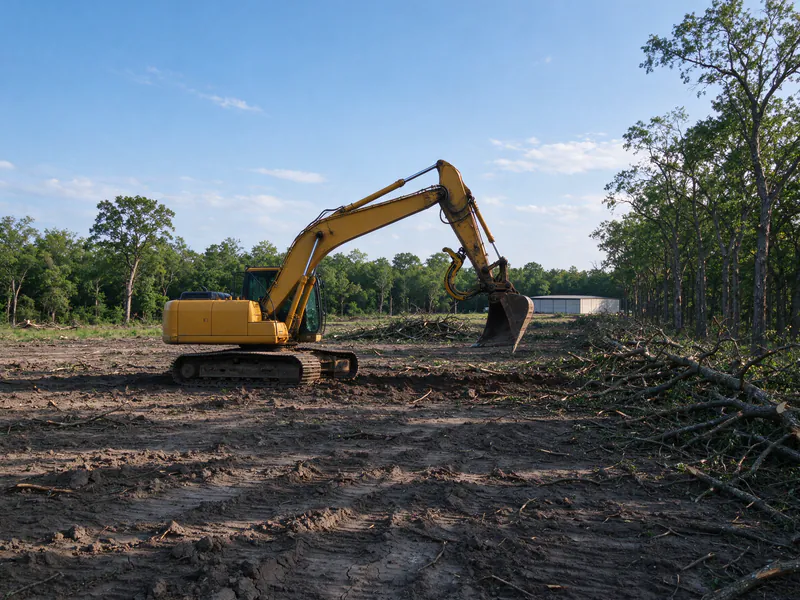
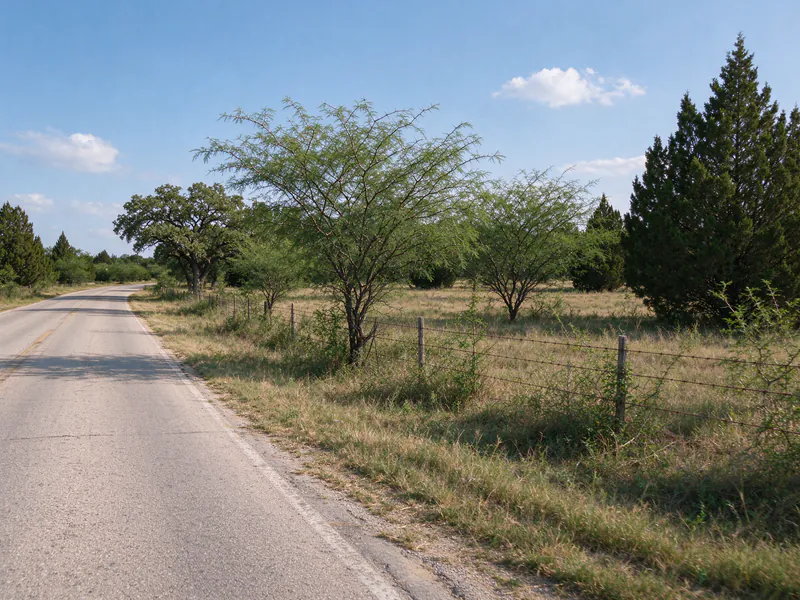
Commercial ground in the Denton area runs from flat Grand Prairie pasture on the west side to post oak woods in the Cross Timbers band through Argyle and south Denton, and the two clear very differently. Pasture with scattered mesquite opens up quickly. A wooded tract inside the city carries heritage post oaks, protection fencing and a preservation floor, and the plan decides which trees come out before any machine does. The walk also notes the clay: Sanger and Slidell clays on the west side rut deeply when wet, which matters when loaded trucks have to cross a site after rain.
Clearing to the tree plan inside Denton
Inside city limits the Denton Development Code shapes a development clearing job more than the ground does. A tree survey and preservation plan has to accompany a site plan, preliminary plat, replat or clear-and-grade permit, whatever the tree count, prepared by an ISA or ASCA arborist, an SAF forester, a botanist, a trained surveyor or a registered landscape architect. Where no protected trees exist, one of them signs a notarized letter saying so.
The plan then sets the floor. At least 30% of the heritage and quality tree diameter inside the development impact area must be preserved; every landmark tree stays. Post oaks count as heritage trees from 6 inches in diameter, so a Cross Timbers tract reaches its preservation floor quickly. Trees removed beyond what the plan preserves are replaced at set ratios or mitigated at $200 per caliper inch paid in lieu. No protected tree may come down for development until the final plat is approved and the tree removal permit, $425, is issued. The city is reviewing changes to these rules, so the Denton tree removal permit guide is kept to the current text.
Protecting the trees that stay
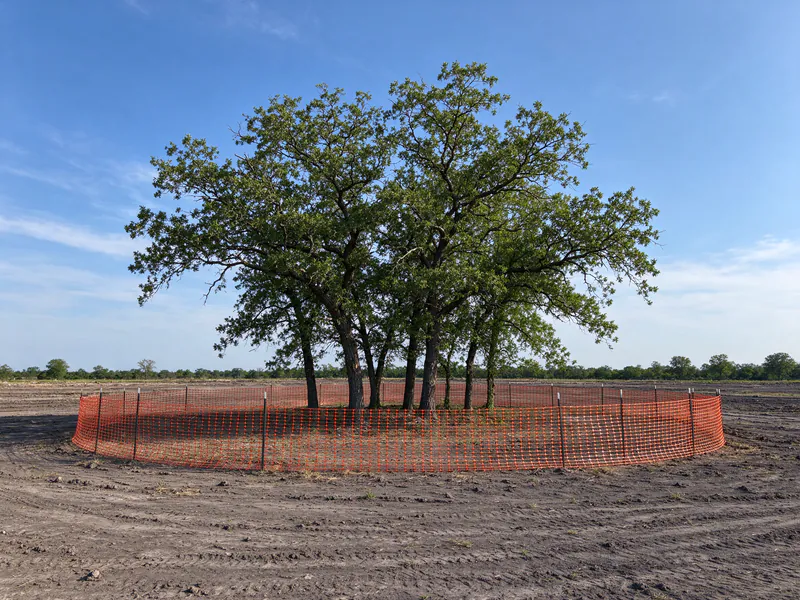
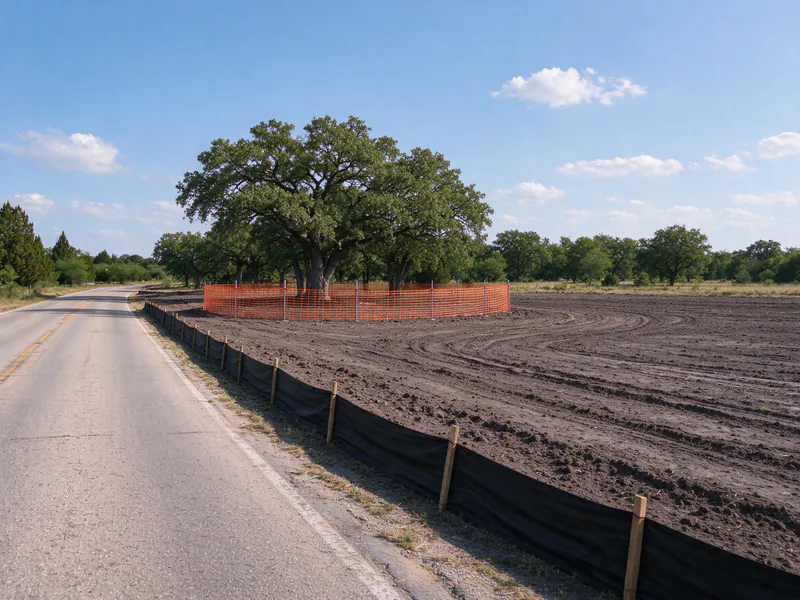
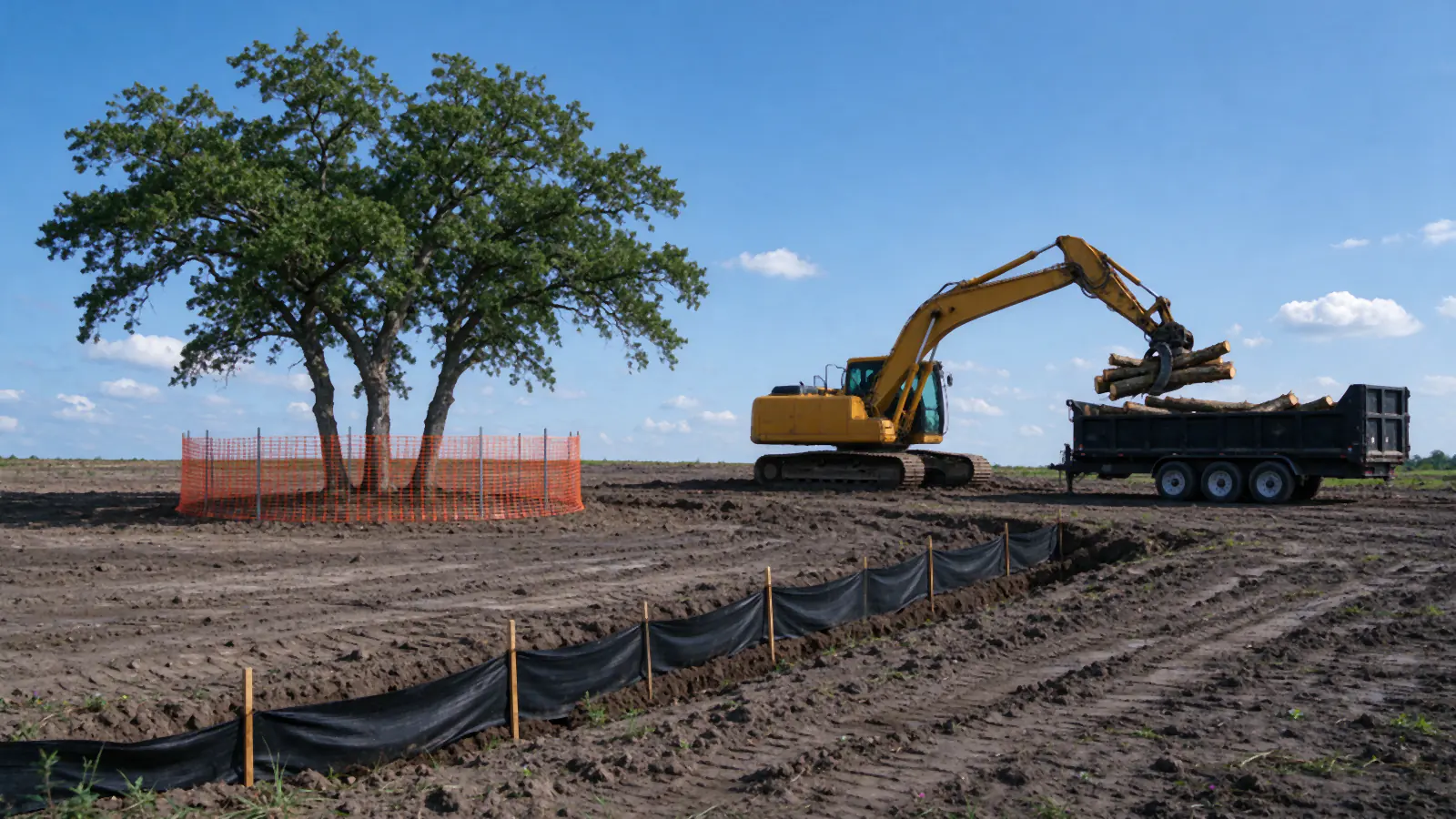
Most damage to preserved trees on a development site happens below the ground. A loaded machine crossing a root zone compacts the clay, a few inches of fill smothers roots, and a cut along the dripline severs them. Denton requires orange mesh protection fencing at least 4 feet high before any permit is released and before grading or brush removal, and it prohibits fill and excavation inside the dripline. Clearing routes are laid out to keep machines and haul trucks outside that fencing, and understory inside it, where removal is allowed, is cleared by hand or with light equipment. Selective clearing covers that method in more depth.
Early clear and grade
The city can issue an early clear-and-grade permit before the building permit once the plat is filed, state watershed requirements are met and site inspections are complete. The submittal goes through eTRAKiT with the commercial application, a site plan with erosion control and drainage plans, and the tree plan, and the Watershed Protection Division inspects. The clearing and grading permit costs $453 and runs one year. If erosion controls fail, the city gives a cure period before a stop-work order and a referral to TCEQ.
Stormwater coverage, the SWPPP and the Notice of Intent
Clearing is usually the first soil disturbance on a site, so stormwater obligations start with it. Under TCEQ’s construction general permit, TXR150000, activities that disturb 1 acre or more need coverage and a stormwater pollution prevention plan. Sites from 1 to under 5 acres are small sites; sites of 5 acres or more, or part of a larger common plan that will disturb 5 or more, are large sites and file a Notice of Intent, $225 electronically or $325 on paper. A single lot inside a subdivision counts as part of the common plan, so its size alone does not settle the question.
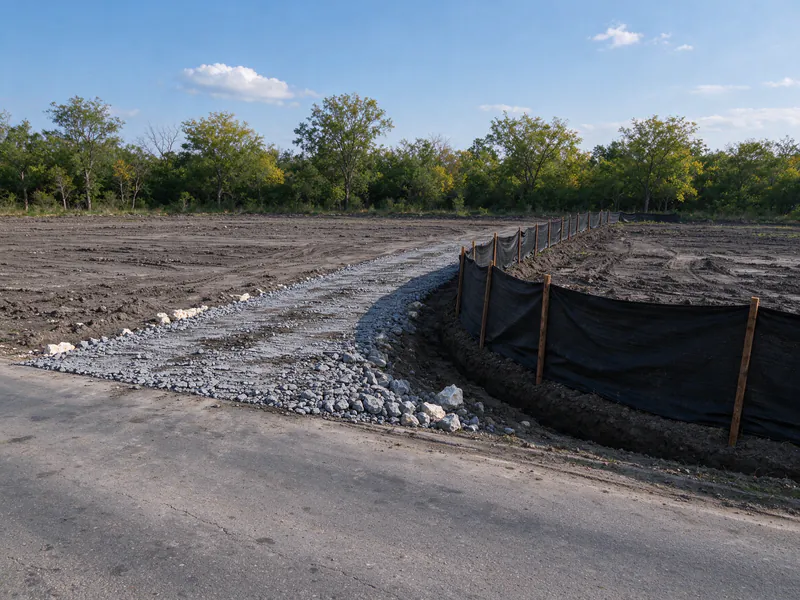
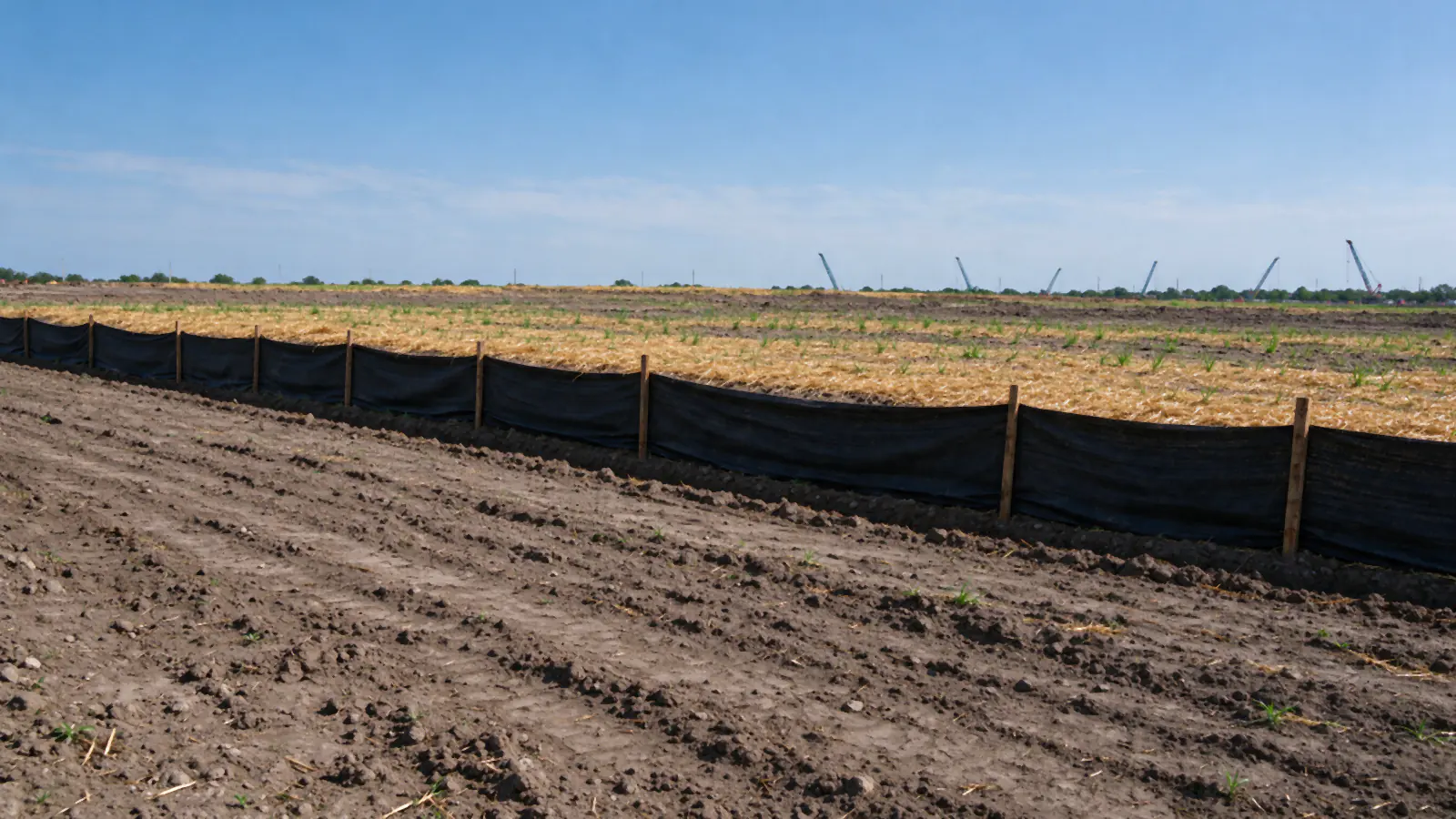
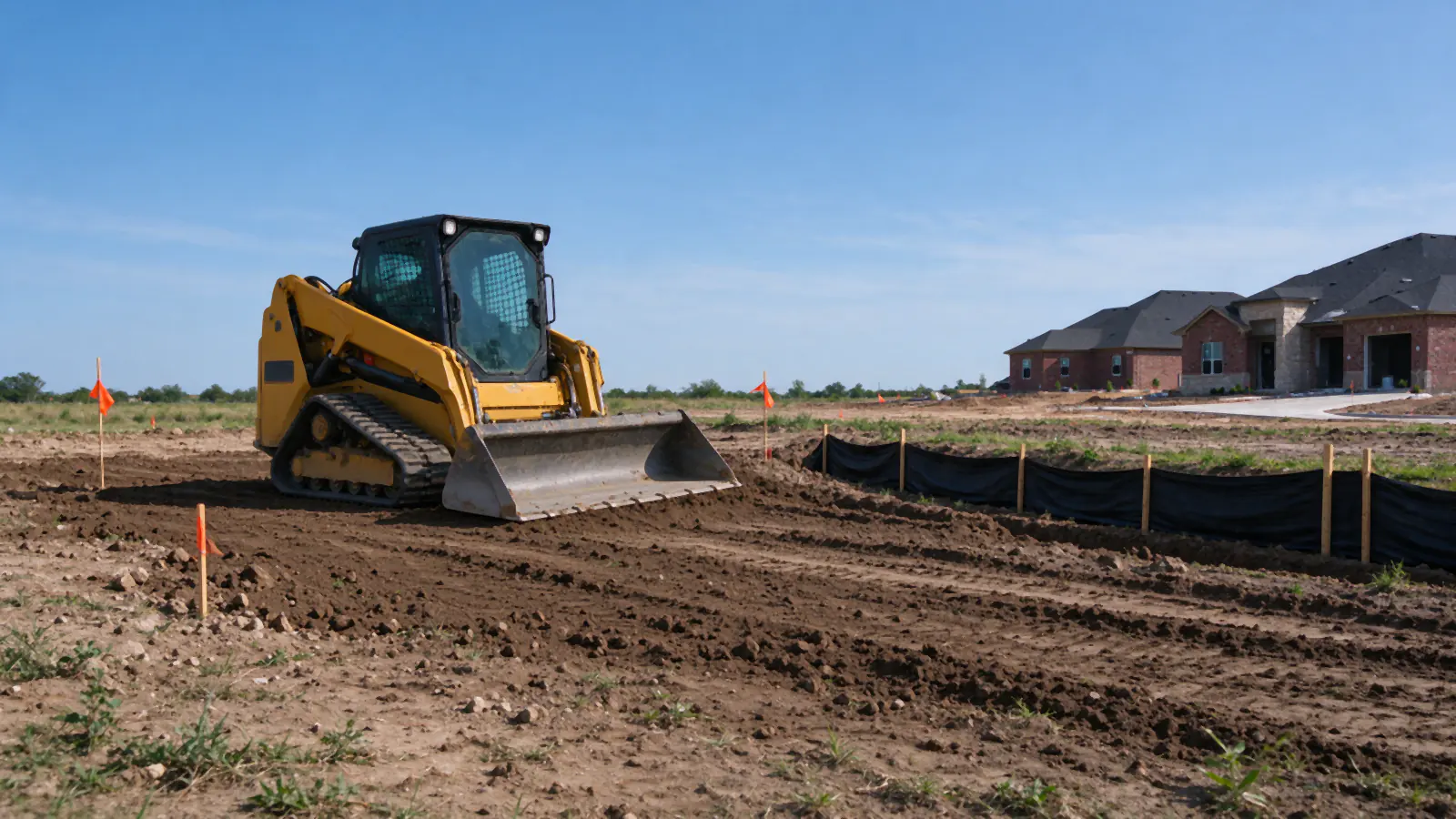
Controls go in before the soil opens. Silt fence along the low edges and a stabilized entrance are usually the first items on the plan, and Denton County TxDOT bids put installed silt fence at $3.40 to $5.00 a foot, though short runs cost more per foot. Who holds the permit as operator is settled before clearing starts, so the clearing work runs under the plan rather than around it. Erosion control covers installation and upkeep.
Creeks, floodplain and Environmentally Sensitive Areas
Denton maps Environmentally Sensitive Areas, and they stop routine clearing. Riparian buffers run 50 feet from the stream for channels draining 1 square mile or less and 100 feet for larger ones, and tree and understory removal is prohibited in buffers and undeveloped floodplain. Cross Timbers Upland Habitat is the other big one: where a contiguous forest block of 10 acres or more remains, nonresidential development keeps 30% of it natural and residential development keeps 50%. Disturbing an ESA beyond its limited allowances needs an Alternative ESA Plan with public hearings before the Planning and Zoning Commission and City Council. A field assessment settles where the lines fall, and the clearing near creeks and floodplains guide explains how it works.
Clearing ahead of a site plan?
Send the plan set or the parcel. The walk-through checks limits of disturbance, preserved trees and permit status before scheduling.
Rules in the towns around Denton
Outside the city each town sets its own sequence, and none of it can be assumed. In Sanger no grading, clearing or fill starts without a stormwater plan and the Director of Development Services’ approval, and early grading needs a final plat submitted and accepted plus an engineer-sealed erosion plan; brush may not be left where it drains to a storm sewer or creek. Argyle protects listed trees from 3 inches, applies the rule to utility and pipeline easements, and requires an approved tree survey and protection plan before any site-work or grading permit. Roanoke does not allow clear-cutting at all. Justin requires a permit for any dirt work, and Krum requires a land development permit for clearing and grubbing. Unincorporated county land and the ETJ are confirmed per tract.
Debris, finish level and the handoff to grading
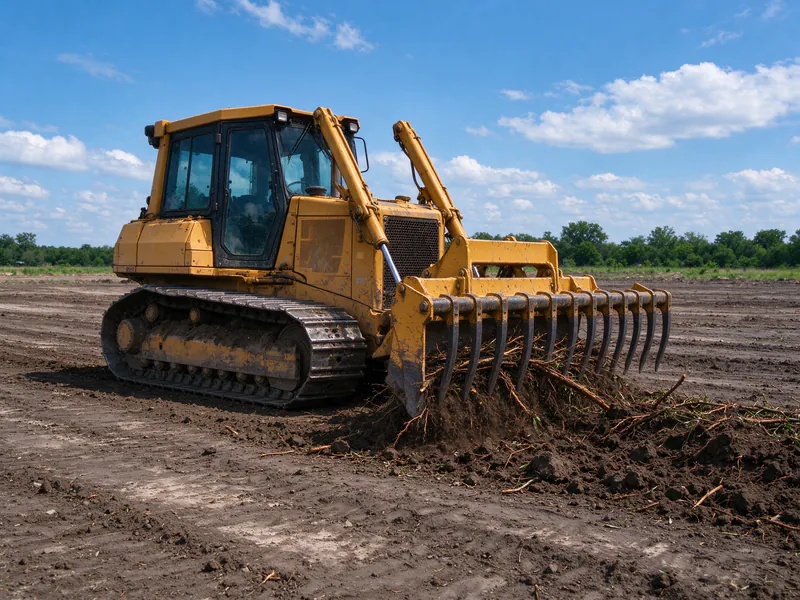
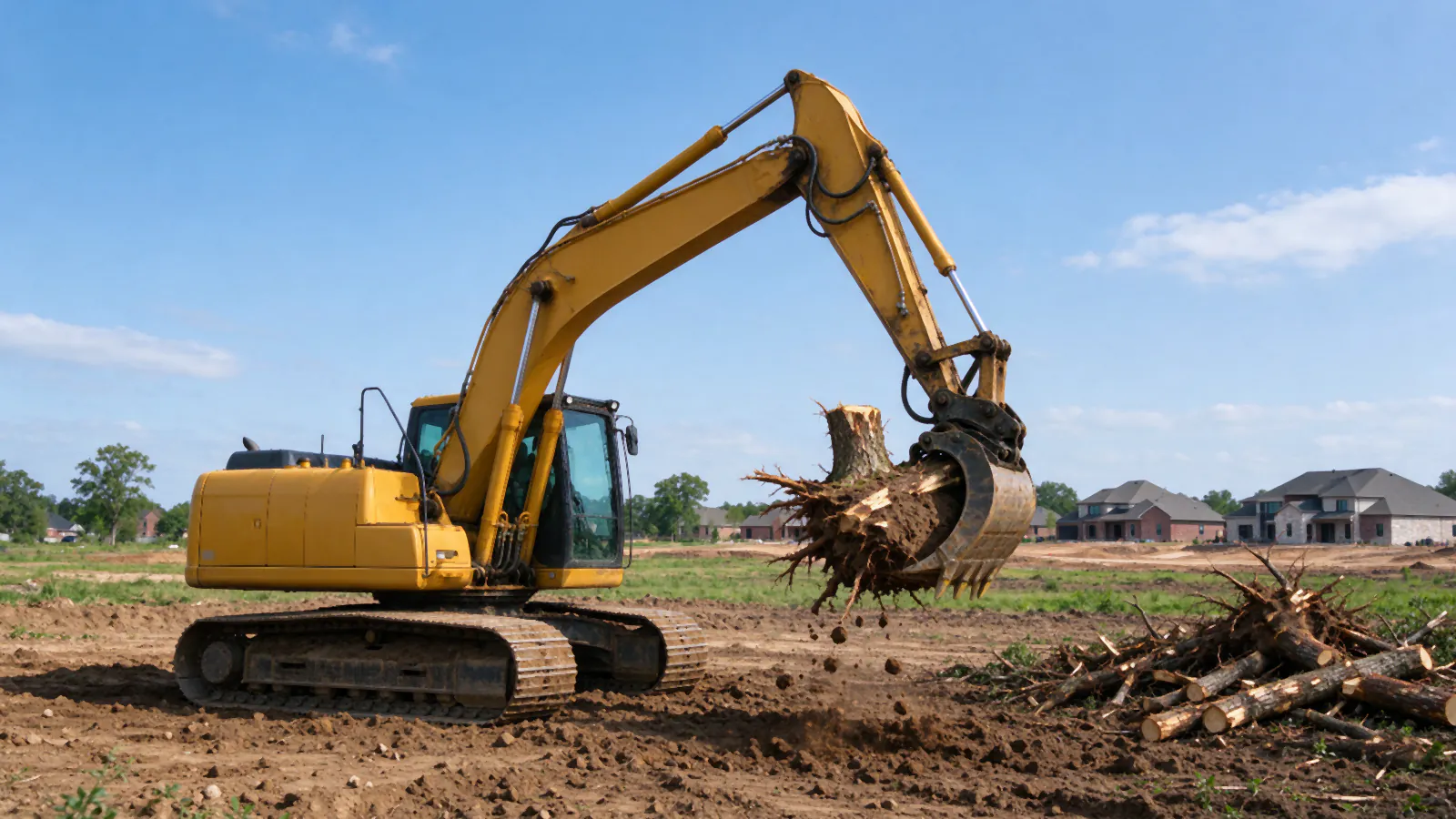
A development site produces debris by the truckload, and where it goes is decided before the first tree falls. Brush and small trees can be mulched in place outside the footprint, logs stacked or hauled, and stumps and root balls grubbed out of pads, drives and utility routes and hauled or ground. Ash wood stays inside the emerald ash borer quarantine area unless treated, which affects where ash logs can go. Burning is not allowed inside Denton city limits, and on county land a land-clearing burn is allowed only when no practical alternative exists, which a mulcher or a haul route usually is. Land clearing debris removal covers trucking and tipping.
The finish is a cleared, grubbed footprint with topsoil stockpiled where the plan calls for it, controls in place and preserved trees untouched. It is not a building pad: cut and fill, compaction and drainage shaping follow under land clearing and grading or the site’s own earthwork contractor. Solar arrays, storage yards and other open-ground projects follow the same path, with a finish matched to what the next trade needs.
What commercial land clearing costs
Commercial clearing is priced per site, because the plan drives the cost as much as the vegetation. For scale, a TxDOT contract for 33 acres of roadside brush removal in Denton County drew bids of $1,360 to $2,000 an acre, with a low bid of $1,590. That is a public benchmark for large, open, easy-to-reach brush, not a development rate; wooded development land with preserved trees costs more per acre. Typical North Texas ranges for the clearing itself run from $1,500 to $3,500 an acre in light brush to $3,500 to $6,500 or more in heavy woods, with grubbing priced on top.
The drivers on a development site are the tree plan (fencing, handwork near keepers, mitigation at $200 per caliper inch), the stormwater controls, how much ground is grubbed, how far debris travels and how many utilities cross the site. For labor context, operating engineers and other construction equipment operators in the Dallas-Fort Worth metro earn a mean $26.51 an hour against $31.87 nationally (BLS OEWS). A wage is not a billing rate: the hourly price also carries the machine, fuel, trailer, insurance and overhead. The cost per acre guide lists the public fees, the cost calculator gives a first range, and what a land clearing quote should include shows how to compare bids line by line.