Last Updated:
Post Oak Land Clearing Denton offers and manages fence line clearing across Denton and the west and north of Denton County, with the work done by licensed and insured contractors. Fence line clearing opens a strip along a boundary or a planned fence route: brush, vines, cedar and saplings cut back, trees on the line taken down, and old wire and posts pulled out and disposed of. It is a long, narrow job with its own hazards, mostly steel hidden in the brush. Building the new fence is a separate trade and is not offered here; the clearing ends with a strip a fence builder can stake.
What happens on the first visit
The first visit walks the whole line and settles where it actually runs. Expect a check of survey pins or a plat against the old fence, notes on trees grown into wire and posts still standing, the width the new fence needs, and a look at gates, creek crossings, transformers and overhead lines along the way.
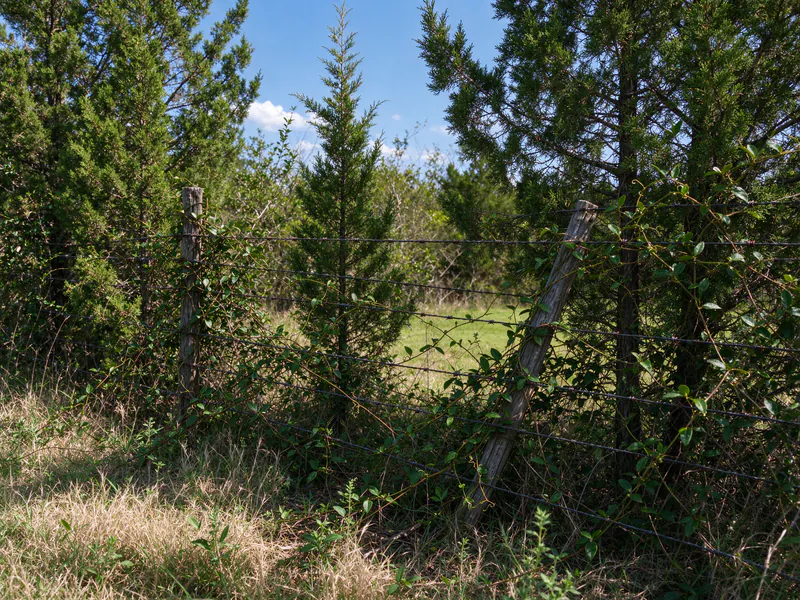
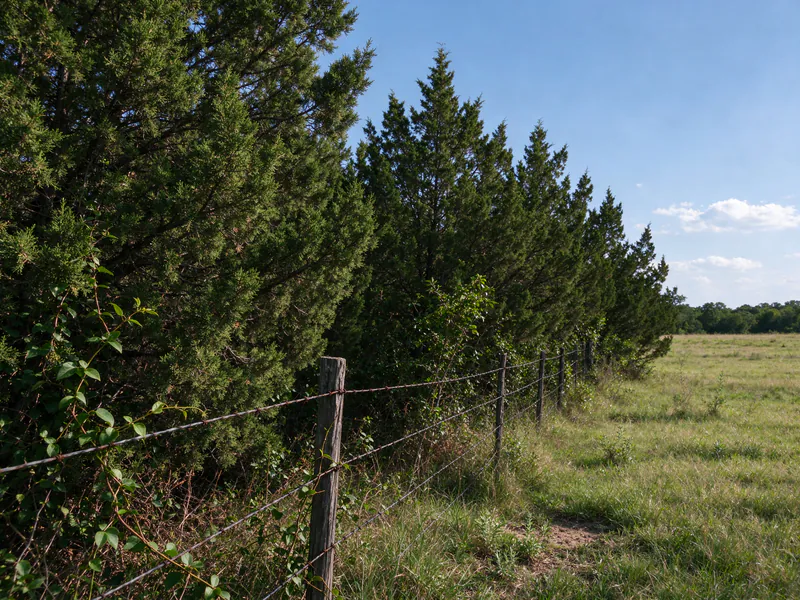
Fence rows are where farm history collects. A row that has been left for twenty years can hold three generations of fencing: cedar posts, T-posts, net wire and barbed wire, some standing and some flattened under the brush. The walk finds what it can, flags it and decides what is pulled by hand before any machine starts. Overhead lines get attention because a row of trees along a road or property line often runs under a distribution line, and Texas law keeps machines and falling trees 6 feet from a high-voltage line unless the line operator has arranged otherwise. Inside Denton, Denton Municipal Electric prunes trees near its lines through its own contractors and asks owners not to trim around them; the clearing near power lines guide explains who to call.
The surveyed line, not the old fence
The most common mistake on a fence line job is clearing to the fence that is there. Old fences were often built by eye, jogged around trees, or pushed off line by years of brush and cattle leaning on them, so they can sit a few feet away from the true boundary in either direction. Clearing to that fence can put machines and tree removal on a neighbor’s ground, or leave a strip of your land outside the new fence for good. Survey pins or a fresh boundary survey settle the line before clearing starts.
Brush and trees on your side of a surveyed line are yours to decide on. Anything on the neighbor’s side, and trees standing on the line itself, are cleared only with the neighbor’s agreement, ideally in writing. Where a new fence is replacing a shared one, neighbors often agree on the width and split the clearing.
What the tree rules allow along a line
Inside Denton city limits, the tree preservation rules exempt narrow understory clearing for surveys: up to 4 feet wide for a general survey and 8 feet for a boundary survey, with no protected tree 10 inches or larger removed under that exemption. The city’s tree removal application also lists understory clearing for fencing among the exemptions, claimed through a no-fee submittal to Building Safety. Agricultural operations are exempt too. Clearing wider than that, or taking a protected tree such as a post oak 6 inches or more across, follows the normal permit path in the Denton tree removal permit guide. In Argyle, the recently adopted tree ordinance lists a fence line within 10 feet of the property line among its permit exceptions. Other towns, the ETJ and county land are confirmed per address, and the clearing land in Denton guide sets out how the rules differ.
Old wire, posts and trees grown into the fence
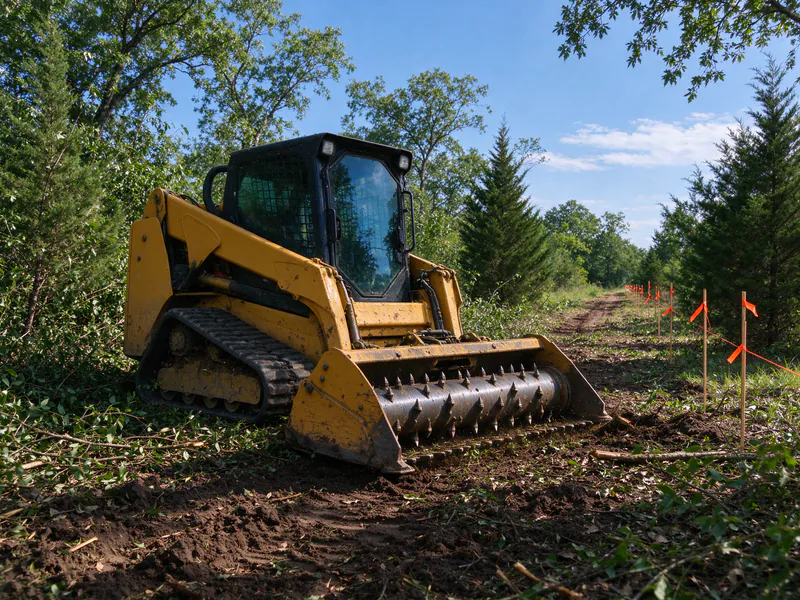
Wire is the hazard that defines this job. Barbed wire stapled to a tree, or simply left leaning against it, gets swallowed as the trunk grows, until a strand disappears into the wood and comes out the other side. A mulcher drum that catches buried wire breaks teeth and wraps steel around itself; a chainsaw that hits it kicks back. So the order is fixed: loose wire is cut and rolled first, posts are pulled, wire embedded in trunks is cut flush or freed by hand, and the tree is felled with that steel in mind. Only then does a machine work the strip.
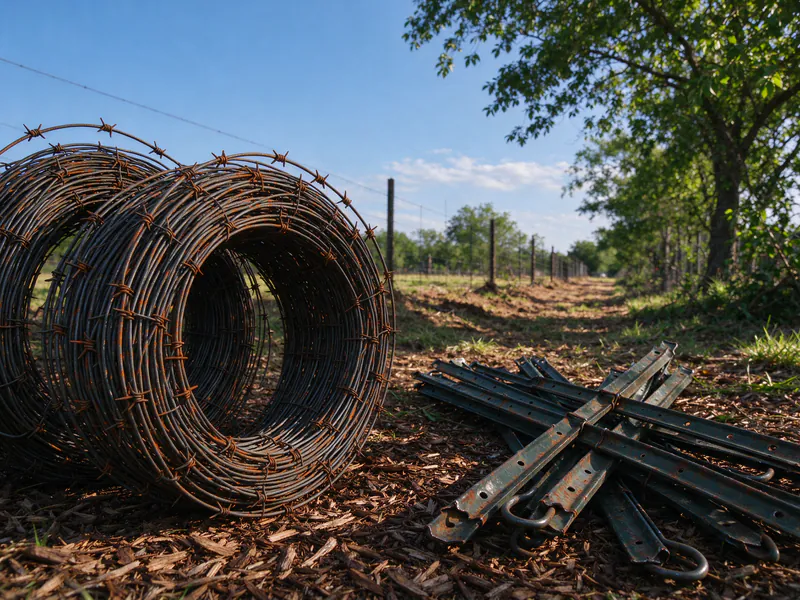
Old fencing is part of the scope. T-posts come out with a puller or a machine, wood and cedar posts are pulled or cut at ground level, and corner and brace posts set in concrete are pulled where agreed. Wire, posts and scrap are kept separate from brush, because steel cannot be mulched and does not go in a brush load at the landfill.
Old fence buried in brush?
Send the length of the line and a few photos. The walk-through finds the wire and posts before any machine starts.
How wide to clear, and why
The width comes from the next trade and from how you want to maintain the row. A fence builder needs room for a post driver or auger on a tractor or compact loader, room to stretch and tie wire, and room to move material along the line, so their equipment sets the minimum. A mowing lane on one or both sides keeps the row from closing back in, since a shredder can then run the length of it every season. Some landowners leave a strip of cover on the far side of a pasture fence for wildlife or wind and clear only the working side.
Transformers and lines limit width in places. CoServ asks that fencing stay 10 feet from the front and 3 feet from the sides and back of a padmount transformer, which can shift a fence line near a meter or a pole. Where a row runs along an access road or a utility strip, easement clearing covers the wider corridor rules.
Debris and the finished strip
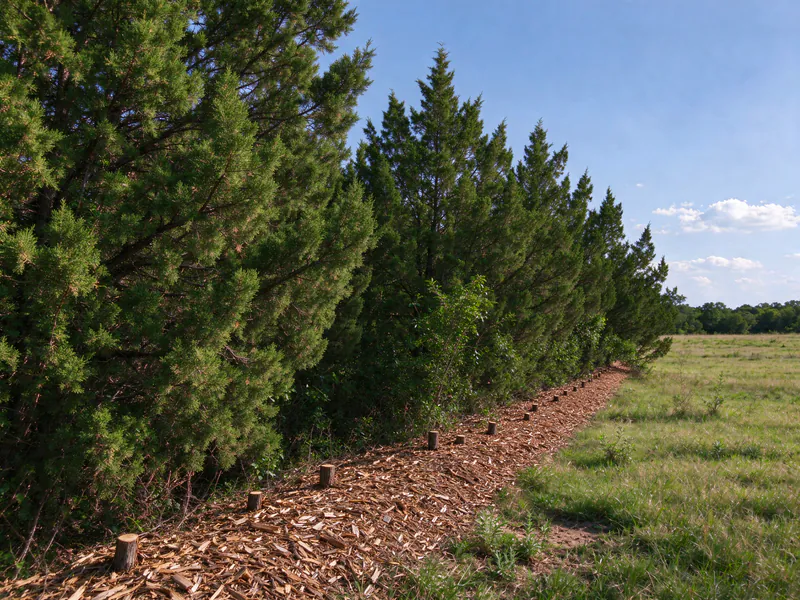
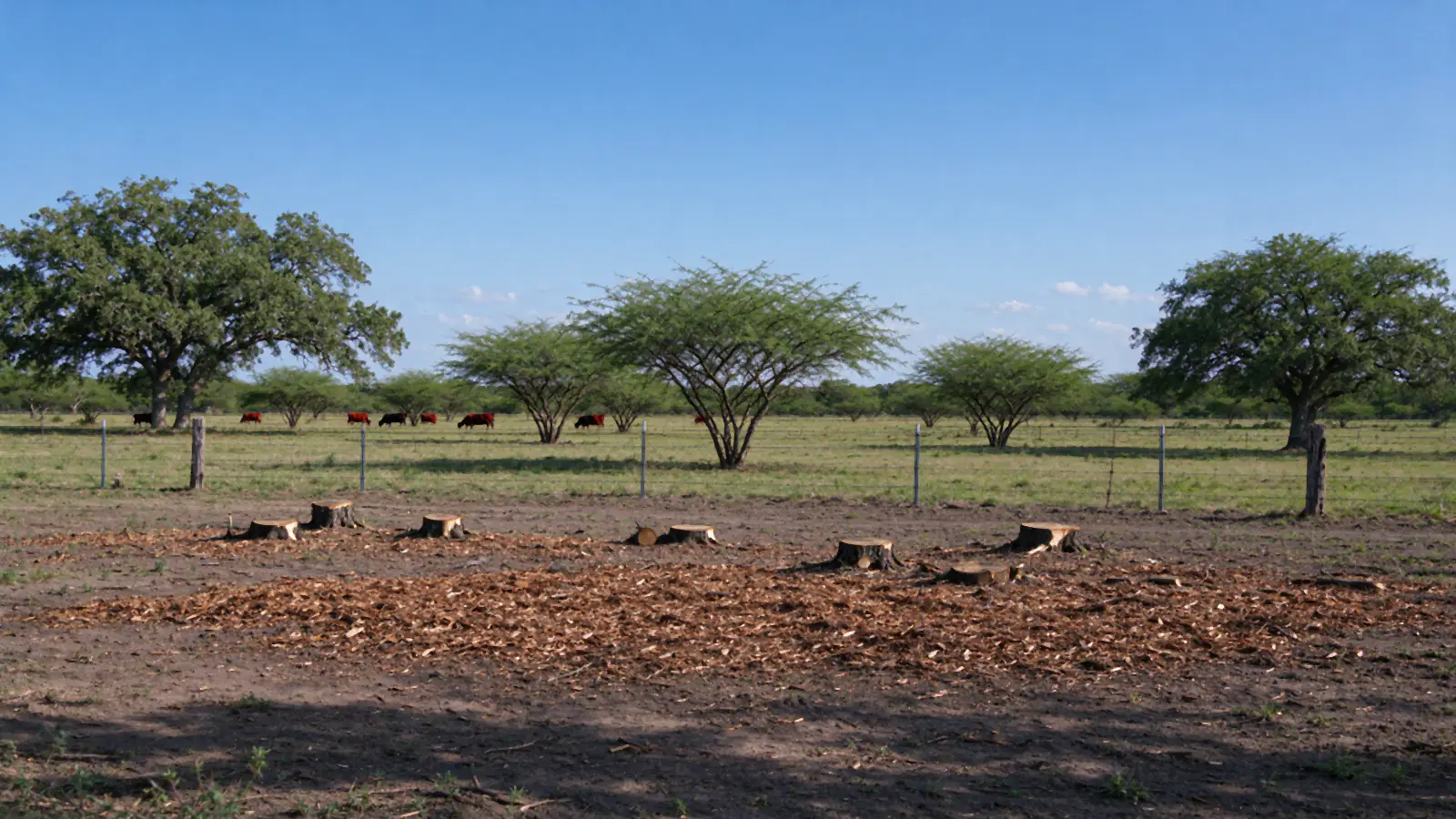
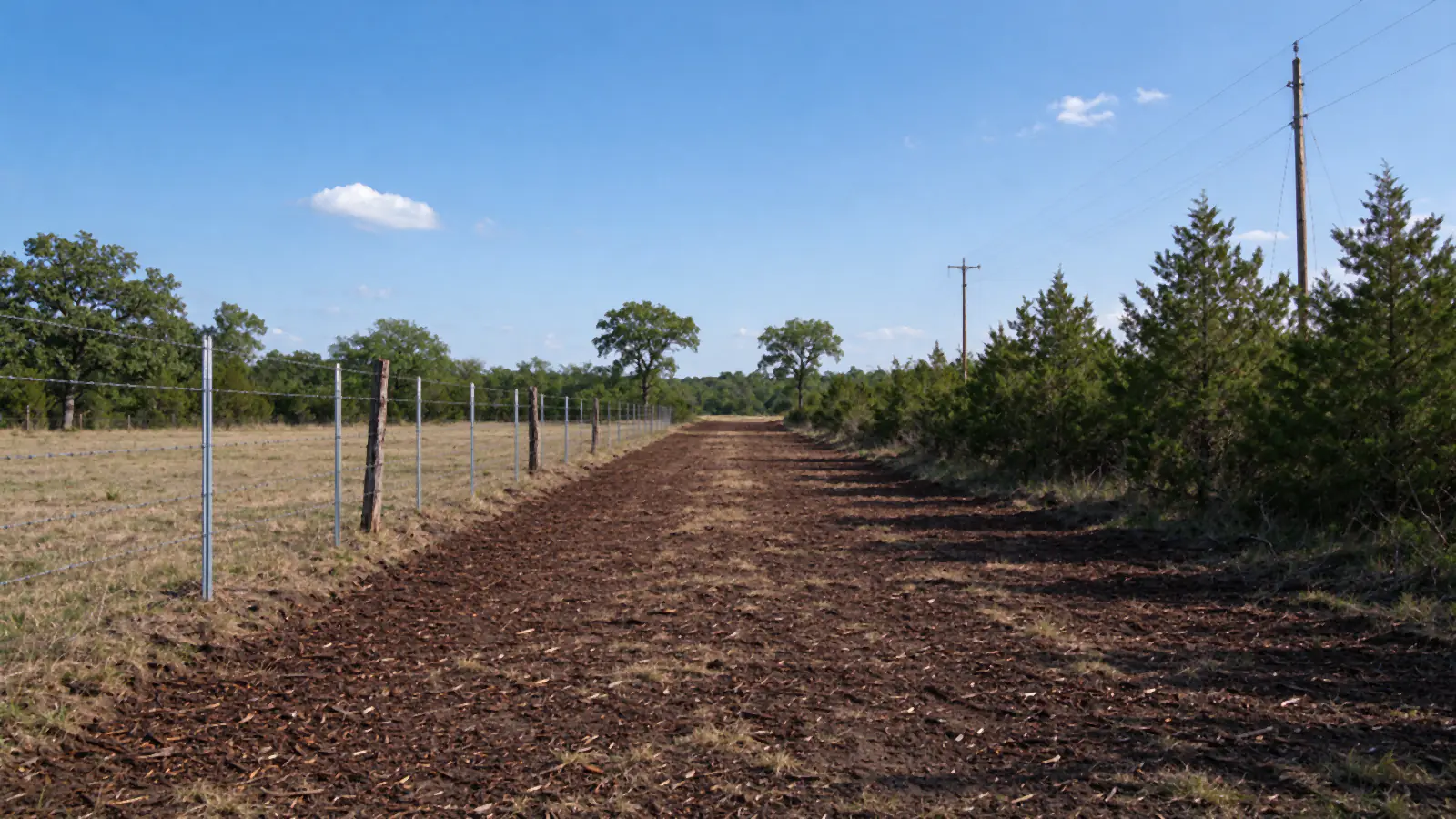
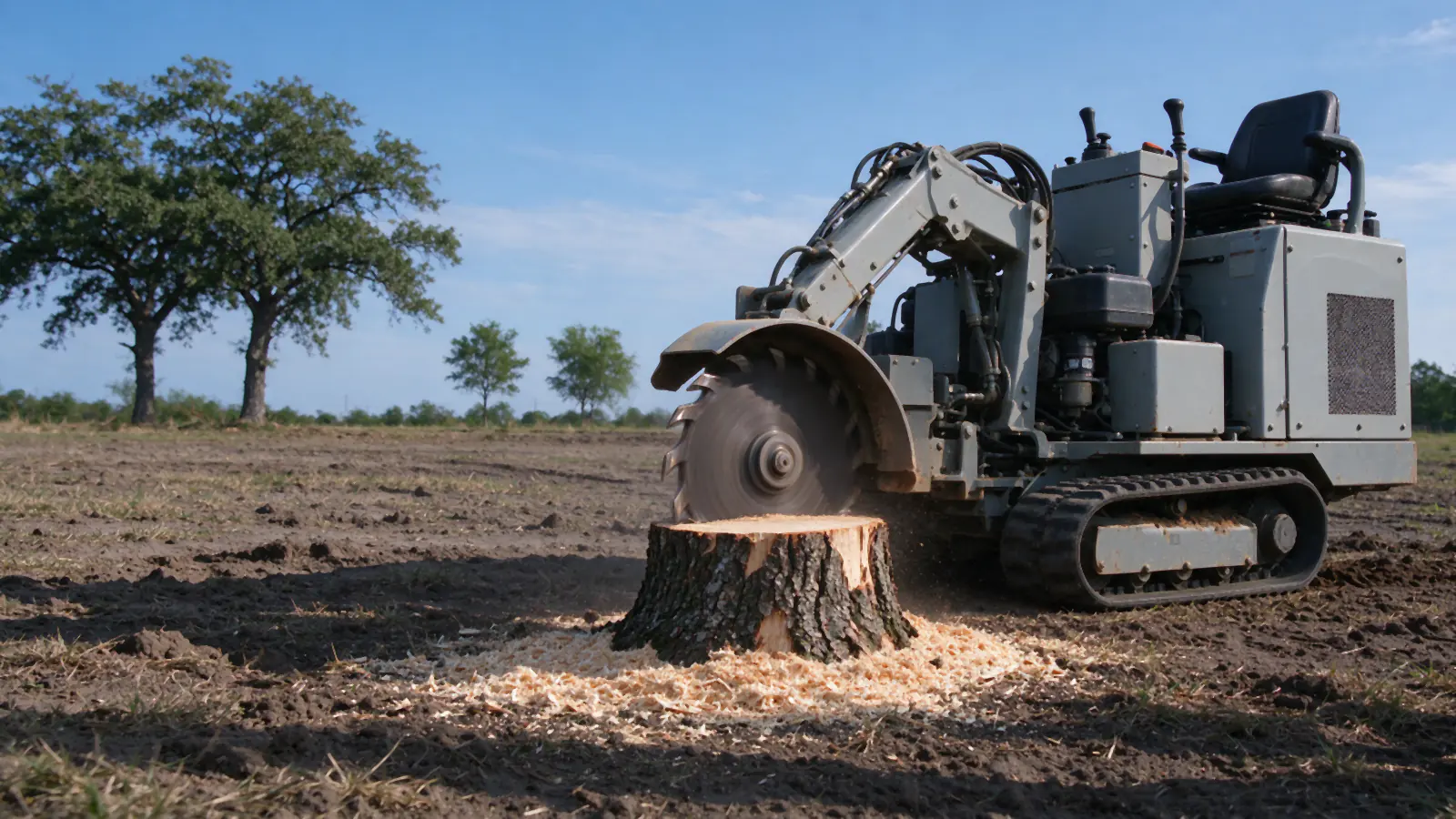
Brush and small trees are usually mulched straight into the strip, which leaves a lane covered against erosion and avoids hauling. Larger trunks are cut and stacked or hauled, and stumps on the line are ground flush or below grade so the fence builder’s posts and a mower can pass. Grinding to 16 inches or deeper requires a Texas811 locate ticket, and post holes dug later will need their own. Wire and posts go out separately as scrap or debris. Burning is not allowed inside Denton city limits, and on county land a land-clearing burn is allowed only when no practical alternative exists, on a county burn day.
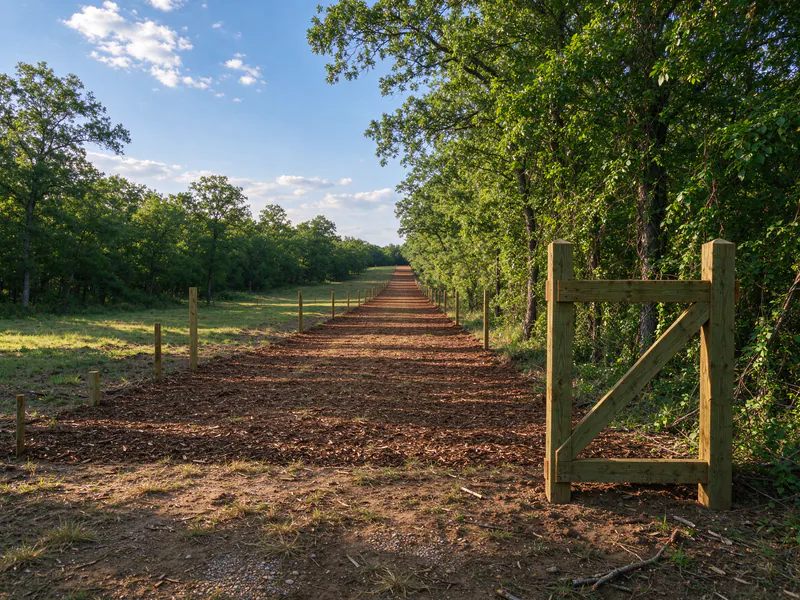
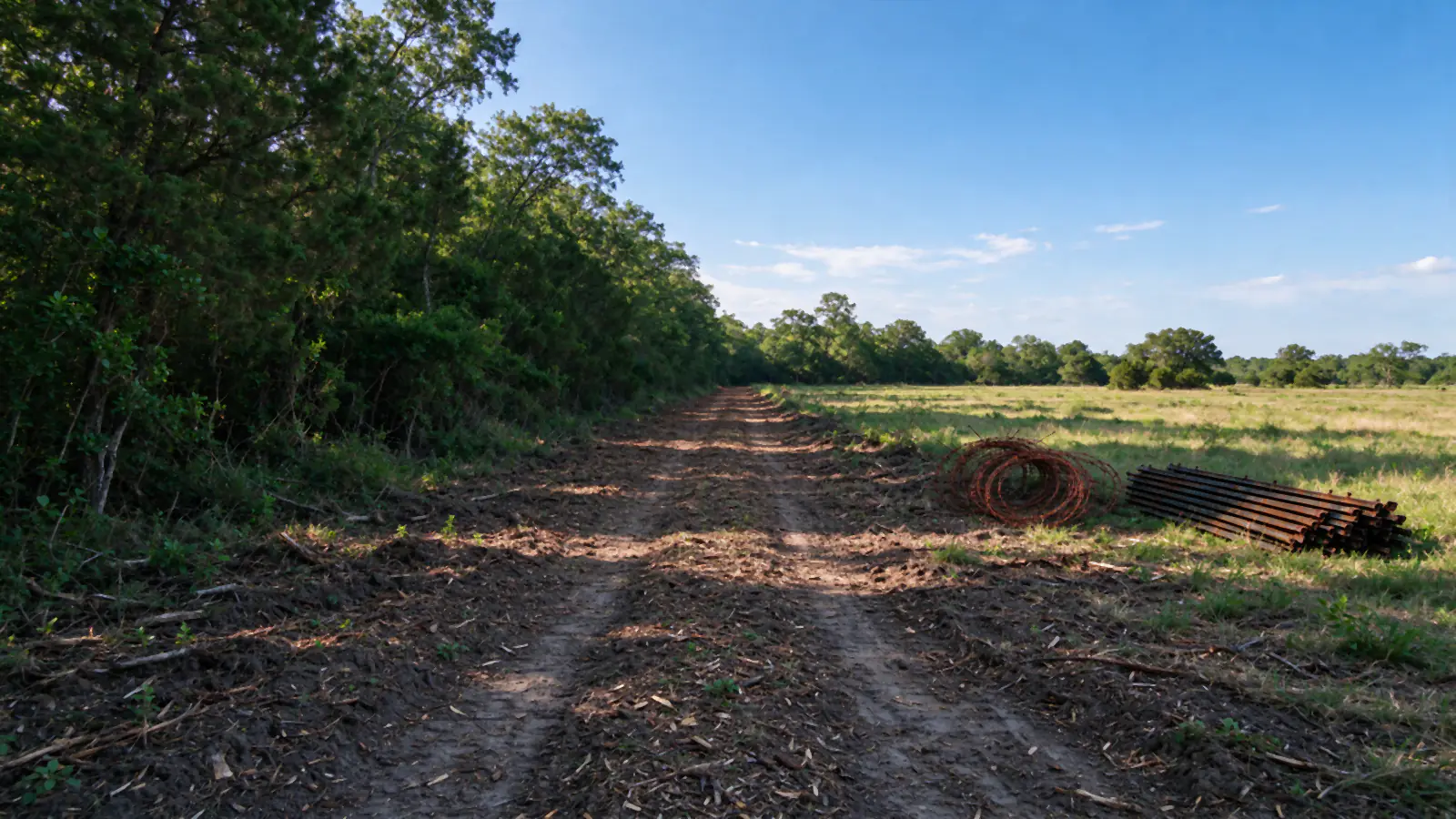
The finish is an open, mulched strip at the agreed width, stumps flush, old fence gone and the line marked by the survey pins. It is not graded or leveled; where a fence crosses a draw or a creek, the water gap is left for the fence builder to design. Denton protects riparian buffers along streams, so clearing at a creek crossing stops at what the rules allow; the clearing near creeks and floodplains guide explains where those lines fall. Keeping the row open afterward is a matter of a shredding pass or two a year; see brush hogging and the keeping brush from growing back guide.
What fence line clearing costs around Denton
There is no published per-foot price for fence line clearing around Denton, so it is quoted from the walk-through. Length and width set the area, and the area is small for the work involved: a strip 10 feet wide and 1,000 feet long is under a quarter acre. That is why moving the machine to the site weighs heavily on fence line jobs, and why short lines cost more per foot than long ones.
The other drivers are the ones a fence row is known for. Embedded and loose wire means handwork before machine work. Old fence removal adds time per post, more for concrete-set corners. Tree size on the line decides between mulching and felling, and stumps add grinding. Access from one end versus both, terrain, creek crossings, overhead lines and how far the wire and brush travel for disposal all move the number. Where the row runs through pasture brush, the per-acre ranges on pasture clearing give a sense of the mulching cost. The cost calculator gives a first range, stump grinding and removal covers stumps on the new line, and what a land clearing quote should include shows how to check that wire and post removal are on the quote.