
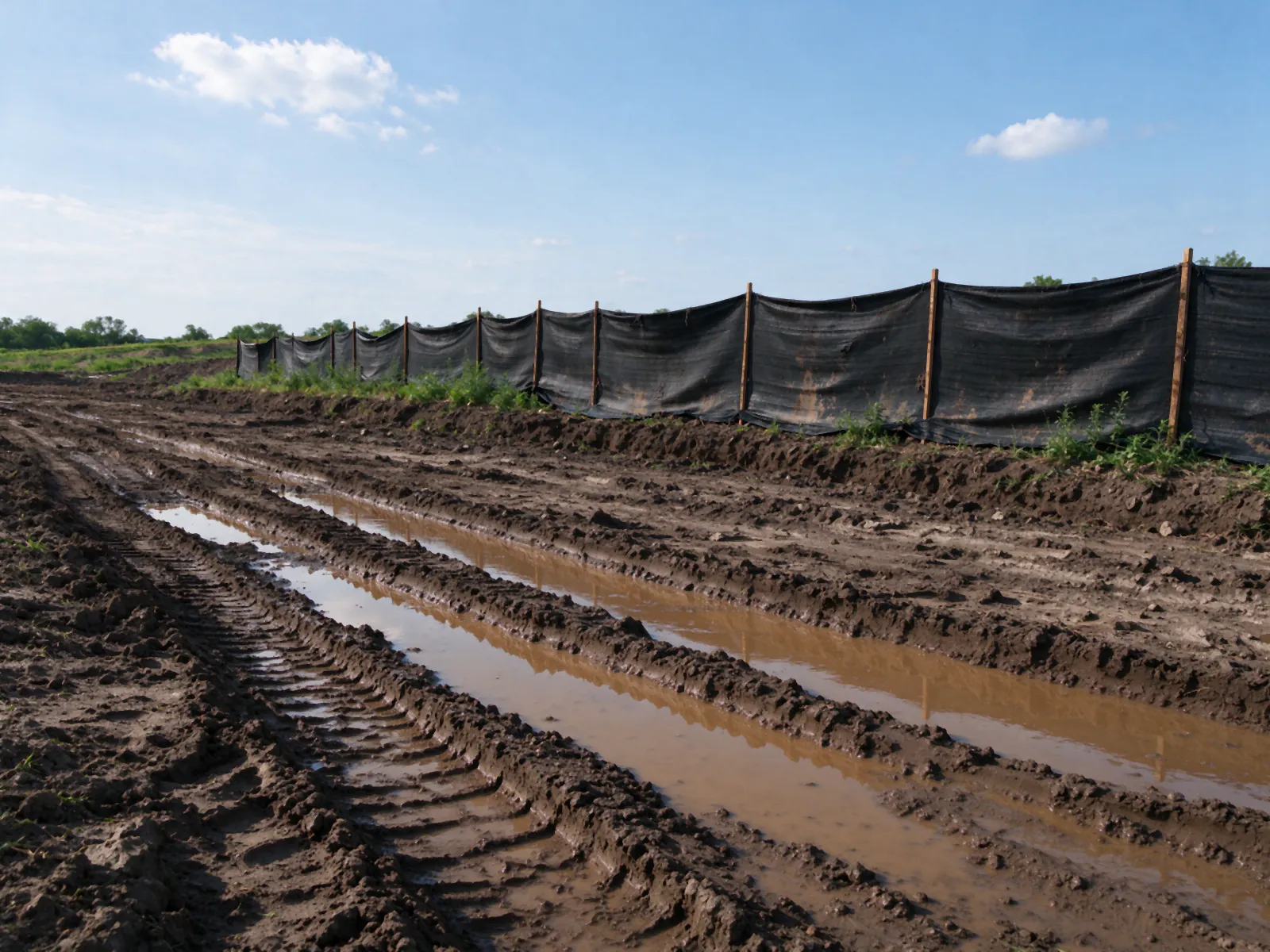
Rain changes a land clearing job more than almost anything else on the west and north side of Denton County, and it does so because of the clay. Post Oak Land Clearing Denton plans clearing across Denton and the west and north of the county, with the work done by licensed and insured contractors, and the calendar for every job is built around how wet the ground is. This note explains what happens in that ground when it rains, why it matters most in May and October, and what a sensible plan looks like.
The short answer
A soaking rain on Denton’s clay usually stops machine work for a few dry days. Saturated clay ruts under tracks, compacts, and turns bare ground into mud that washes off in the next storm. Light mulching on firm ground can sometimes continue, but clearing and grubbing, stump removal and anything that opens the soil waits until the surface firms up.
Why Denton clay behaves the way it does
The USDA soil survey for Denton County shows a split that surprises people. West and north of the city, around Krum, Sanger, Ponder, Justin and Roanoke, the soils are mostly clays: Sanger clay, Slidell clay and Mingo clay loam, with Ponder loam mixed in. Toward Argyle and the south-central county the Eastern Cross Timbers bring sandy loams such as Gasil fine sandy loam and loamy fine sands.
Sanger clay runs up to 48% clay and Slidell clay up to 50%. Both sit in hydrologic soil group D, the slowest-draining class, and both have high shrink-swell, with linear extensibility up to 9.1% and 10%. Clay particles are tiny and plate-shaped. When they get wet they swell and close the pore space water would use to soak downward, so the top few inches stay saturated long after the rain stops, while the ground beneath them stays dry. Gasil fine sandy loam, by contrast, is group B with a linear extensibility of 1.8%: it takes water in and drains it within hours.
That difference is the whole story of rain on a clearing job. On sand, a storm costs a morning. On group D clay, it can cost the better part of a week.
What a machine does to wet clay
Ruts that set like concrete
A tracked mulcher or dozer spreads its weight, but saturated clay has almost no strength. The tracks sink, shear the surface and push the clay aside into ridges. When the clay dries, it shrinks and hardens in that shape. The ruts that result are hard enough to rattle a mower for years, and they collect water in straight lines, which keeps those strips wet longer after every later rain.
Compaction below the surface
Weight on wet clay squeezes out the remaining air space. Compacted clay drains even more slowly than it did before, sheds more of the next rain as runoff, and gives grass roots a harder time coming back. On a pasture or a yard that is a lasting cost. On a building pad the engineer may want the compacted layer reworked anyway, but on ground meant to grow grass it is damage. The pasture clearing page explains why the finish on grazing land matters.
Mud that leaves the site
Tires and tracks carry clay onto driveways and roads, and bare ground that has been churned up washes far more easily than ground with roots and mulch still in it. That is the start of an erosion problem, covered in the next section.
Planning around the wet months?
Send the acreage and a few photos. The walk-through looks at drainage, low spots and access before a start date is set.
When the rain comes in Denton
NOAA’s 30-year normals for Denton Municipal Airport put the yearly total at about 35.6 inches. May is the wettest month at 4.52 inches, and October is close behind at 4.17 inches. Those two months also have the most days with half an inch of rain or more: about three in May and between two and three in October, out of roughly 22 such days a year. July is the driest month at 1.77 inches, followed by January at 1.94 inches.
For planning, that means:
- Late spring and October are the months most likely to lose working days to wet clay, and the months when freshly bared ground is most likely to wash.
- Midsummer gives the firmest ground, though heat, drought and burn bans bring their own limits.
- Winter often works well between fronts, with brush dormant, but a cold, cloudy week dries clay slowly.
The when to clear land in North Texas guide sets those seasons side by side, and how long land clearing takes explains how weather days fit into a schedule.
Rain after the clearing is done
The riskiest moment for cleared ground is the first heavy rain after the work. Brush and roots were holding that soil. Strip them off a slope and a May storm can cut rills into it in an afternoon, carrying sediment to the ditch, the creek or the neighbor’s yard.
How much protection the ground needs depends on what was done to it.
- Mulched ground already has its cover. A forestry mulcher leaves a layer of chips that breaks raindrop impact and slows runoff, and the roots stay in the soil. See forestry mulching.
- Grubbed or graded ground is bare and loose, and it needs cover or containment right away: mulch spread back over it, seed, erosion control blankets on slopes, or a silt fence along the low edge. Silt fence in Denton County TxDOT bid results runs $3.40 to $5.00 a foot installed, a useful public benchmark for budgeting.
- Creek banks and bottoms are the last ground to dry and the first to flood. Frequently flooded soils such as Frio clay loam and Tinn clay line the creeks, and Denton’s riparian buffers limit what can be cleared there at all. Clearing near creeks and floodplains covers those rules.
The rules point the same way. Disturbing an acre or more of soil brings TCEQ construction stormwater coverage and a stormwater pollution prevention plan. The City of Denton can deny a clearing and grading permit when erosion and sediment controls are inadequate, and violations can lead to stop-work orders. In Justin, the city’s residential guidelines require erosion control to be installed and maintained at all times. The erosion control after land clearing page explains the options in detail.
How a wet-season job is planned
None of this means clearing stops for half the year. It means the plan accounts for water from the first walk.
The walk notes where water sits and where it runs: low corners, draws, creek edges and the path a loaded trailer will take in and out. Access gets planned along the highest, firmest route. Where a job mixes methods, the order can change with the weather: mulching on firm upland ground while the low spots dry, grubbing and stump work saved for a dry stretch. Bare ground is covered as the work goes, not at the end. Homeowners report asking whether a job is easier right after rain or after a dry spell; on Denton clay, dry ground is almost always the better answer.
A good quote says how weather days are handled. Ask about it, along with the other lines covered in what a land clearing quote should include. If a building pad is the goal, clearing land to build a house explains why the pad area is usually grubbed in dry weather and handed on for grading before the next wet month.
Want a start date that fits the ground? Call (940) 204-6191 or request an estimate with the acreage, the address and a few photos of the lowest part of the property.